
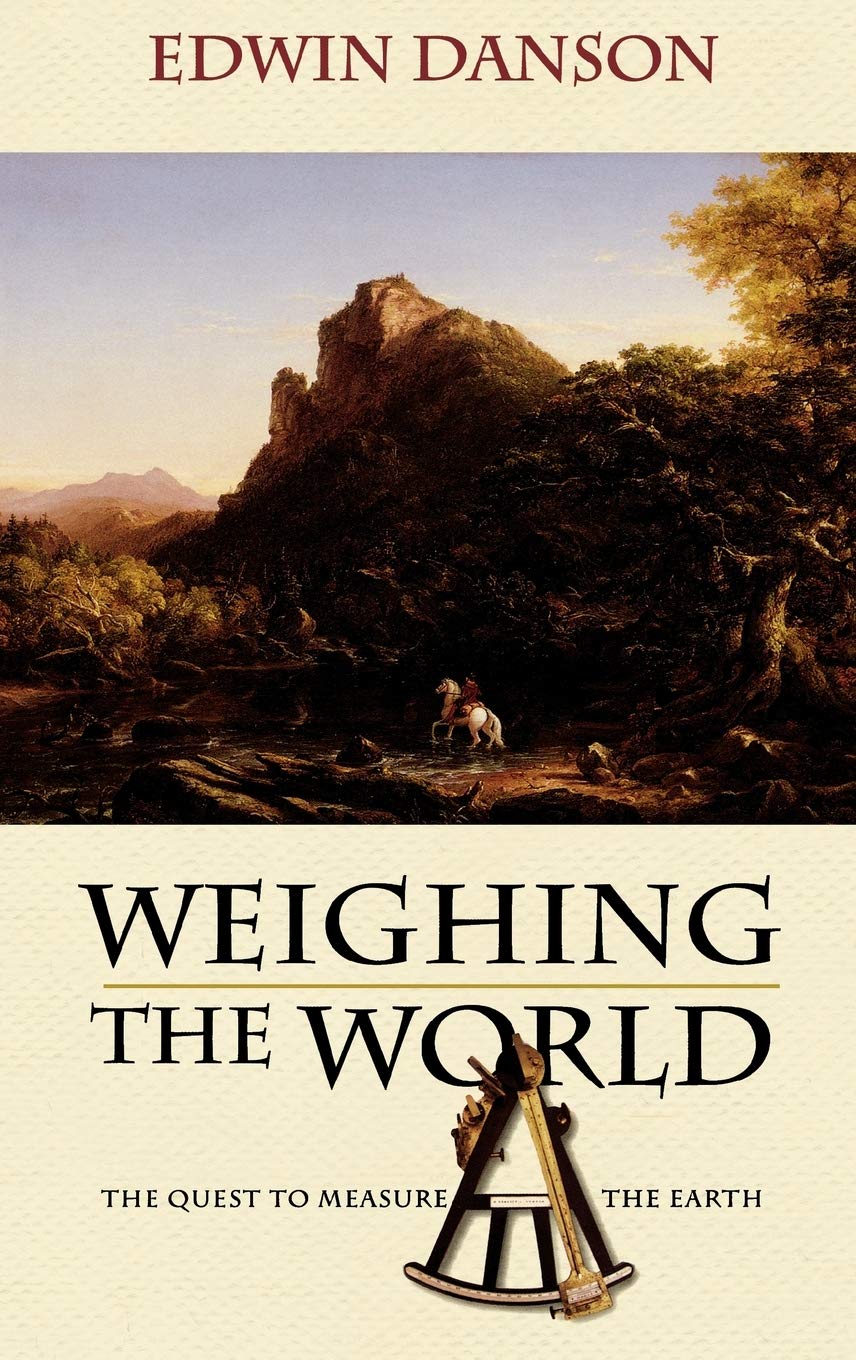
Title
Weighing The World: The Quest To Measure The Earth
Sold by Ergodebooks, an authorized reseller.
Returns accepted within 30 days | support@ergodebooks.com
Shipping Information
- Free Standard Shipping — United States only
- Processing Time: 3–5 business days
- Estimated Delivery: 6–10 business days after dispatch
- Double-boxed, fully insured & discreetly packaged
- Tracking number sent via email once dispatched
Returns & Refund
Returns accepted within 30 days of delivery.
Damaged or Defective Item
Free return shipping + replacement or full refund
Wrong Item Received
Free return shipping + replacement or full refund
Change of Mind
Return shipping at customer's expense · 25% restocking fee applies
Payment Option

Weighing The World Is A Revealing Behindthescenes Look At The Scientific Events Leading To Modern Map Making, Written By One Of The World'S Master Surveyors. Edwin Danson, Using A Similar Approach To His Earlier Best Seller, Drawing The Line: How Mason And Dixon Surveyed The Most Important Border In America (Wiley, 2000) Takes Us On A Journey Telling The Story Of This Experiment That Has Not Been Written About In Over Two Hundred Years. National Jealousies, Commercial And Political Rivalry Were The Underlying Causes For Many Of The Eighteenth Century'S Wars But War Also Provided The Stimulus For Much Commercial Effort And Scientific Innovation. Armies Equipped With The Latest Weaponry Marched About The Countryside, Led By Generals With Only The Vaguest Of Maps At Their Disposal. At The Start Of The Century There Were No Maps, Anywhere In The World. While There Were Plenty Of Atlases And Sketch Maps Of Countries, Regions And Districts, With Few Exceptions They Were Imperfect Renditions In Nature. No One Knew, With Any Certainty The Shape Of The Earth Or What Lay Beneath Its Surface. Was It Hollow Or Was It Solid? Were The Andes The Highest Mountain On The Earth Or Was It The Peak Of Tenerife? Was The Earth A Perfect Sphere Or Was It Slightly Squashed As Sir Isaac Newton Prophesized? Just How Did You Accurately Measure The Planet? The Answers To These And Other Questions About The Nature Of The Earth, Answers We Now Take For Granted, Were Complete Mysteries. Danson Presents The Stories Of The Scientists And Scholars That Had To Scale The Andes, Cut Through Tropical Forests And How They Handled The Hardships They Faced In The Attempt To Revolutionize Our Understanding Of The Planet.
⚠️ WARNING (California Proposition 65):
This product may contain chemicals known to the State of California to cause cancer, birth defects, or other reproductive harm.
For more information, please visit www.P65Warnings.ca.gov.
- Q: What is the binding type of this book? A: This book has a hardcover binding. Hardcover bindings are durable and provide a more robust protection for the pages.
- Q: How many pages does this book have? A: This book contains three hundred four pages. It offers an in-depth exploration of the history of map making.
- Q: What are the dimensions of this book? A: The book measures six point five four inches in length, zero point seven five inches in width, and nine point two nine inches in height. These dimensions make it easy to handle and store.
- Q: Who is the author of this book? A: The author of this book is Edwin Danson. He is known for his expertise in surveying and historical narrative.
- Q: What genre does this book belong to? A: This book belongs to the History genre. It focuses on historical events related to map making and scientific exploration.
- Q: Is this book suitable for young readers? A: This book is recommended for older teens and adults. It discusses complex historical and scientific themes that may not be suitable for younger children.
- Q: What themes are explored in this book? A: The book explores themes of exploration, scientific discovery, and the history of cartography. It delves into the challenges faced by early surveyors.
- Q: How can I use this book for research? A: You can use this book as a resource for understanding the historical context of map making. It provides insights and stories that are useful for academic work.
- Q: Is there an index or bibliography in this book? A: Yes, the book includes an index and bibliography. These features can help readers locate specific topics and sources for further reading.
- Q: How should I store this book to keep it in good condition? A: Store this book upright on a shelf in a dry environment. Avoid exposing it to direct sunlight to prevent fading of the cover and pages.
- Q: Can I clean the cover of this book? A: Yes, you can clean the cover with a soft, dry cloth. Avoid using water or cleaning solutions that may damage the material.
- Q: What if the book arrives damaged? A: If the book arrives damaged, you should contact the seller for a return or replacement. Most sellers have policies in place to handle such situations.
- Q: Does this book contain illustrations or maps? A: Yes, the book contains illustrations and maps that enhance the narrative. These visuals help to better understand the content.
- Q: Is this book available in other formats? A: Currently, this book is available in hardcover format. There is no indication of other formats like paperback or eBook.
- Q: What is the publication date of this book? A: The publication date of this book is not specified in the provided details. You may need to check the publisher's website for more information.
- Q: Can I gift this book to someone interested in history? A: Yes, this book makes a great gift for anyone interested in history, especially those fascinated by cartography and scientific exploration.