If you have any questions, you are always welcome to contact us. We'll get back to you as soon as possible, withing 24 hours on weekdays.
Customer service
All questions about your order, return and delivery must be sent to our customer service team by e-mail at yourstore@yourdomain.com
Sale & Press
If you are interested in selling our products, need more information about our brand or wish to make a collaboration, please contact us at press@yourdomain.com
Help
If you have any questions, you are always welcome to contact us. We'll get back to you as soon as possible, withing 24 hours on weekdays.
Customer service
All questions about your order, return and delivery must be sent to our customer service team by e-mail at yourstore@yourdomain.com
Sale & Press
If you are interested in selling our products, need more information about our brand or wish to make a collaboration, please contact us at press@yourdomain.com
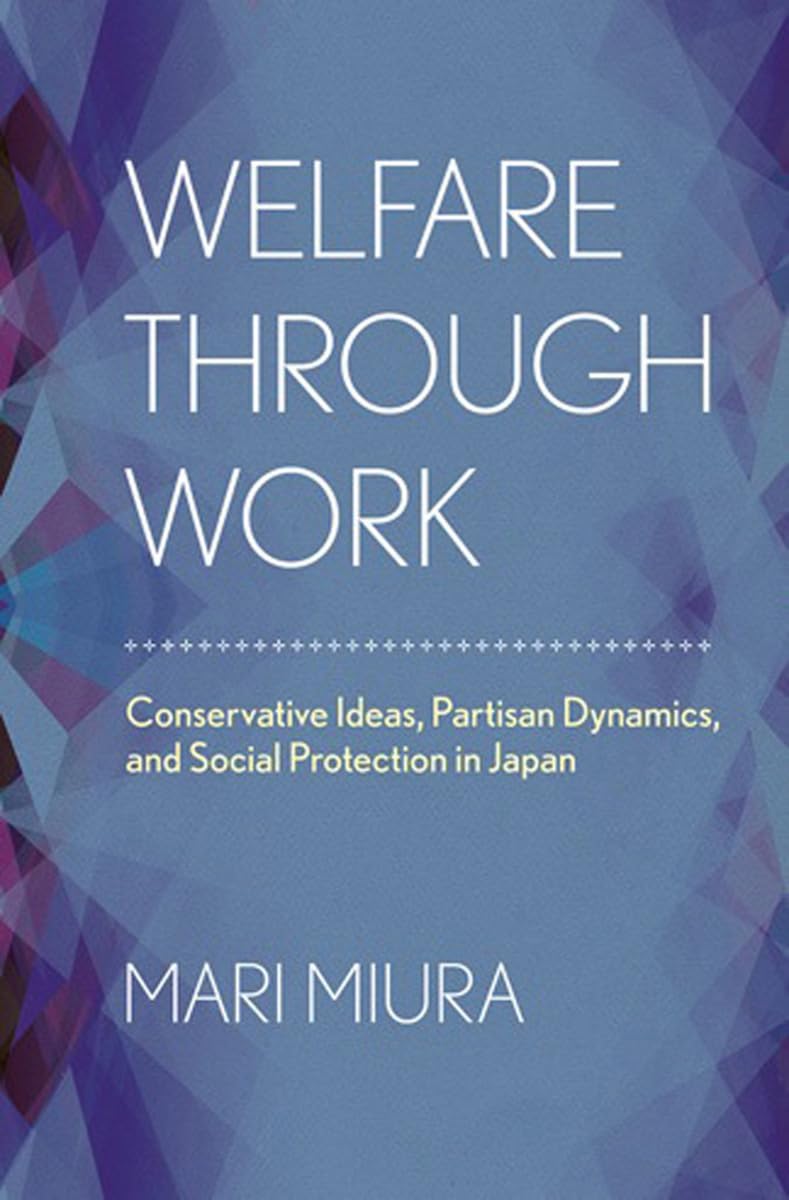
High economic growth and relatively equitable distribution were among the most conspicuous characteristics of the postwar Japanese political economy. The lure of the Japanese model, however, has faded since the 1990s. Growth is in short supply and equality a thing of the past. In Welfare through Work, Mari Miura looks in depth at Japans social protection system as a factor in the contemporary malaise of the Japanese political economy.The Japanese social protection system should be understood as a system of 'welfare through work,' Miura suggests, because employment protection has functionally substituted for income maintenance. A gendered dual system in the labor market allowed a high degree of labor market flexibility, which enabled Japan to achieve high employment rates as well as strong legal protections for regular workers. In recent years, conservatives gradually replaced the productivism and cooperatism that had resulted from earlier party politics with neoliberalism, which, in turn, hampered the effectiveness of the welfare through work system. In Miuras view, the dynamics of partisan competition fostered ideational renewal, just as the political visions and ideologies of the governing party strongly affected the design of the social protection system. In the scenario Miura describes, the partisan dynamics since the 1990s resulted in the policy change that further undermined the social protection system, and the ensuing disruption has been felt throughout Japan.
⚠️ WARNING (California Proposition 65):
This product may contain chemicals known to the State of California to cause cancer,
birth defects, or other reproductive harm.
For MAP (Minimum Advertised Price) violations and Intellectual Property (IP) or Trademark concerns, please contact:
support@ergodebooks.com
⚠️ California Proposition 65 Warning: Some products sold on this website may expose you to chemicals known to the State of California to cause cancer, birth defects, or other reproductive harm. For more information, visit www.P65Warnings.ca.gov.