
Title
We'Ll Always Have Paris: American Tourists In France Since 1930
Sold by Ergodebooks, an authorized reseller.
Returns accepted within 30 days | support@ergodebooks.com
Shipping Information
- Free Standard Shipping — United States only
- Processing Time: 3–5 business days
- Estimated Delivery: 6–10 business days after dispatch
- Double-boxed, fully insured & discreetly packaged
- Tracking number sent via email once dispatched
Returns & Refund
Returns accepted within 30 days of delivery.
Damaged or Defective Item
Free return shipping + replacement or full refund
Wrong Item Received
Free return shipping + replacement or full refund
Change of Mind
Return shipping at customer's expense · 25% restocking fee applies
Payment Option

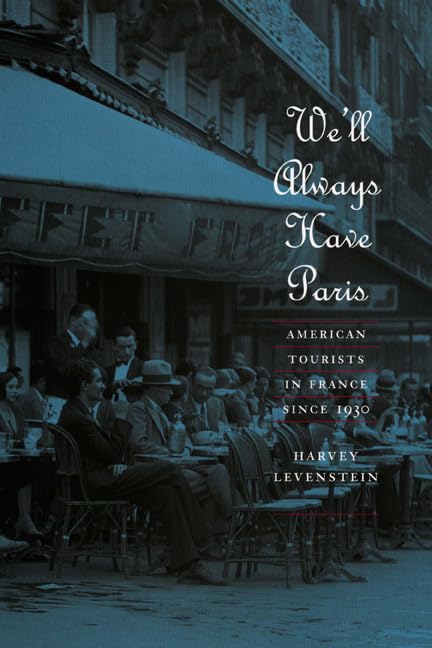
For Much Of The Twentieth Century, Americans Had A Love/Hate Relationship With France. While Many Admired Its Beauty, Culture, Refinement, And Famed Joie De Vivre, Others Thought Of It As A Dilapidated Country Populated By Foulsmelling, Meanspirited Antiamericans Driven By A Keen Desire To Part Tourists From Their Money. We'Ll Always Have Paris Explores How Both Images Came To Flourish In The United States, Often In The Minds Of The Same People.Harvey Levenstein Takes Us Back To The 1930S, When, Despite The Great Depression, France Continued To Be The Stomping Ground Of The Social Elite Of The Eastern Seaboard. After World War Ii, Wealthy And Famous Americans Returned To The Country In Droves, Helping To Revive Its Old Image As A Wellspring Of Sophisticated And Sybaritic Pleasures. At The Same Time, Though, Thanks In Large Part To Communist And Gaullist Campaigns Against U.S. Power, A Growing Sensitivity To French Antiamericanism Began To Color Tourists' Experiences There, Strengthening The Negative Images Of The French That Were Already Embedded In American Culture. But As The Century Drew On, The Traditional Positive Images Were Revived, As Many Americans Again Developed An Appreciation For France'S Cuisine, Art, And Urban And Rustic Charms.Levenstein, In His Colorful, Anecdotal Style, Digs Into Personal Correspondence, Journalism, And Popular Culture To Shape A Story Of One Nation'S Relationship To Another, Giving Vivid Play To Americans' Changing Response To Such Things As France'S Reputation For Sexual Freedom, Haute Cuisine, High Fashion, And Racial Tolerance. He Puts This Tumultuous Coupling Of France And The United States In Historical Perspective, Arguing That While Some In Congress Say We May No Longer Have French Fries, Others, Like Humphrey Bogart In Casablanca, Know They Will Always Have Paris, And France, To Enjoy And Remember.
⚠️ WARNING (California Proposition 65):
This product may contain chemicals known to the State of California to cause cancer, birth defects, or other reproductive harm.
For more information, please visit www.P65Warnings.ca.gov.
- Q: What is the page count of the book? A: The book contains three hundred sixty-eight pages. This length allows for a comprehensive exploration of American tourists' relationships with France.
- Q: What type of binding does this book have? A: This book features a hardcover binding. Hardcover books are known for their durability and premium feel.
- Q: What are the dimensions of the book? A: The dimensions are six inches in length, one point two inches in width, and nine point zero two inches in height. These measurements make it a suitable size for easy handling.
- Q: Who is the author of this book? A: The author is Harvey Levenstein. He is known for his engaging narrative style and thorough historical research.
- Q: What genre does this book belong to? A: The book falls under the historical non-fiction genre. It examines the cultural dynamics between Americans and France throughout the twentieth century.
- Q: What themes are explored in this book? A: Key themes include cultural admiration, anti-American sentiments, and the evolution of perceptions about France. The book highlights the complex relationship shaped by historical events.
- Q: How should I read this book? A: You can read this book at your own pace, as it is suitable for general audiences interested in history and culture. It is accessible for adults and older teens.
- Q: Is this book suitable for academic use? A: Yes, this book is suitable for academic use. It provides valuable insights and references for studies related to American and French cultural history.
- Q: Can this book be used for group discussions? A: Yes, it can be used for group discussions. Its rich content encourages dialogue about cultural perceptions and historical context.
- Q: How should I store this hardcover book? A: Store the book upright on a shelf in a cool, dry place. This will help prevent damage to the cover and pages.
- Q: Does this book have any specific care instructions? A: No, there are no specific care instructions for this book. However, keeping it away from moisture will help maintain its condition.
- Q: Is this book safe for children? A: Yes, the book is appropriate for older teens and adults. It discusses complex themes that may not be suitable for younger children.
- Q: What if the book arrives damaged? A: If the book arrives damaged, you should contact the seller for a return or exchange. Most sellers have policies in place for such issues.
- Q: Can I return this book if I change my mind? A: Yes, you can typically return the book within a specified period if you change your mind, depending on the retailer's return policy.
- Q: Is there a warranty for this book? A: No, there is no warranty for this book. Books typically do not come with warranties like electronics.
- Q: How can I find more books by Harvey Levenstein? A: You can search online bookstores or libraries for more works by Harvey Levenstein. His other titles often explore similar historical themes.