
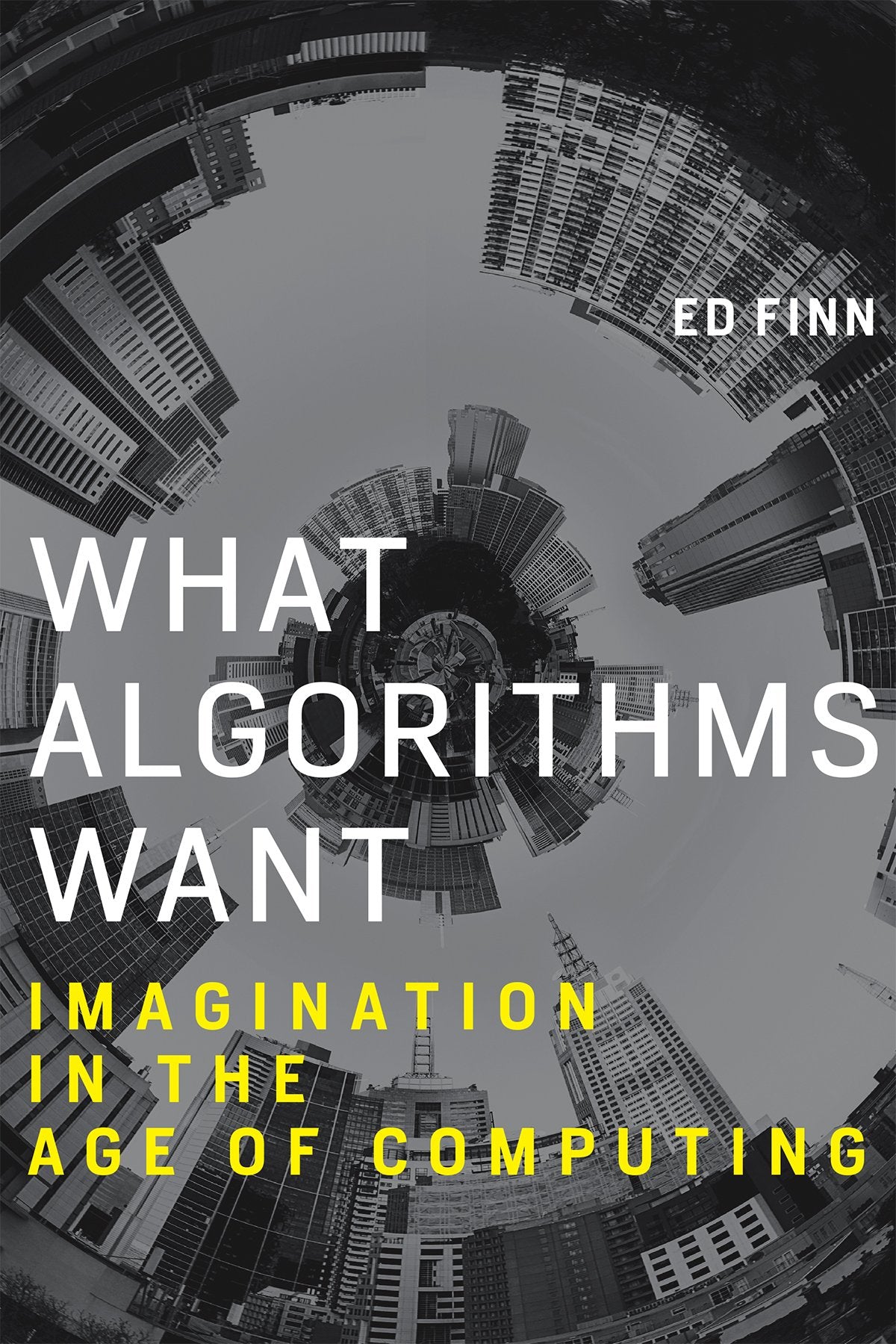
Title
What Algorithms Want: Imagination In The Age Of Computing
Sold by Ergodebooks, an authorized reseller.
Returns accepted within 30 days | support@ergodebooks.com
Shipping Information
- Free Standard Shipping — United States only
- Processing Time: 3–5 business days
- Estimated Delivery: 6–10 business days after dispatch
- Double-boxed, fully insured & discreetly packaged
- Tracking number sent via email once dispatched
Returns & Refund
Returns accepted within 30 days of delivery.
Damaged or Defective Item
Free return shipping + replacement or full refund
Wrong Item Received
Free return shipping + replacement or full refund
Change of Mind
Return shipping at customer's expense · 25% restocking fee applies
Payment Option

The Gap Between Theoretical Ideas And Messy Reality, As Seen In Neal Stephenson, Adam Smith, And Star Trek.We Depend Onwe Believe Inalgorithms To Help Us Get A Ride, Choose Which Book To Buy, Execute A Mathematical Proof. It'S As If We Think Of Code As A Magic Spell, An Incantation To Reveal What We Need To Know And Even What We Want. Humans Have Always Believed That Certain Invocationsthe Marriage Vow, The Shaman'S Cursedo Not Merely Describe The World But Make It. Computation Casts A Cultural Shadow That Is Shaped By This Long Tradition Of Magical Thinking. In This Book, Ed Finn Considers How The Algorithmin Practical Terms, A Method For Solving A Problemhas Its Roots Not Only In Mathematical Logic But Also In Cybernetics, Philosophy, And Magical Thinking.Finn Argues That The Algorithm Deploys Concepts From The Idealized Space Of Computation In A Messy Reality, With Unpredictable And Sometimes Fascinating Results. Drawing On Sources That Range From Neal Stephenson'S Snow Crash To Diderot'S Encyclopdie, From Adam Smith To The Star Trek Computer, Finn Explores The Gap Between Theoretical Ideas And Pragmatic Instructions. He Examines The Development Of Intelligent Assistants Like Siri, The Rise Of Algorithmic Aesthetics At Netflix, Ian Bogost'S Satiric Facebook Game Cow Clicker, And The Revolutionary Economics Of Bitcoin. He Describes Google'S Goal Of Anticipating Our Questions, Uber'S Cartoon Maps And Black Box Accounting, And What Facebook Tells Us About Programmable Value, Among Other Things.If We Want To Understand The Gap Between Abstraction And Messy Reality, Finn Argues, We Need To Build A Model Of Algorithmic Reading And Scholarship That Attends To Process, Spearheading A New Experimental Humanities.
⚠️ WARNING (California Proposition 65):
This product may contain chemicals known to the State of California to cause cancer, birth defects, or other reproductive harm.
For more information, please visit www.P65Warnings.ca.gov.
- Q: What is the page count of the book? A: The book has two hundred fifty-seven pages. This length provides a comprehensive exploration of algorithms and their cultural impact.
- Q: What is the binding type of this book? A: This book is hardcover. The durable binding ensures longevity and makes it suitable for frequent use.
- Q: What are the dimensions of the book? A: The book measures six and a half inches in length, one inch in width, and nine and a half inches in height. These dimensions make it easy to handle and store.
- Q: How do I approach reading this book? A: You can read this book at your own pace. It’s suitable for anyone interested in algorithms, technology, or cultural studies.
- Q: Is this book suitable for beginners? A: Yes, this book is suitable for beginners. It introduces complex ideas in an accessible manner, making it a great starting point.
- Q: What age group is this book appropriate for? A: This book is appropriate for adults and older teens. It discusses advanced concepts in algorithms and cultural implications.
- Q: How should I store this book? A: Store the book upright on a shelf to prevent damage. Keep it in a dry place to maintain the integrity of the pages.
- Q: Can I lend this book to others? A: Yes, you can lend this book. Just ensure it is returned in good condition to maintain its quality.
- Q: How do I clean the book's cover? A: To clean the cover, use a soft, dry cloth. Avoid using water or cleaning solutions to prevent damage.
- Q: What if the book arrives damaged? A: If the book arrives damaged, contact the seller for return options. Most sellers will provide a replacement or refund.
- Q: How can I find similar books? A: You can find similar books by searching for titles in the algorithms or technology category. Look for recommendations online or at your local bookstore.
- Q: Is this book a good resource for academic study? A: Yes, this book is a valuable resource for academic study. It combines theory and practical applications relevant to contemporary discussions.
- Q: Are there any visual aids in the book? A: No, this book does not contain visual aids. It focuses on text to convey complex concepts.
- Q: What topics are covered in this book? A: The book covers algorithms, their cultural significance, and various applications in technology and society. It draws from diverse sources.
- Q: Who is the author of this book? A: The author of this book is Ed Finn. He is known for his insights into technology and culture.