If you have any questions, you are always welcome to contact us. We'll get back to you as soon as possible, withing 24 hours on weekdays.
Customer service
All questions about your order, return and delivery must be sent to our customer service team by e-mail at yourstore@yourdomain.com
Sale & Press
If you are interested in selling our products, need more information about our brand or wish to make a collaboration, please contact us at press@yourdomain.com
Help
If you have any questions, you are always welcome to contact us. We'll get back to you as soon as possible, withing 24 hours on weekdays.
Customer service
All questions about your order, return and delivery must be sent to our customer service team by e-mail at yourstore@yourdomain.com
Sale & Press
If you are interested in selling our products, need more information about our brand or wish to make a collaboration, please contact us at press@yourdomain.com
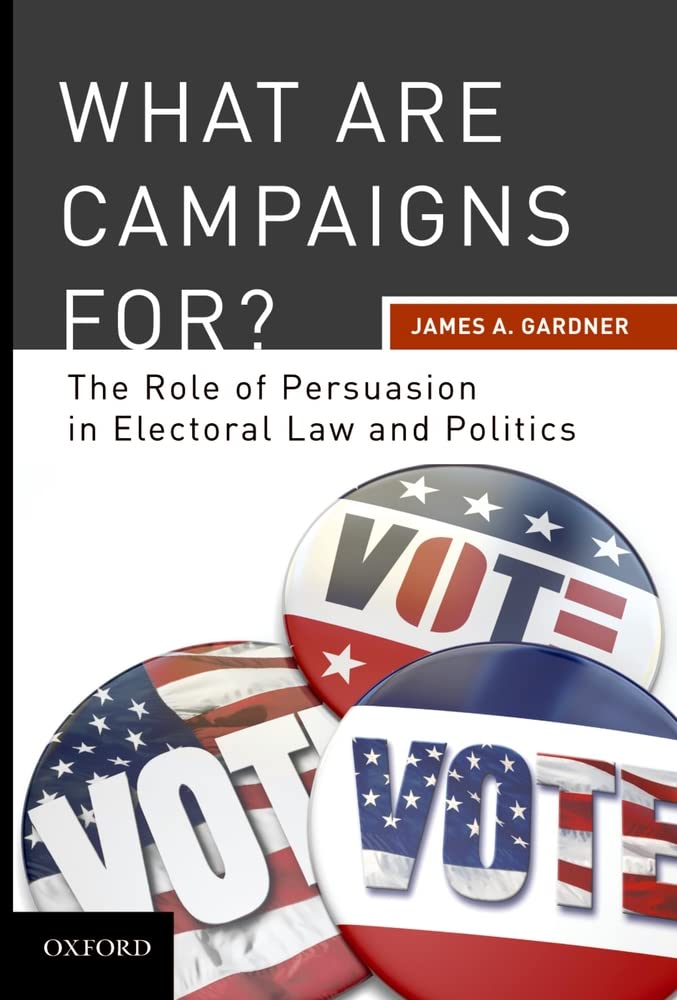
Election campaigns ought to be serious occasions in the life of a democratic polity. For citizens of a democracy, an election is a time to take stockto reexamine our beliefs; to review our understanding of our own interests; to ponder the place of those interests in the larger social order; and to contemplate, and if necessary to revise, our understanding of how our commitments are best translated into governmental policyor so we profess to believe.Americans, however, are haunted by the fear that our election campaigns fall far short of the ideal to which we aspire. The typical modern American election campaign seems crass, shallow, and unengaging. The arena of our democratic politics seems to lie in an uncomfortable chasm between our political ideals and everyday reality.What Are Campaigns For? is a multidisciplinary work of legal scholarship that examines the role of legal institutions in constituting the disjunction between political ideal and reality. The book explores the contemporary American ideal of democratic citizenship in election campaigns by tracing it to its historical sources, documenting its thorough infiltration of legal norms, evaluating its feasibility in light of the findings of empirical social science, and testing it against the requirements of democratic theory.
⚠️ WARNING (California Proposition 65):
This product may contain chemicals known to the State of California to cause cancer,
birth defects, or other reproductive harm.
For MAP (Minimum Advertised Price) violations and Intellectual Property (IP) or Trademark concerns, please contact:
support@ergodebooks.com
⚠️ California Proposition 65 Warning: Some products sold on this website may expose you to chemicals known to the State of California to cause cancer, birth defects, or other reproductive harm. For more information, visit www.P65Warnings.ca.gov.