
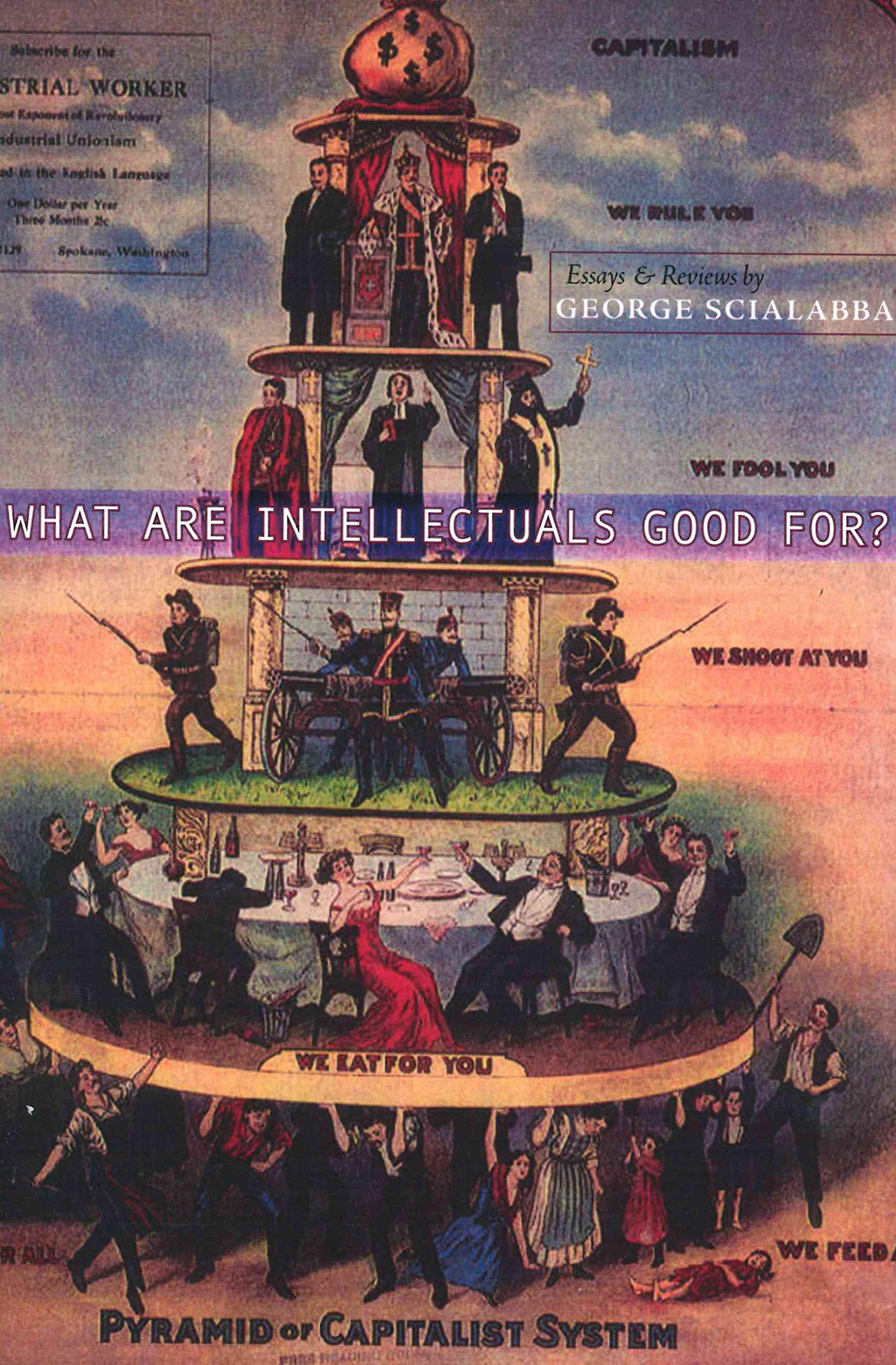
Title
What Are Intellectuals Good For?
Sold by Ergodebooks, an authorized reseller.
Returns accepted within 30 days | support@ergodebooks.com
Shipping Information
- Free Standard Shipping — United States only
- Processing Time: 3–5 business days
- Estimated Delivery: 6–10 business days after dispatch
- Double-boxed, fully insured & discreetly packaged
- Tracking number sent via email once dispatched
Returns & Refund
Returns accepted within 30 days of delivery.
Damaged or Defective Item
Free return shipping + replacement or full refund
Wrong Item Received
Free return shipping + replacement or full refund
Change of Mind
Return shipping at customer's expense · 25% restocking fee applies
Payment Option

Nonfiction. Politics. Literary Criticism. What Are Intellectuals Good For? Appraises A Large Gallery Of Twentiethcentury Intellectuals, Including Randolph Bourne, Dwight Macdonald, Lionel Trilling, Irving Howe, Isaiah Berlin, William F. Buckley Jr., Allan Bloom, Richard Rorty, Stanley Fish, Christopher Lasch, Edward Said, Ellen Willis, And Christopher Hitchens. It Also Includes Two Essays On Intellectuals And Politics And Concludes With One On Moral Consequences Of Our Species Cyberevolution. George Scialabba, A Columnist For The Boston Globe And Contributor To The Boston Review, Dissent, The American Prospect, And The Nation, Is Admired By A Circle Of Discerning Readers. What Are Intellectuals Good For?, His Second Essay Collection, Brings His Voice To A Larger Audience. Scott Mclemee, The Intellectual Affairs Columnist Of Insidehighered, Has Contributed A Foreword.
⚠️ WARNING (California Proposition 65):
This product may contain chemicals known to the State of California to cause cancer, birth defects, or other reproductive harm.
For more information, please visit www.P65Warnings.ca.gov.
- Q: How many pages does 'What Are Intellectuals Good For?' have? A: This book has two hundred fifty-two pages. It's a comprehensive collection that explores the significance of various intellectuals throughout the twentieth century.
- Q: What is the binding type of this book? A: The binding type is paperback. This makes it lightweight and easy to handle, perfect for casual reading.
- Q: Who is the author of 'What Are Intellectuals Good For?' A: The author is George Scialabba. He is known for his insightful commentary on politics and literature.
- Q: What are the dimensions of this book? A: The dimensions are six inches wide, one inch thick, and eight point seventy-five inches tall. This size is typical for paperback nonfiction books.
- Q: Is this book suitable for a general audience? A: Yes, it is suitable for a general audience. The content appeals to those interested in politics, literary criticism, and intellectual discourse.
- Q: How do I read 'What Are Intellectuals Good For?' A: You can read it like any other book. Just open it, and start from the first page to understand the author's insights on intellectuals.
- Q: Is this book appropriate for students? A: Yes, it is appropriate for students. It provides critical perspectives that can enhance their understanding of political and social issues.
- Q: Can I gift this book to someone interested in literature? A: Yes, it's a great gift for anyone interested in literature and politics. The essays are thought-provoking and encourage discussion.
- Q: What should I do to keep this book in good condition? A: To keep it in good condition, store it in a dry place and avoid exposure to direct sunlight. Handle it gently to preserve the binding.
- Q: Is there any specific care needed for a paperback book? A: No special care is needed, but it's best to avoid bending the cover or pages. Keep it away from moisture to prevent damage.
- Q: How should I store this book when not reading? A: Store it upright on a bookshelf or lay it flat in a drawer. This prevents warping and keeps the pages intact.
- Q: What if the book arrives damaged? A: If the book arrives damaged, you should contact the seller for a return or exchange. Most sellers have policies in place for such situations.
- Q: Is there a warranty for this book? A: No, books typically do not come with a warranty. However, check the retailer's return policy for any issues.
- Q: Are there any essays about politics in this book? A: Yes, the book includes two essays specifically addressing intellectuals and politics. They provide insights into the relationship between the two.
- Q: How does this book compare to other nonfiction titles? A: This book stands out for its focused exploration of intellectuals in the twentieth century, unlike broader nonfiction that covers multiple topics.
- Q: Who has contributed a foreword to this book? A: Scott McLemee, the Intellectual Affairs columnist of InsideHigherEd, has contributed a foreword. His insights enhance the book's context.