
Title
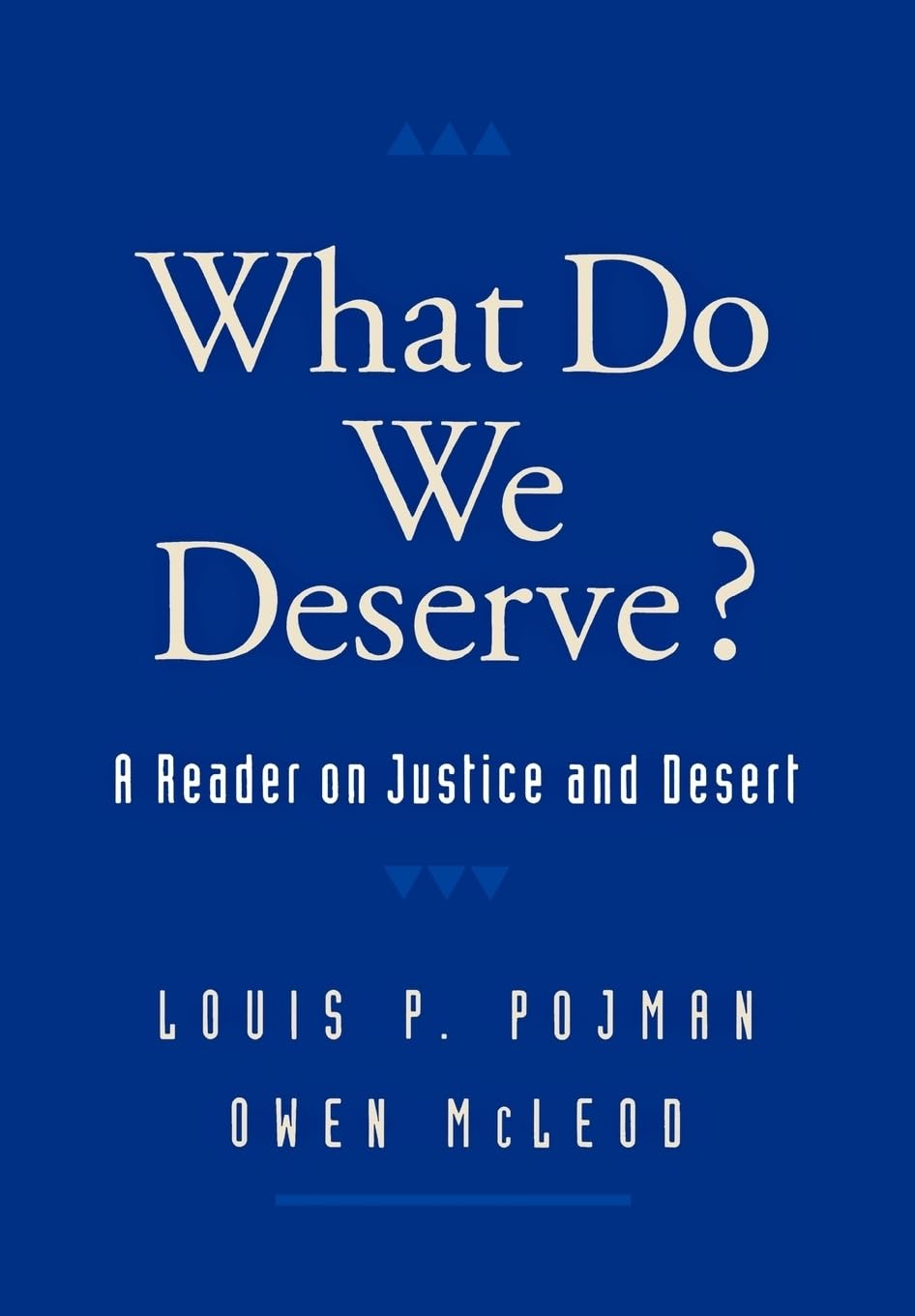
What Do We Deserve?: A Reader on Justice and Desert (Routledge Advances in International),Used
Sold by Ergodebooks, an authorized reseller.
Returns accepted within 30 days | support@ergodebooks.com
Shipping Information
- Free Standard Shipping — United States only
- Processing Time: 3–5 business days
- Estimated Delivery: 6–10 business days after dispatch
- Double-boxed, fully insured & discreetly packaged
- Tracking number sent via email once dispatched
Returns & Refund
Returns accepted within 30 days of delivery.
Damaged or Defective Item
Free return shipping + replacement or full refund
Wrong Item Received
Free return shipping + replacement or full refund
Change of Mind
Return shipping at customer's expense · 25% restocking fee applies
Payment Option

The concept of desert, which once enjoyed a central place in political and ethical theory, has been relegated to the margins of much of contemporary theory, if not excluded altogether. Recently a renewed interest in the topic has emerged, and several philosophers have argued that the notion merits a more central place in political and ethical theory. Some of these philosophers contend that justice exists to the extent that people receive exactly what they deserve, while others argue that desert should replace such considerations as rights, need, and equality as the basis for distributions. Still others argue that morality involves a fitting match between one's moral character and a degree of happiness. All of these positions have encountered opposition from egalitarians, libertarians, and those who are skeptical about the coherence of the concept of desert.The first anthology of its kind, What Do We Deserve? is a balanced collection of readings that brings sharply opposing positions and arguments together and stimulates debate over the meaning and significance of desert in current thought. The book begins with eight classical readings on desert (by Plato, Aristotle, Hobbes, Smith, Kant, Mill, Sidgwick, and Ross), and later turns to contemporary interpretations of the issue. The selections examine the concept itself, analyze its relationship to the ideas of freedom and responsibility, engage in the debate between John Rawls and his critics on the merits of desert, and, finally, study the wider role and significance of desert in political and ethical theory.
⚠️ WARNING (California Proposition 65):
This product may contain chemicals known to the State of California to cause cancer, birth defects, or other reproductive harm.
For more information, please visit www.P65Warnings.ca.gov.