
Title
What Has Athens to Do with Jerusalem?: Timaeus and Genesis in Counterpoint (Volume 21) (Thomas Spencer Jerome Lectures),New
Sold by Ergodebooks, an authorized reseller.
Returns accepted within 30 days | support@ergodebooks.com
Shipping Information
- Free Standard Shipping — United States only
- Processing Time: 3–5 business days
- Estimated Delivery: 6–10 business days after dispatch
- Double-boxed, fully insured & discreetly packaged
- Tracking number sent via email once dispatched
Returns & Refund
Returns accepted within 30 days of delivery.
Damaged or Defective Item
Free return shipping + replacement or full refund
Wrong Item Received
Free return shipping + replacement or full refund
Change of Mind
Return shipping at customer's expense · 25% restocking fee applies
Payment Option

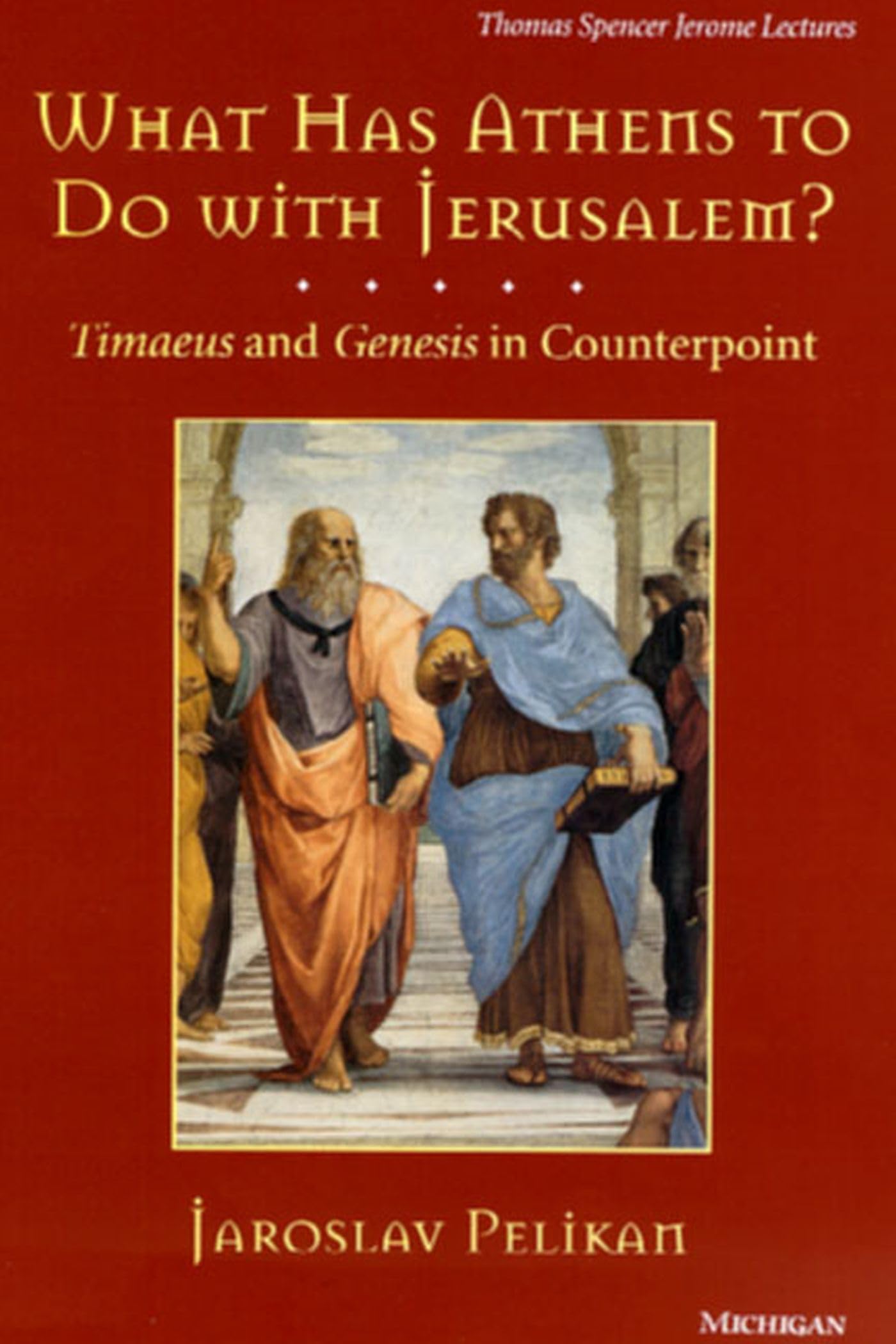
The debate about evolution and creationism is striking evidence of the tensions between biblical and philosophicalscientific explanations of the origins of the universe. For most of the past twenty centuries, important historical context for the debate has been supplied by the relation (or 'counterpoint') between two monumental texts: Plato's Timaeus and the Book of Genesis.In What Has Athens to Do with Jerusalem?, Jaroslav Pelikan examines the origins of this counterpoint. He reviews the central philosophical issues of origins as posed in classical Rome by Lucretius, and he then proceeds to an examination of Timaeus and Genesis, with Timaeus' Plato representing Athens and Genesis' Moses representing Jerusalem. He then follows the three most important case studies of the counterpointin the Jewish philosophical theology of Alexandria, in the Christian thought of Constantinople, and in the intellectual foundations of the Western Middles Ages represented by Catholic Rome, where Timaeus would be the only Platonic dialogue in general circulation.Whatever Plato may have intended originally in writing Timaeus, it has for most of the intervening period been read in the light of Genesis. Conversely, Genesis has been known, not in the original Hebrew, but in Greek and Latin translations that were seen to bear a distinct resemblance to one another and to the Latin version of Timaeus. Pelikan's study leads to original findings that deal with Christian doctrine in the period of the church fathers, including the Three Cappadocians (Basil of Caesarea, Gregory of Nazianzus, and Gregory of Nyssa) in the East, and in the West, Ambrose, Augustine, and Boethius. All of these vitally important authors addressed the problem of the 'counterpoint,' and neither they nor these primary texts can become fully intelligible without attention to the central issues being explored here.What Has Athens to Do with Jerusalem? will be of interest to historians, theologians, and philosophers and to anyone with interest in any of the religious traditions addressed herein.
⚠️ WARNING (California Proposition 65):
This product may contain chemicals known to the State of California to cause cancer, birth defects, or other reproductive harm.
For more information, please visit www.P65Warnings.ca.gov.