
Title
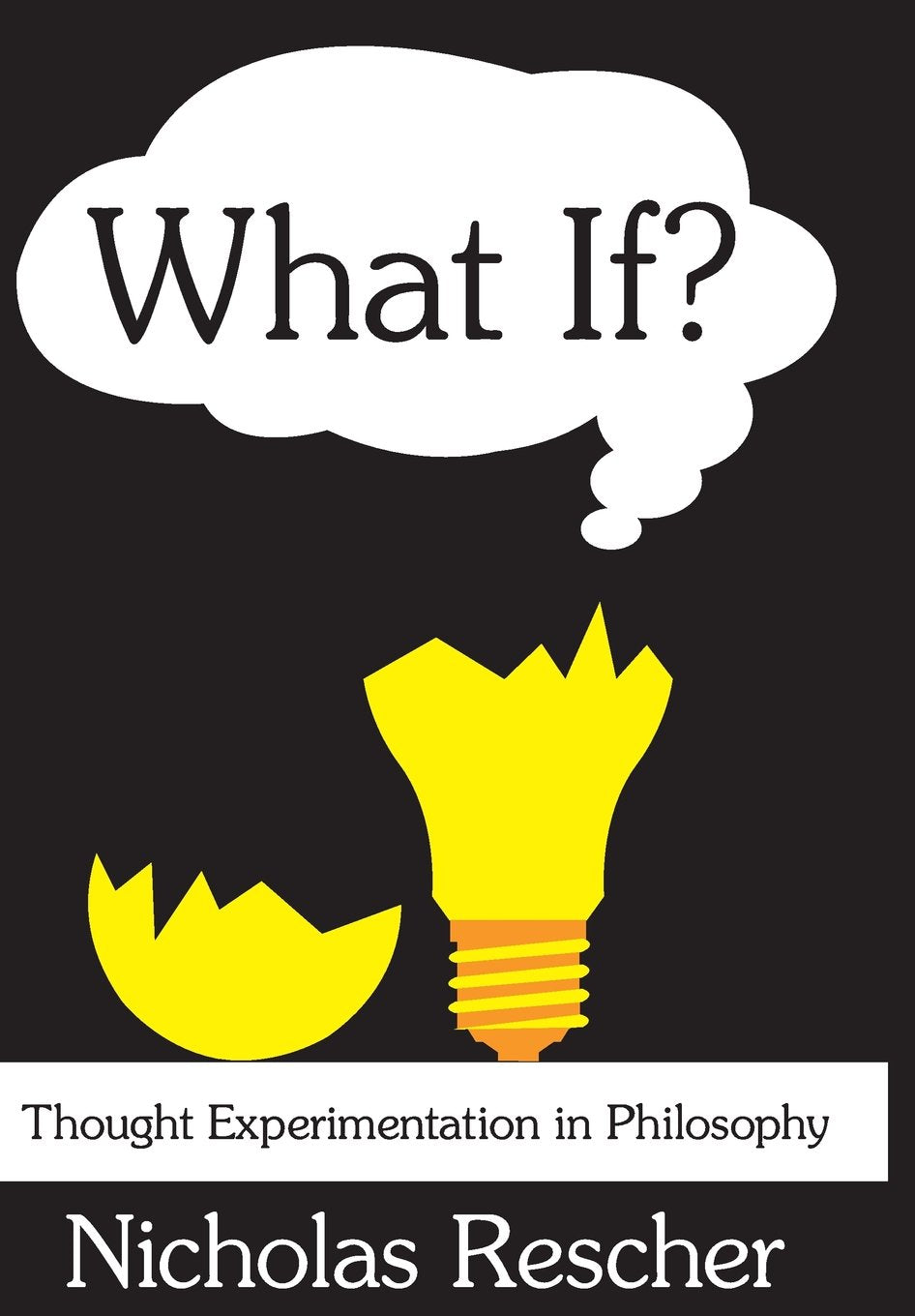
What If?: Thought Experimentation in Philosophy,Used
Sold by Ergodebooks, an authorized reseller.
Returns accepted within 30 days | support@ergodebooks.com
Shipping Information
- Free Standard Shipping — United States only
- Processing Time: 3–5 business days
- Estimated Delivery: 6–10 business days after dispatch
- Double-boxed, fully insured & discreetly packaged
- Tracking number sent via email once dispatched
Returns & Refund
Returns accepted within 30 days of delivery.
Damaged or Defective Item
Free return shipping + replacement or full refund
Wrong Item Received
Free return shipping + replacement or full refund
Change of Mind
Return shipping at customer's expense · 25% restocking fee applies
Payment Option

Thought experimentation has been a staple of philosophical methodology since classical antiquity, when Xenophanes of Colophon speculated that if horses had gods, they would be equine in form. Nicholas Rescher's What If? undertakes a systematic survey of the role and utility of thought experiments in philosophy. After surveying the historical issues, Rescher examines the principles involved, and explains the conditions under which thought experimentation can validly yield instructive results in philosophy. The reader gains understanding of the differences between scientific and philosophical experiments.What If? begins by examining the nature of thought experiments. It presents an overview of how thought experiments have figured in natural science and in historical studies, before moving on to examine how they function as an instrument of philosophical inquiry. After examining thought experiments from the preSocratics to the present day, Rescher turns from history to analysis, and examines the modes of reasoning involved in the use of speculative hypotheses in philosophical problem solving. He shows the limitations of speculative ontology, showing that thought experimentation can lead readily to paradox in a way that increasingly diminishes its usefulness. The book concludes by arguing and illustrating how and when it becomes pointless to push speculation, or thought experimentation beyond the limits of intelligibility and cogent sense.Among the principal features of Rescher's book is its elaborate analysis of the appropriate conditions for philosophical thought experimentation. Its cardinal thesis is that there indeed are limits to the appropriateness of this important methodological resource and that transgressing these limits destroys the prospect of drawing any valid lessons for the philosophical enterprise. What If? will be of interest to philosophers, students of philosophy, and theorists of logic and reasoning.
⚠️ WARNING (California Proposition 65):
This product may contain chemicals known to the State of California to cause cancer, birth defects, or other reproductive harm.
For more information, please visit www.P65Warnings.ca.gov.