If you have any questions, you are always welcome to contact us. We'll get back to you as soon as possible, withing 24 hours on weekdays.
Customer service
All questions about your order, return and delivery must be sent to our customer service team by e-mail at yourstore@yourdomain.com
Sale & Press
If you are interested in selling our products, need more information about our brand or wish to make a collaboration, please contact us at press@yourdomain.com
Help
If you have any questions, you are always welcome to contact us. We'll get back to you as soon as possible, withing 24 hours on weekdays.
Customer service
All questions about your order, return and delivery must be sent to our customer service team by e-mail at yourstore@yourdomain.com
Sale & Press
If you are interested in selling our products, need more information about our brand or wish to make a collaboration, please contact us at press@yourdomain.com
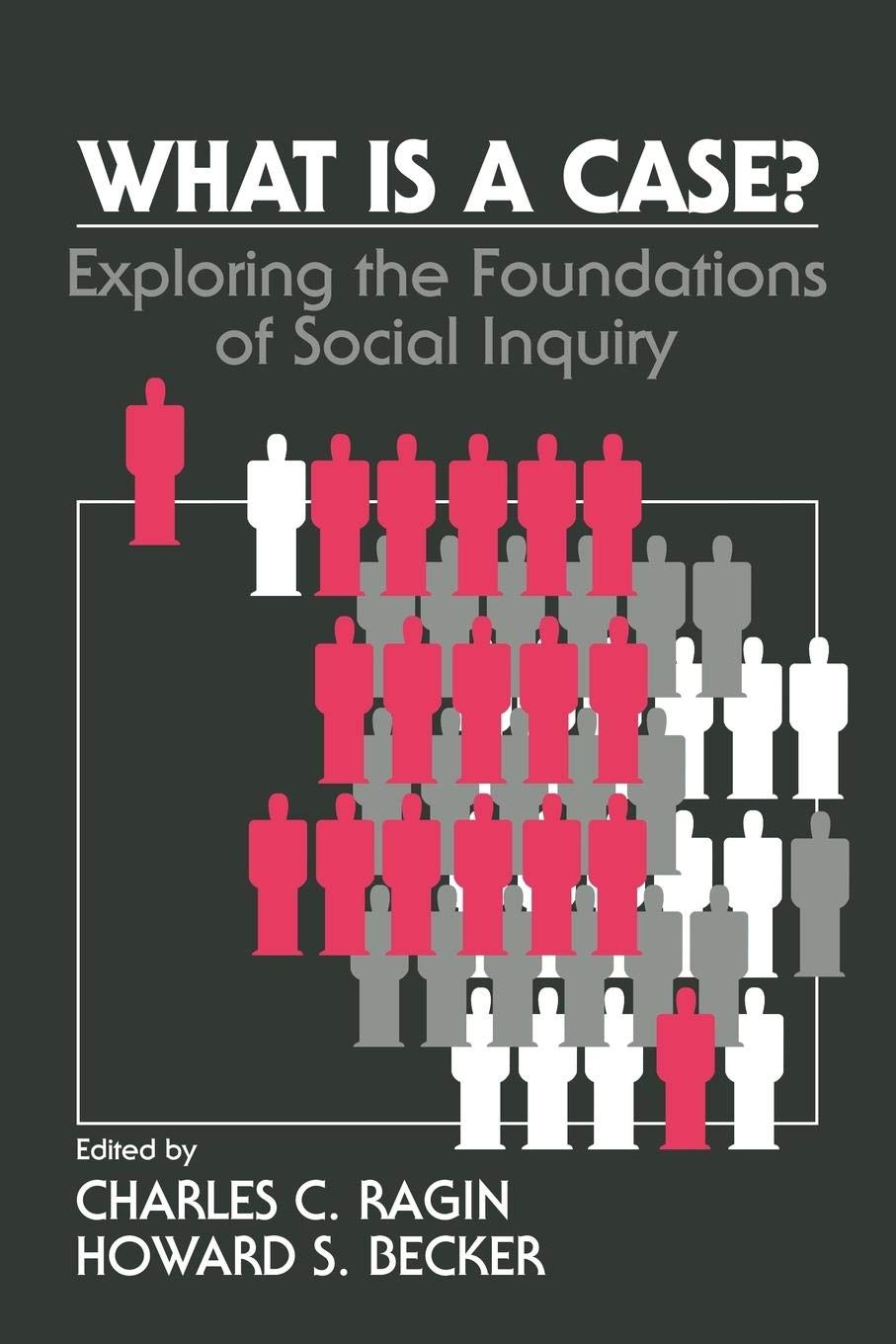
The concept of the case is a basic feature of social science research and yet many questions about how a case should be defined, how cases should be selected and what the criteria are for a good case or set of cases are far from settled. Are cases preexisting phenomena that need only be identified by the researcher before analysis can begin? Or are cases constructed during the course of research, only after analysis has revealed which features should be considered defining characteristics? Will cases be selected randomly from the total pool of available cases? Or will cases be chosen because of their unique qualities? These questions and many others are addressed by the contributors to this volume as they probe the nature of the case and the ways in which different understandings of what a case is affect the conduct and the results of research. The contributors find a good deal of common ground, and yet they also express strikingly different views on many key points. As Ragin argues and the contributions demonstrate, the work of any given researcher is often characterized by some hybrid of these basic approaches, and it is important to understand that most research involves multiple definitions and uses of cases, as both specific empirical phenomena and as general theoretical categories.
⚠️ WARNING (California Proposition 65):
This product may contain chemicals known to the State of California to cause cancer,
birth defects, or other reproductive harm.
For MAP (Minimum Advertised Price) violations and Intellectual Property (IP) or Trademark concerns, please contact:
support@ergodebooks.com
⚠️ California Proposition 65 Warning: Some products sold on this website may expose you to chemicals known to the State of California to cause cancer, birth defects, or other reproductive harm. For more information, visit www.P65Warnings.ca.gov.