
Title
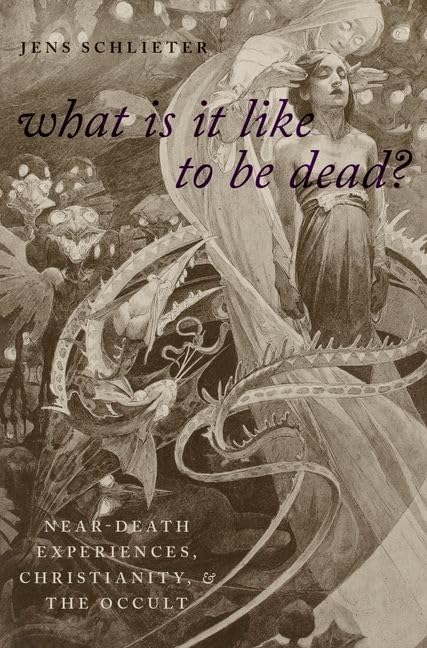
What Is it Like to Be Dead?: NearDeath Experiences, Christianity, and the Occult (Oxford Studies in Western Esotericism),Used
Sold by Ergodebooks, an authorized reseller.
Returns accepted within 30 days | support@ergodebooks.com
Shipping Information
- Free Standard Shipping — United States only
- Processing Time: 3–5 business days
- Estimated Delivery: 6–10 business days after dispatch
- Double-boxed, fully insured & discreetly packaged
- Tracking number sent via email once dispatched
Returns & Refund
Returns accepted within 30 days of delivery.
Damaged or Defective Item
Free return shipping + replacement or full refund
Wrong Item Received
Free return shipping + replacement or full refund
Change of Mind
Return shipping at customer's expense · 25% restocking fee applies
Payment Option

Studies of "neardeath experiences" show that such experiences not only provide a new certainty of postmortem survival, but often function as a call for fundamental change in the present. Reported aftereffects encompass changes in attitudes, beliefs, and life orientation. It is said that "experiencers" have lost their fear of death, found their purpose in life, or become "more spiritual." The experience often declared to be indescribable, inexplicable, or ineffable is held by many to be the most important of their lives and, moreover, the best proof available for matters "transcendent."In What Is It Like To Be Dead?, Jens Schlieter argues that to understand recent testimonies of neardeath experiences, we need to be aware of the history of innumerable reports of earlier neardeath experiences that were communicated and handed down in scores of newspapers, journals, and books. Collections of such testimonies have been published for more than 150 years, accompanied by attempts to classify and interpret them. Schlieter analyzes the religious relevance of neardeath experiences for the experiencers themselves, but also for the growing audience attracted by these testimonies. Neardeath experiences bear ontological, epistemic, intersubjective, and moral significance, ranging from reassurance that religious experience is still possible to claims that they initiate a new spiritual orientation in life, or offer evidence for the transcultural validity of afterlife beliefs. This study is the first to document and analyze four centuries of neardeath testimonies before the codification of the genre in the 1970s, offering the first full account of the modern genealogy of "neardeath experiences."
⚠️ WARNING (California Proposition 65):
This product may contain chemicals known to the State of California to cause cancer, birth defects, or other reproductive harm.
For more information, please visit www.P65Warnings.ca.gov.