If you have any questions, you are always welcome to contact us. We'll get back to you as soon as possible, withing 24 hours on weekdays.
Customer service
All questions about your order, return and delivery must be sent to our customer service team by e-mail at yourstore@yourdomain.com
Sale & Press
If you are interested in selling our products, need more information about our brand or wish to make a collaboration, please contact us at press@yourdomain.com
Help
If you have any questions, you are always welcome to contact us. We'll get back to you as soon as possible, withing 24 hours on weekdays.
Customer service
All questions about your order, return and delivery must be sent to our customer service team by e-mail at yourstore@yourdomain.com
Sale & Press
If you are interested in selling our products, need more information about our brand or wish to make a collaboration, please contact us at press@yourdomain.com
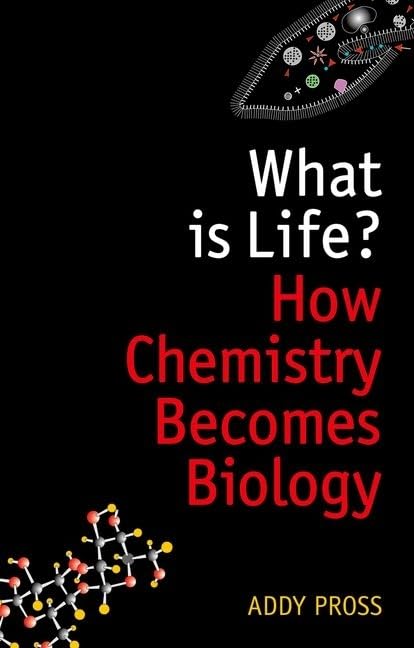
Seventy Years Ago, Erwin Schrodinger Posed A Profound Question: 'What Is Life, And How Did It Emerge From Nonlife?' This Problem Has Puzzled Biologists And Physical Scientists Ever Since.Living Things Are Hugely Complex And Have Unique Properties, Such As Selfmaintenance And Apparently Purposeful Behaviour Which We Do Not See In Inert Matter. So How Does Chemistry Give Rise To Biology? What Could Have Led The First Replicating Molecules Up Such A Path? Now, Developments In The Emerging Field Of 'Systems Chemistry' Are Unlocking The Problem. Addy Pross Shows How The Different Kind Of Stability That Operates Among Replicating Molecules Results In A Tendency For Chemical Systems To Become More Complex And Acquire The Properties Of Life. Strikingly, He Demonstrates That Darwinian Evolution Is The Biological Expression Of A Deeper, Welldefined Chemical Concept: The Whole Story From Replicating Molecules To Complex Life Is One Continuous Process Governed By An Underlying Physical Principle. The Gulf Between Biology And The Physical Sciences Is Finally Becoming Bridged.
⚠️ WARNING (California Proposition 65):
This product may contain chemicals known to the State of California to cause cancer,
birth defects, or other reproductive harm.
For MAP (Minimum Advertised Price) violations and Intellectual Property (IP) or Trademark concerns, please contact:
support@ergodebooks.com
⚠️ California Proposition 65 Warning: Some products sold on this website may expose you to chemicals known to the State of California to cause cancer, birth defects, or other reproductive harm. For more information, visit www.P65Warnings.ca.gov.