
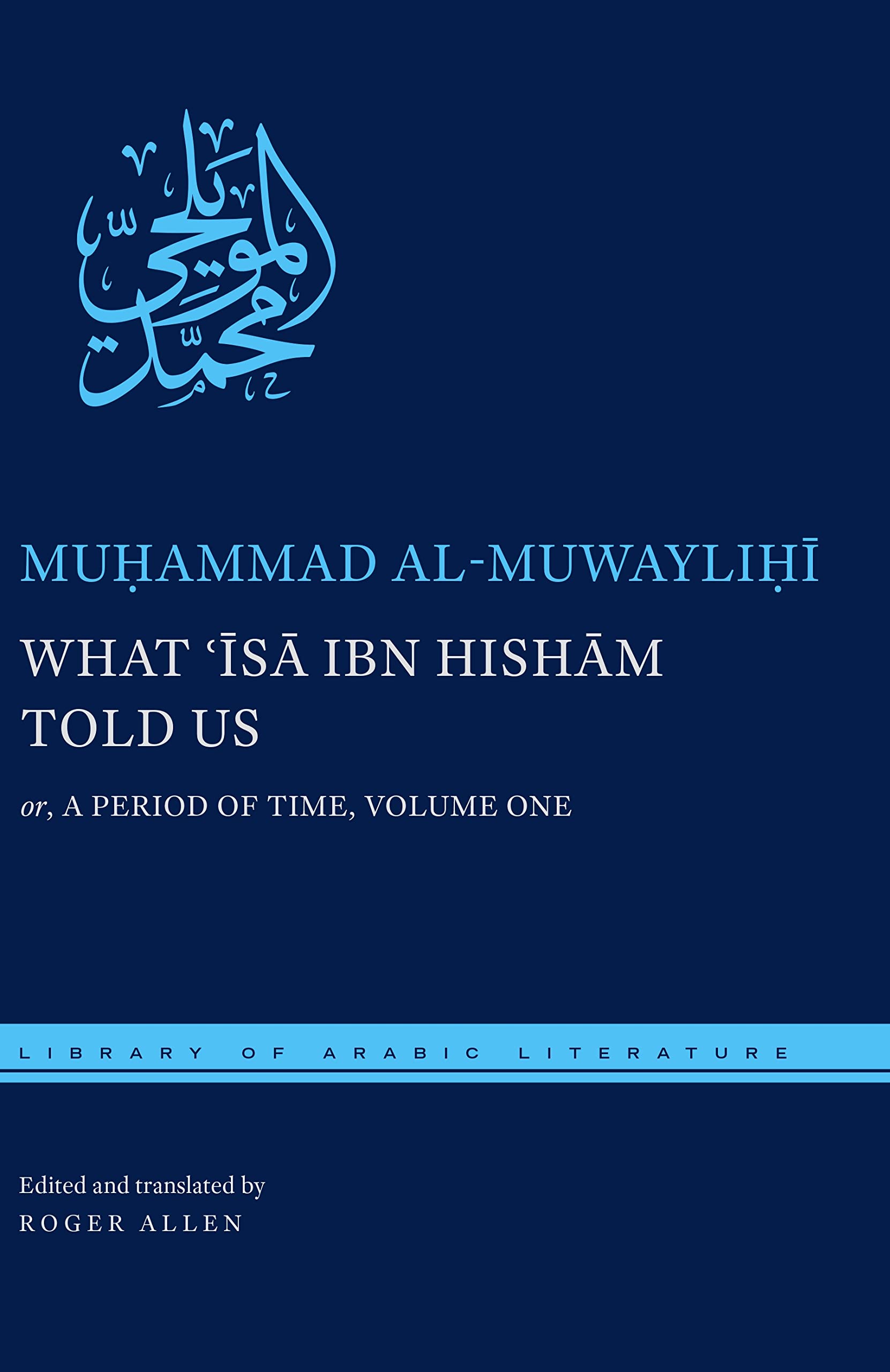
Title
What ?Isa Ibn Hisham Told Us: Or, A Period Of Time, Volume One (Library Of Arabic Literature, 54)
Sold by Ergodebooks, an authorized reseller.
Returns accepted within 30 days | support@ergodebooks.com
Shipping Information
- Free Standard Shipping — United States only
- Processing Time: 3–5 business days
- Estimated Delivery: 6–10 business days after dispatch
- Double-boxed, fully insured & discreetly packaged
- Tracking number sent via email once dispatched
Returns & Refund
Returns accepted within 30 days of delivery.
Damaged or Defective Item
Free return shipping + replacement or full refund
Wrong Item Received
Free return shipping + replacement or full refund
Change of Mind
Return shipping at customer's expense · 25% restocking fee applies
Payment Option

With What ?Isa Ibn Hisham Told Us, The Library Of Arabic Literature Brings Readers An Acknowledged Masterpiece Of Early Twentiethcentury Arabic Prose. Penned By The Egyptian Journalist Mu?Ammad Almuwayli?I, This Exceptional Title Was First Introduced In Serialized Form In His Familys Pioneering Newspaper Mi?Ba? Alsharq (Light Of The East), On Which This Edition Is Based, And Later Published In Book Form In 1907. Widely Hailed For Its Erudition And Its Mordant Wit, What ?Isa Ibn Hisham Told Us Was Embraced By Egypts Burgeoning Reading Public And Soon Became Required Reading For Generations Of Egyptian School Students.Bridging Classical Genres And The Emerging Tradition Of Modern Arabic Fiction, What ?Isa Ibn Hisham Told Us Is Divided Into Two Parts, The Second Of Which Was Only Added To The Text With The Fourth Edition Of 1927. Sarcastic In Tone And Critical In Outlook, The Book Relates The Excursions Of Its Narrator ?Isa Ibn Hishamand His Companion, The Pasha, Through A Rapidly Westernized Cairo At The Height Of British Occupation, Providing Vivid Commentary Of A Society Negotiatinghowever Imperfectlythe Clash Of Imported Cultural Values And Traditional Norms Of Conduct, Law, And Education. The Second Journey Takes The Narrator To Paris To Visit The Exposition Universelle Of 1900, Where Almuwayli?I Casts The Same Relentlessly Critical Eye On European Society, Modernity, And The Role Of Western Imperialism As It Ripples Across The Globe.Paving The Way For The Modern Arabic Novel, What ?Isa Ibn Hisham Told Us Is Invaluable Both For Its Sociological Insight Into Colonial Egypt And Its Pioneering Role In Arabic Literary History.A Bilingual Arabicenglish Edition.
⚠️ WARNING (California Proposition 65):
This product may contain chemicals known to the State of California to cause cancer, birth defects, or other reproductive harm.
For more information, please visit www.P65Warnings.ca.gov.
- Q: What is the page count of this book? A: This book has four hundred ninety-six pages. It provides a comprehensive look at early twentieth-century Arabic prose.
- Q: What are the dimensions of this book? A: The book measures six point three inches in length, one point three inches in width, and nine point two one inches in height. These dimensions make it a suitable size for easy handling and reading.
- Q: What type of binding does this book have? A: This book features a hardcover binding. The hardcover design enhances durability, making it ideal for long-term use.
- Q: Who is the author of this book? A: The author of this book is Muḥammad al-Muwayliḥī. He was an influential Egyptian journalist and writer known for his contributions to Arabic literature.
- Q: What genre does this book belong to? A: This book is classified under the Middle Eastern genre. It bridges classical genres with modern Arabic fiction.
- Q: Is this book suitable for younger readers? A: Yes, this book is suitable for older students and adults. It was required reading for generations of Egyptian school students.
- Q: How can I read this book? A: You can read this book as a narrative that combines historical context with literary critique. It is engaging for anyone interested in Arabic literature.
- Q: Is this book available in multiple languages? A: Yes, this book is a bilingual Arabic-English edition. This feature makes it accessible to a wider audience.
- Q: What themes are explored in this book? A: This book explores themes of cultural clash, modernity, and imperialism. It provides critical insights into colonial Egypt.
- Q: How should I care for this hardcover book? A: To care for this hardcover book, keep it in a dry and cool environment. Avoid exposing it to direct sunlight to preserve its quality.
- Q: Are there any special storage instructions for this book? A: Yes, store this book upright on a shelf. Ensure it is placed away from moisture to prevent damage.
- Q: What if the book arrives damaged? A: If the book arrives damaged, contact customer support for assistance with returns or exchanges. Most retailers provide options for damaged items.
- Q: Is there a warranty on this book? A: No, books typically do not come with a warranty. However, check the retailer's return policy for any issues.
- Q: Can I find this book in libraries? A: Yes, many libraries may have this book available. It is a significant work in Arabic literature and often included in academic collections.
- Q: Is this book considered a classic? A: Yes, this book is considered a classic of early twentieth-century Arabic prose. It has been influential in shaping modern Arabic literature.