
Title
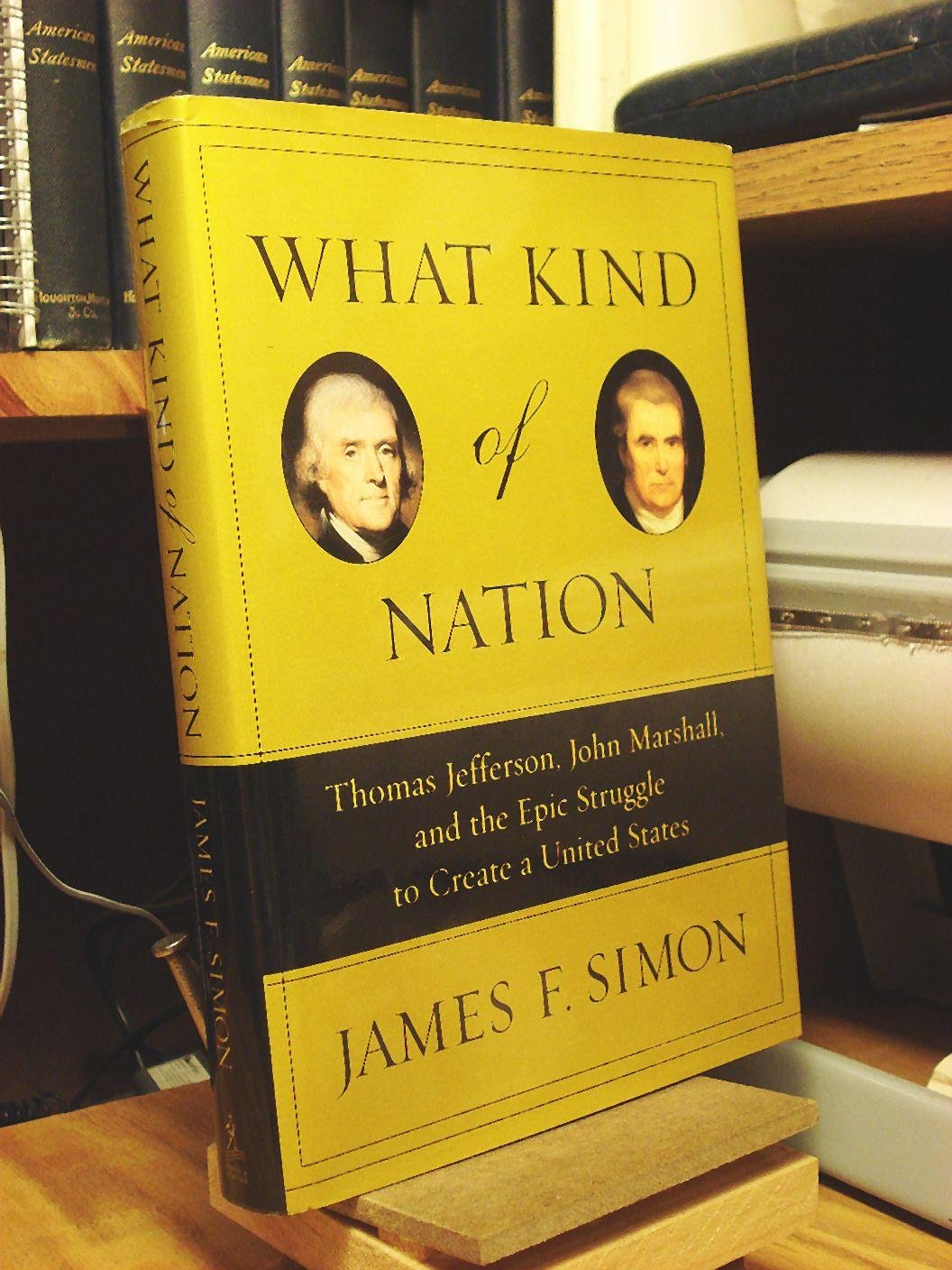
What Kind of Nation: Thomas Jefferson, John Marshall, and the Epic Struggle to Create a United States,Used
Sold by Ergodebooks, an authorized reseller.
Returns accepted within 30 days | support@ergodebooks.com
Shipping Information
- Free Standard Shipping — United States only
- Processing Time: 3–5 business days
- Estimated Delivery: 6–10 business days after dispatch
- Double-boxed, fully insured & discreetly packaged
- Tracking number sent via email once dispatched
Returns & Refund
Returns accepted within 30 days of delivery.
Damaged or Defective Item
Free return shipping + replacement or full refund
Wrong Item Received
Free return shipping + replacement or full refund
Change of Mind
Return shipping at customer's expense · 25% restocking fee applies
Payment Option

What Kind of Nation is a riveting account of the bitter and protracted struggle between two titans of the early republic over the power of the presidency and the independence of the judiciary.The clash between fellow Virginians (and second cousins) Thomas Jefferson and John Marshall remains the most decisive confrontation between a president and a chief justice in American history. Fought in private as well as in full public view, their struggle defined basic constitutional relationships in the early days of the republic and resonates still in debates over the role of the federal government visvis the states and the authority of the Supreme Court to interpret laws.Jefferson was a strong advocate of states' rights who distrusted the power of the federal government. He believed that the Constitution defined federal authority narrowly and left most governmental powers to the states. He was suspicious of the Federalistdominated Supreme Court, whose members he viewed as partisan promoters of their political views at the expense of Jefferson's Republicans. When he became president, Jefferson attempted to correct the Court's bias by appointing Republicans to the Court. He also supported an unsuccessful impeachment of Federalist Supreme Court Justice Samuel Chase.Marshall believed in a strong federal government and was convinced that an independent judiciary offered the best protection for the Constitution and the nation. After he was appointed by Federalist President John Adams to be chief justice in 1801 (only a few weeks before Jefferson succeeded Adams), he issued one farreaching opinion after another. Beginning with the landmark decision Marbury v. Madison in 1803, and through many cases involving states' rights, impeachment, treason, and executive privilege, Marshall established the Court as the final arbiter of the Constitution and the authoritative voice for the constitutional supremacy of the federal government over the states.As Marshall's views prevailed, Jefferson became increasingly bitter, certain that the Court was suffocating the popular will. But Marshall's carefully reasoned rulings endowed the Court with constitutional authority even as they expanded the power of the federal government, paving the way for later Court decisions sanctioning many pivotal laws of the modern era, such as those of the New Deal, the Great Society, and the Civil Rights Act of 1964.In a fascinating description of the treason trial of Jefferson's former vice president, Aaron Burr, James F. Simon shows how Marshall rebuffed President Jefferson's claim of executive privilege. That decision served as precedent for a modern Supreme Court ruling rejecting President Nixon's claim that he did not have to hand over the Watergate tapes.More than 150 years after Jefferson's and Marshall's deaths, their words and achievements still reverberate in constitutional debate and political battle. What Kind of Nation is a dramatic rendering of a bitter struggle between two shrewd politicians and powerful statesmen that helped create a United States.
⚠️ WARNING (California Proposition 65):
This product may contain chemicals known to the State of California to cause cancer, birth defects, or other reproductive harm.
For more information, please visit www.P65Warnings.ca.gov.
- Q: What is the main theme of 'What Kind of Nation'? A: The book explores the struggle between Thomas Jefferson and John Marshall over the power of the presidency and the independence of the judiciary during the early years of the United States.
- Q: Who are the authors of 'What Kind of Nation'? A: The author of the book is James F. Simon.
- Q: What is the publication date of this book? A: The book was published on February 26, 2002.
- Q: How many pages does 'What Kind of Nation' have? A: The book contains 352 pages.
- Q: What type of binding does this book have? A: The book is available in hardcover binding.
- Q: What condition is the book in? A: The book is listed as 'New'.
- Q: What category does this book fall under? A: The book is categorized under 'United States' history.
- Q: What are the key features of the book? A: The key feature of the book is that it is a used book in good condition.
- Q: What is the significance of the struggle between Jefferson and Marshall? A: Their clash defined the constitutional relationship between the federal government and the states, influencing the authority of the Supreme Court.
- Q: Is there a specific event discussed that highlights their conflict? A: The book discusses the treason trial of Aaron Burr and how Marshall's decisions set precedents for future Supreme Court rulings.