
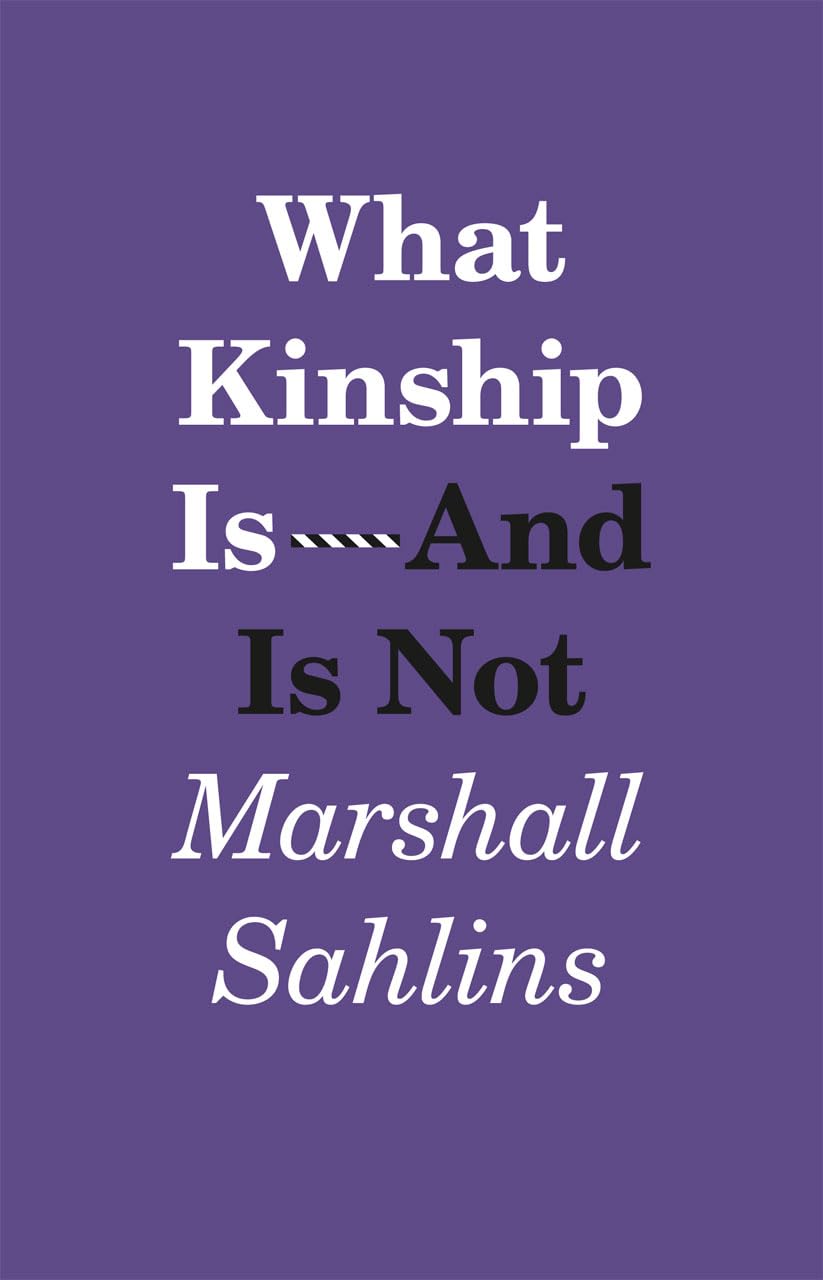
Title
What Kinship Isand Is Not
Sold by Ergodebooks, an authorized reseller.
Returns accepted within 30 days | support@ergodebooks.com
Shipping Information
- Free Standard Shipping — United States only
- Processing Time: 3–5 business days
- Estimated Delivery: 6–10 business days after dispatch
- Double-boxed, fully insured & discreetly packaged
- Tracking number sent via email once dispatched
Returns & Refund
Returns accepted within 30 days of delivery.
Damaged or Defective Item
Free return shipping + replacement or full refund
Wrong Item Received
Free return shipping + replacement or full refund
Change of Mind
Return shipping at customer's expense · 25% restocking fee applies
Payment Option

In This Pithy Twopart Essay, Marshall Sahlins Reinvigorates The Debates On What Constitutes Kinship, Building On Some Of The Best Scholarship In The Field To Produce An Original Outlook On The Deepest Bond Humans Can Have. Covering Thinkers From Aristotle And Lvy Bruhl To Mile Durkheim And David Schneider, And Communities From The Maori And The English To The Korowai Of New Guinea, He Draws On A Breadth Of Theory And A Range Of Ethnographic Examples To Form An Acute Definition Of Kinship, What He Calls The Mutuality Of Being. Kinfolk Are Persons Who Are Parts Of One Another To The Extent That What Happens To One Is Felt By The Other. Meaningfully And Emotionally, Relatives Live Each Others Lives And Die Each Others Deaths.In The Second Part Of His Essay, Sahlins Shows That Mutuality Of Being Is A Symbolic Notion Of Belonging, Not A Biological Connection By Blood. Quite Apart From Relations Of Birth, People May Become Kin In Ways Ranging From Sharing The Same Name Or The Same Food To Helping Each Other Survive The Perils Of The High Seas. In A Groundbreaking Argument, He Demonstrates That Even Where Kinship Is Reckoned From Births, It Is Because The Wider Kindred Or The Clan Ancestors Are Already Involved In Procreation, So That The Notion Of Birth Is Meaningfully Dependent On Kinship Rather Than Kinship On Birth. By Formulating This Reversal, Sahlins Identifies What Kinship Truly Is: Not Nature, But Culture.
⚠️ WARNING (California Proposition 65):
This product may contain chemicals known to the State of California to cause cancer, birth defects, or other reproductive harm.
For more information, please visit www.P65Warnings.ca.gov.
- Q: How many pages does the book have? A: One hundred ten pages. This provides a concise yet thorough exploration of kinship concepts by Marshall Sahlins.
- Q: What is the binding type of this book? A: It is a hardcover. This ensures durability and a premium feel, making it suitable for repeated readings.
- Q: What are the book's dimensions? A: The dimensions are eight point six inches by five point eight inches by zero point six inches. This size makes it easy to handle and store.
- Q: Who is the author of the book? A: The author is Marshall Sahlins. He is a renowned anthropologist known for his work on kinship and culture.
- Q: What genre does this book belong to? A: It belongs to the Social Sciences genre. This classification highlights its focus on human relationships and cultural studies.
- Q: Is this book suitable for academic study? A: Yes, it is suitable for academic study. The book engages with significant theories and thinkers in anthropology.
- Q: How do I read and apply the concepts in this book? A: You can read it as a standalone essay or as part of broader studies in anthropology. The insights can be applied in discussions about kinship in various cultures.
- Q: Is this book appropriate for beginners in anthropology? A: Yes, it is appropriate for beginners. Its clear writing style and engaging arguments make complex ideas accessible.
- Q: Can this book be used for group discussions? A: Yes, it can be used for group discussions. Its thought-provoking content encourages dialogue on kinship and cultural connections.
- Q: How should I store this hardcover book? A: Store it upright on a shelf. This prevents warping and keeps the cover and pages in good condition.
- Q: What care does a hardcover book require? A: It requires minimal care but should be kept away from moisture. Avoid exposing it to direct sunlight to preserve the cover.
- Q: Is this book safe for children? A: Yes, it is generally safe for older children. However, parental guidance is recommended due to complex themes.
- Q: What if the book arrives damaged? A: If it arrives damaged, contact the seller for a return or replacement. Most sellers have policies for such situations.
- Q: Can I return the book if I'm not satisfied? A: Yes, you can typically return it if unsatisfied. Check the specific return policy of the seller for details.
- Q: What if I have questions about the content of the book? A: You can refer to academic forums or reach out to your local librarian for more insights. Discussion groups often explore such texts.
- Q: Is there a warranty for this book? A: No, books generally do not come with a warranty. However, return policies may cover issues like damage.