
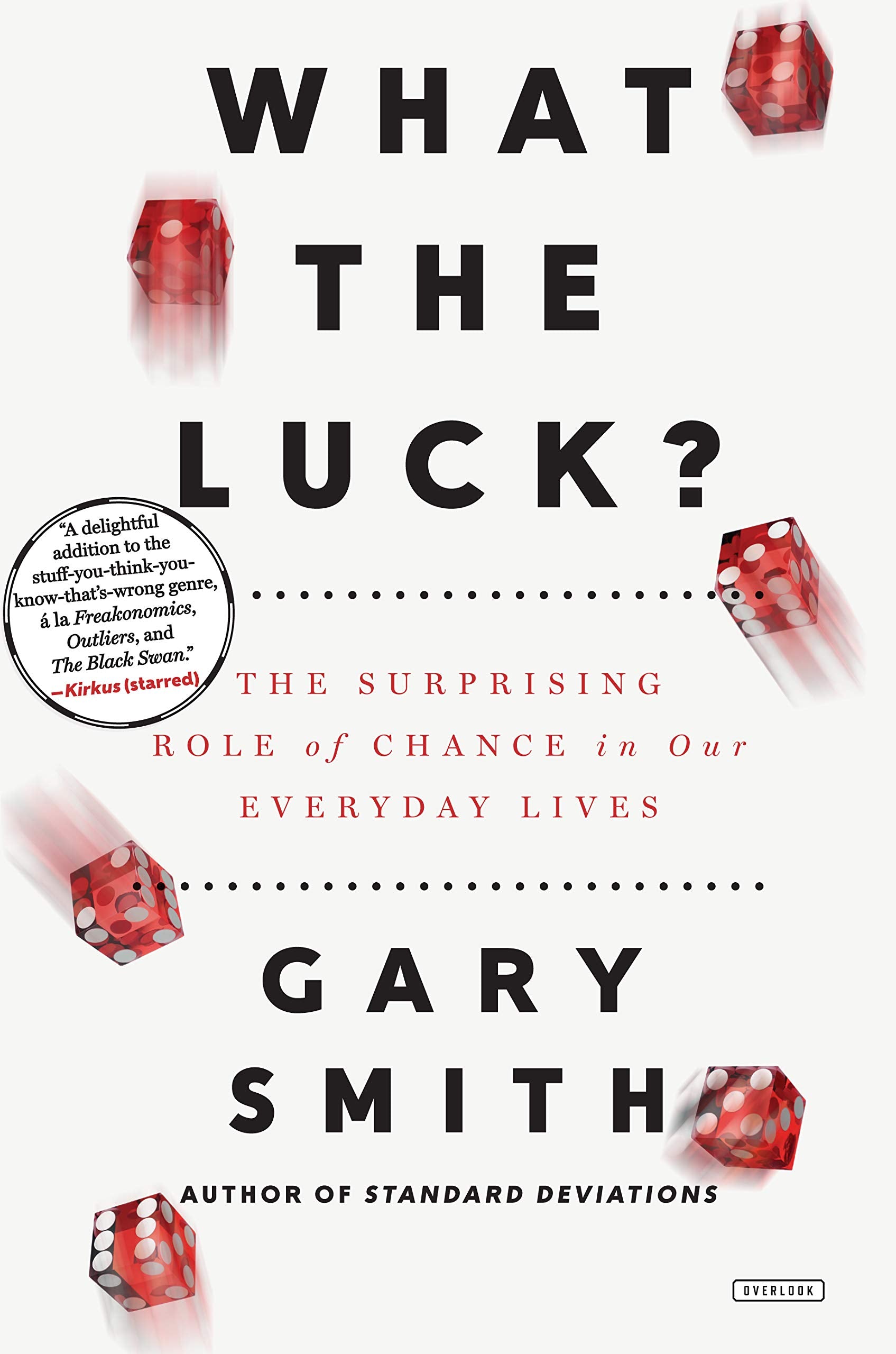
Title
What the Luck?: The Surprising Role of Chance in Our Everyday Lives,Used
Sold by Ergodebooks, an authorized reseller.
Returns accepted within 30 days | support@ergodebooks.com
Shipping Information
- Free Standard Shipping — United States only
- Processing Time: 3–5 business days
- Estimated Delivery: 6–10 business days after dispatch
- Double-boxed, fully insured & discreetly packaged
- Tracking number sent via email once dispatched
Returns & Refund
Returns accepted within 30 days of delivery.
Damaged or Defective Item
Free return shipping + replacement or full refund
Wrong Item Received
Free return shipping + replacement or full refund
Change of Mind
Return shipping at customer's expense · 25% restocking fee applies
Payment Option

In Israel, pilot trainees who were praised for doing well subsequently performed worse, while trainees who were yelled at for doing poorly performed better. It is an empirical fact that highly intelligent women tend to marry men who are less intelligent. Students who get the highest scores in third grade generally get lower scores in fourth grade.And yet, it's wrong to conclude that screaming is not more effective in pilot training, women choose men whose intelligence does not intimidate them, or schools are failing third graders. In fact, there's one reason for each of these empirical facts: Statistics. Specifically, a statical concept called Regression to the Mean.Regression to the mean seeks to explain, with statistics, the role of luck in our day to day lives. An insufficient appreciation of luck and chance can wreak all kinds of mischief in sports, education, medicine, business, politics, and more. It can lead us to see illness when we are not sick and to see cures when treatments are worthless. Perfectly natural random variation can lead us to attach meaning to the meaningless.Freakonomics showed how economic calculations can explain seemingly counterintuitive decisionmaking. Thinking, Fast and Slow, helped readers identify a host of small cognitive errors that can lead to miscalculations and irrational thought. In What the Luck?, statistician and author Gary Smith sets himself a similar goal, and explainsin clear, understandable, and witty prosehow a statistical understanding of luck can change the way we see just about every aspect of our lives...and can help us learn to rely less on random chance, and more on truth.
⚠️ WARNING (California Proposition 65):
This product may contain chemicals known to the State of California to cause cancer, birth defects, or other reproductive harm.
For more information, please visit www.P65Warnings.ca.gov.