
Title
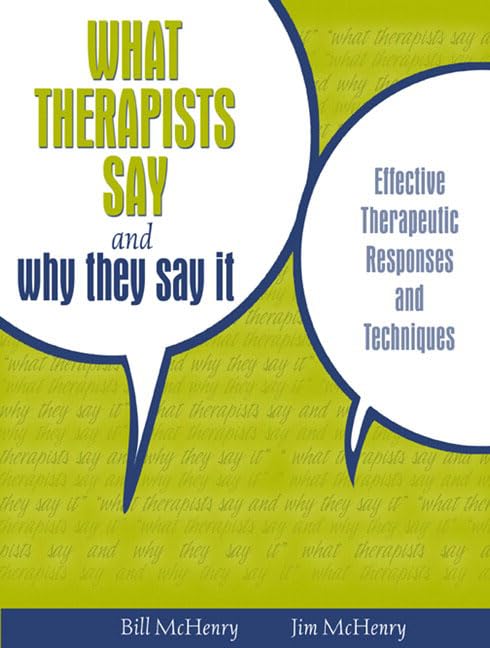
What Therapists Say and Why They Say It: Effective Therapeutic Responses and Techniques,Used
Sold by Ergodebooks, an authorized reseller.
Returns accepted within 30 days | support@ergodebooks.com
Shipping Information
- Free Standard Shipping — United States only
- Processing Time: 3–5 business days
- Estimated Delivery: 6–10 business days after dispatch
- Double-boxed, fully insured & discreetly packaged
- Tracking number sent via email once dispatched
Returns & Refund
Returns accepted within 30 days of delivery.
Damaged or Defective Item
Free return shipping + replacement or full refund
Wrong Item Received
Free return shipping + replacement or full refund
Change of Mind
Return shipping at customer's expense · 25% restocking fee applies
Payment Option

This eminently practical resource presents the preservice and practicing therapist with information regarding 112 skills/techniques as well as 1,424 examples of therapeutic responses that can help them utilize those techniques.Students learn directly from the techniques, descriptions and examples. Practice exercises provide opportunities for both student and instructor to discuss choice, purpose, and implementation of techniques. Instructors will find the comprehensive coverage a definite aid in their efforts in prepracticum, practicum, field and theories. Practitioners will find the list of examples for each technique useful in integrating new skills into their practices.
⚠️ WARNING (California Proposition 65):
This product may contain chemicals known to the State of California to cause cancer, birth defects, or other reproductive harm.
For more information, please visit www.P65Warnings.ca.gov.
- Q: What is the page count of this book? A: This book has two hundred twenty-four pages. It provides a comprehensive resource for therapists with detailed techniques and examples.
- Q: What is the binding type of this book? A: The binding type is paperback. This makes it lightweight and easy to handle for both students and practitioners.
- Q: What is the physical size of this book? A: The dimensions are approximately zero point five one inches in thickness, six point nine inches in width, and nine point two one inches in height.
- Q: How can I effectively use the techniques in this book? A: You can use the techniques by practicing the exercises provided in the book. These exercises encourage discussion and implementation of the skills.
- Q: Is this book suitable for beginners in therapy? A: Yes, this book is designed for both pre-service students and practicing therapists. It includes practical examples and exercises that cater to various levels of experience.
- Q: What type of exercises are included in the book? A: The book contains practice exercises that allow for discussions on the choice and purpose of the techniques. These exercises enhance the learning experience.
- Q: How should I store this book to keep it in good condition? A: Store the book in a cool, dry place away from direct sunlight. This will help maintain the integrity of the pages and binding.
- Q: Are there any safety concerns with this book? A: No, there are no hazardous materials associated with this book. It is a resource for educational purposes and does not contain harmful substances.
- Q: What if the book arrives damaged? A: If the book arrives damaged, you should contact the retailer for return or replacement options. Most retailers have policies in place for such issues.
- Q: Can this book be used for group therapy settings? A: Yes, the techniques and exercises are applicable in group therapy settings. They encourage interaction and collaborative learning among participants.
- Q: Who is the author of this book? A: The author of the book is William McHenry. He provides valuable insights based on his expertise in therapeutic techniques.
- Q: Is there a specific audience this book targets? A: The book targets both students and practitioners in the field of psychoanalysis. It serves as a resource for enhancing therapeutic skills.
- Q: Does this book include real-life examples of techniques? A: Yes, it includes one thousand four hundred twenty-four examples of therapeutic responses. These examples help illustrate the techniques in action.
- Q: Is this book useful for instructors in therapy programs? A: Yes, instructors will find the comprehensive coverage useful for pre-practicum, practicum, and field theories. It aids in teaching various therapeutic techniques.
- Q: What category does this book fall under? A: This book falls under the category of psychoanalysis. It provides insights and techniques relevant to this field.