
Title
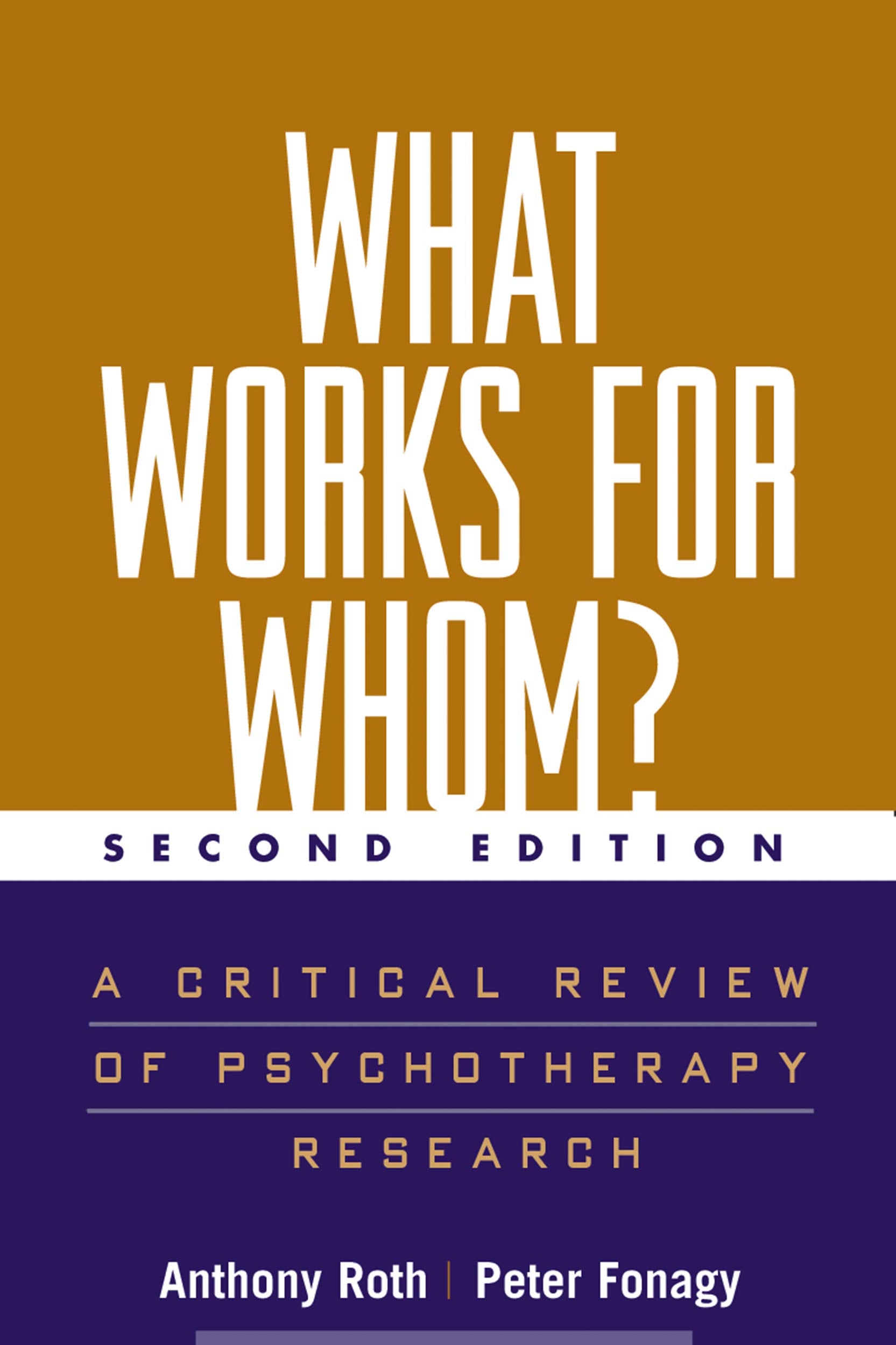
What Works For Whom?, Second Edition: A Critical Review Of Psychotherapy Research,New
Sold by Ergodebooks, an authorized reseller.
Returns accepted within 30 days | support@ergodebooks.com
Shipping Information
- Free Standard Shipping — United States only
- Processing Time: 3–5 business days
- Estimated Delivery: 6–10 business days after dispatch
- Double-boxed, fully insured & discreetly packaged
- Tracking number sent via email once dispatched
Returns & Refund
Returns accepted within 30 days of delivery.
Damaged or Defective Item
Free return shipping + replacement or full refund
Wrong Item Received
Free return shipping + replacement or full refund
Change of Mind
Return shipping at customer's expense · 25% restocking fee applies
Payment Option

This Acclaimed Work Provides A Systematic, Comprehensive, And Balanced Evaluation Of The Current Status Of All Major Psychotherapeutic Approaches. With A Primary Focus On Adults, Detailed Evidence Is Presented For The Efficacy Of Widely Used Interventions For Frequently Encountered Mental Disorders And Specific Populations. The Book Also Explains The Concepts That Underpin Psychotherapy Research, Examines Methodological Challenges In Translating Research Into Practice, And Considers The Impact On Outcome Of Factors Common To All Therapies, Such As Therapist And Patient Characteristics.
⚠️ WARNING (California Proposition 65):
This product may contain chemicals known to the State of California to cause cancer, birth defects, or other reproductive harm.
For more information, please visit www.P65Warnings.ca.gov.
- Q: How many pages does the book have? A: The book has six hundred sixty-one pages. This extensive content covers various psychotherapeutic approaches and their efficacy.
- Q: What is the binding type of this book? A: The book is paperback. This makes it lightweight and easy to handle for reading.
- Q: What are the dimensions of the book? A: The book measures six inches in length, one point two six inches in width, and nine point zero two inches in height. These dimensions make it a standard size for a paperback.
- Q: Who is the author of the book? A: The author is Anthony Roth. He is recognized for his critical insights into psychotherapy research.
- Q: What is the main focus of the book? A: The book primarily focuses on adults and examines various psychotherapeutic approaches. It evaluates their effectiveness for frequently encountered mental disorders.
- Q: Is this book suitable for beginners in psychotherapy? A: Yes, this book is suitable for beginners. It provides a comprehensive overview of psychotherapy research, making it accessible for those new to the field.
- Q: Can I use this book as a reference for advanced psychotherapy studies? A: Yes, this book is an excellent reference for advanced studies. It includes detailed evaluations of major psychotherapeutic approaches and methodological challenges.
- Q: Is this book appropriate for professionals in mental health? A: Yes, mental health professionals will find this book valuable. It addresses current research and therapeutic efficacy, making it useful for practice.
- Q: How should I care for this paperback book? A: To care for the book, keep it in a dry environment and avoid direct sunlight. This will help maintain its condition over time.
- Q: Is it okay to write in this book? A: Yes, you can write in this book if you wish to take notes. However, be mindful that it may affect the book's appearance.
- Q: What should I do if the book arrives damaged? A: If the book arrives damaged, contact the seller for a return or replacement. Most sellers have a policy for damaged items.
- Q: Does this book have a return policy? A: Yes, the book typically comes with a return policy. Check the seller's specific terms for details on returns.
- Q: What if I have questions about the content of the book? A: If you have questions about the content, consider reaching out to online forums or professional groups in psychotherapy. They can provide insights.
- Q: Can this book help me understand therapy research better? A: Yes, this book is designed to enhance understanding of therapy research. It provides a critical review of various psychotherapeutic methods.
- Q: Is this book suitable for group study? A: Yes, this book is suitable for group study. Its comprehensive nature encourages discussion and deeper understanding among participants.
- Q: Where can I find more information about the book's contents? A: You can find more information about the book's contents in the introduction and table of contents sections. These offer a detailed overview of each chapter.