
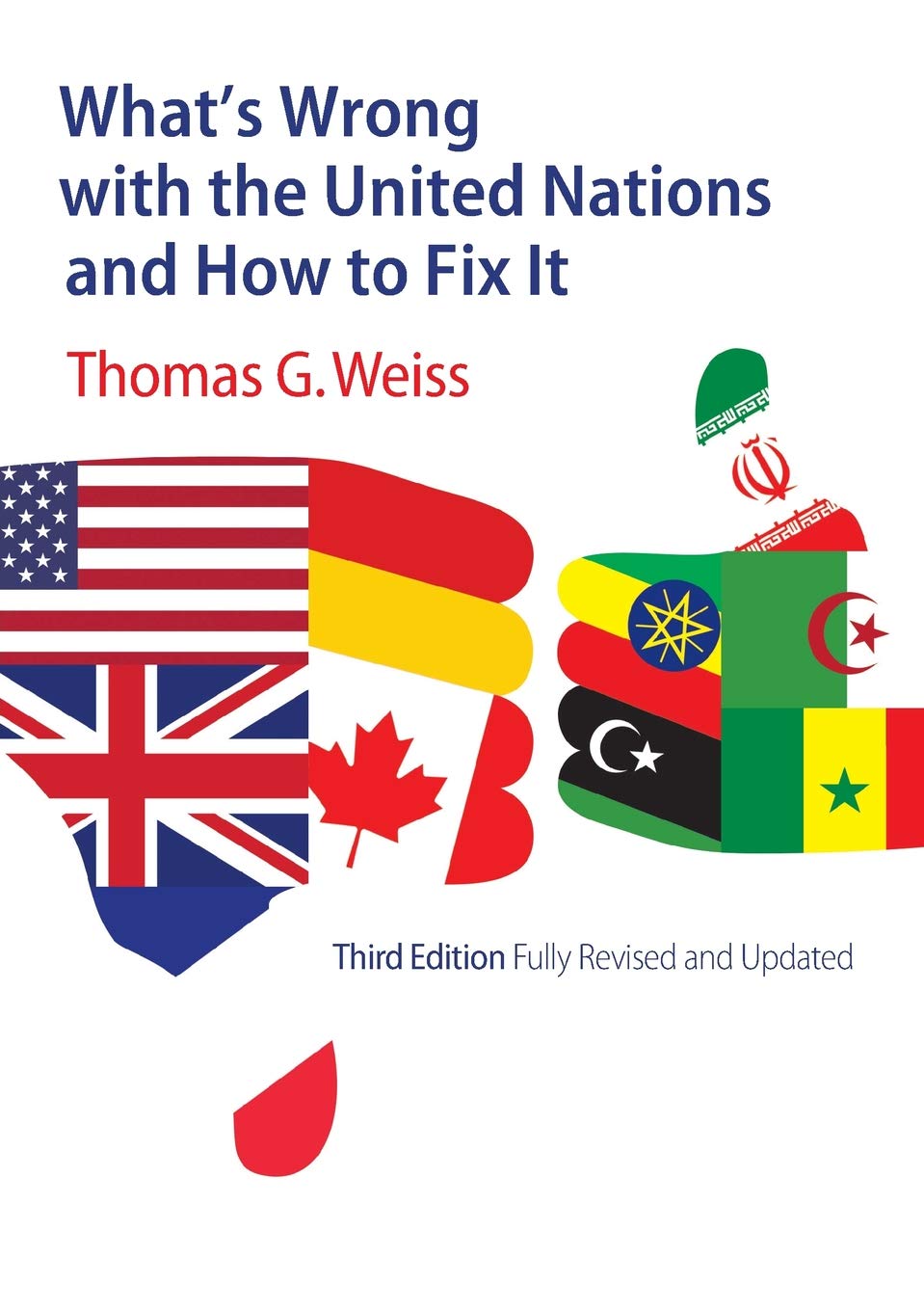
Title
What's Wrong with the United Nations and How to Fix It,Used
Sold by Ergodebooks, an authorized reseller.
Returns accepted within 30 days | support@ergodebooks.com
Shipping Information
- Free Standard Shipping — United States only
- Processing Time: 3–5 business days
- Estimated Delivery: 6–10 business days after dispatch
- Double-boxed, fully insured & discreetly packaged
- Tracking number sent via email once dispatched
Returns & Refund
Returns accepted within 30 days of delivery.
Damaged or Defective Item
Free return shipping + replacement or full refund
Wrong Item Received
Free return shipping + replacement or full refund
Change of Mind
Return shipping at customer's expense · 25% restocking fee applies
Payment Option

Seven decades after its establishment, the United Nations and its system of related organizations and programs are perpetually in crisis. While the twentiethcenturys world wars gave rise to groundbreaking efforts at international organization in 1919 and 1945, todays UN is illequipped to deal with contemporary challenges to world order. Neither the end of the Cold War nor the aftermath of 9/11 has led to the next generation of multilateral institutions. But what exactly is wrong with the UN that makes it incapable of confronting contemporary global challenges and, more importantly, can we fix it?In this revised and updated third edition of his popular text, leading scholar of global governance Thomas G. Weiss takes a diagnoseandcure approach to the world organizations inherent difficulties. In the first half of the book, he considers: the problems of international leadership and decision making in a world of selfinterested states; the diplomatic complications caused by the artificial divisions between the industrialized North and the global South; the structural problems of managing the UNs many overlapping jurisdictions, agencies, and bodies; and the challenges of bureaucracy and leadership. The second half shows how to mitigate these maladies and points the way to a world in which the UNs institutional ills might be cured. Weisss remedies are not based on pious hopes of a miracle cure for the UN, but rather on specific and encouraging examples that could be replicated. With considered optimism and in contrast to received wisdom, he contends that substantial change is both plausible and possible.
⚠️ WARNING (California Proposition 65):
This product may contain chemicals known to the State of California to cause cancer, birth defects, or other reproductive harm.
For more information, please visit www.P65Warnings.ca.gov.
- Q: What is the main theme of 'What's Wrong with the United Nations and How to Fix It'? A: The book explores the inherent difficulties faced by the United Nations in addressing contemporary global challenges and proposes specific remedies for improvement.
- Q: Who is the author of this book? A: The author is Thomas G. Weiss, a leading scholar in global governance.
- Q: What edition is this book? A: This is the third edition of the book, which has been revised and updated.
- Q: When was this book published? A: The book was published on September 19, 2016.
- Q: How many pages does this book have? A: The book contains 320 pages.
- Q: What is the binding type of this book? A: The book is available in paperback binding.
- Q: Is this book suitable for someone interested in international relations? A: Yes, the book is highly suitable for anyone interested in international relations, global governance, and the functioning of international organizations.
- Q: Does the book offer solutions for the issues it discusses? A: Yes, the book presents specific examples and remedies aimed at mitigating the challenges faced by the United Nations.
- Q: What kind of approach does Thomas G. Weiss take in this book? A: Weiss takes a diagnose-and-cure approach to analyze the problems of the UN and suggests practical solutions.
- Q: Is there any prior knowledge required to understand the content of this book? A: While some background in international relations may be beneficial, the book is written to be accessible to a general audience interested in understanding the UN's challenges.