
Title
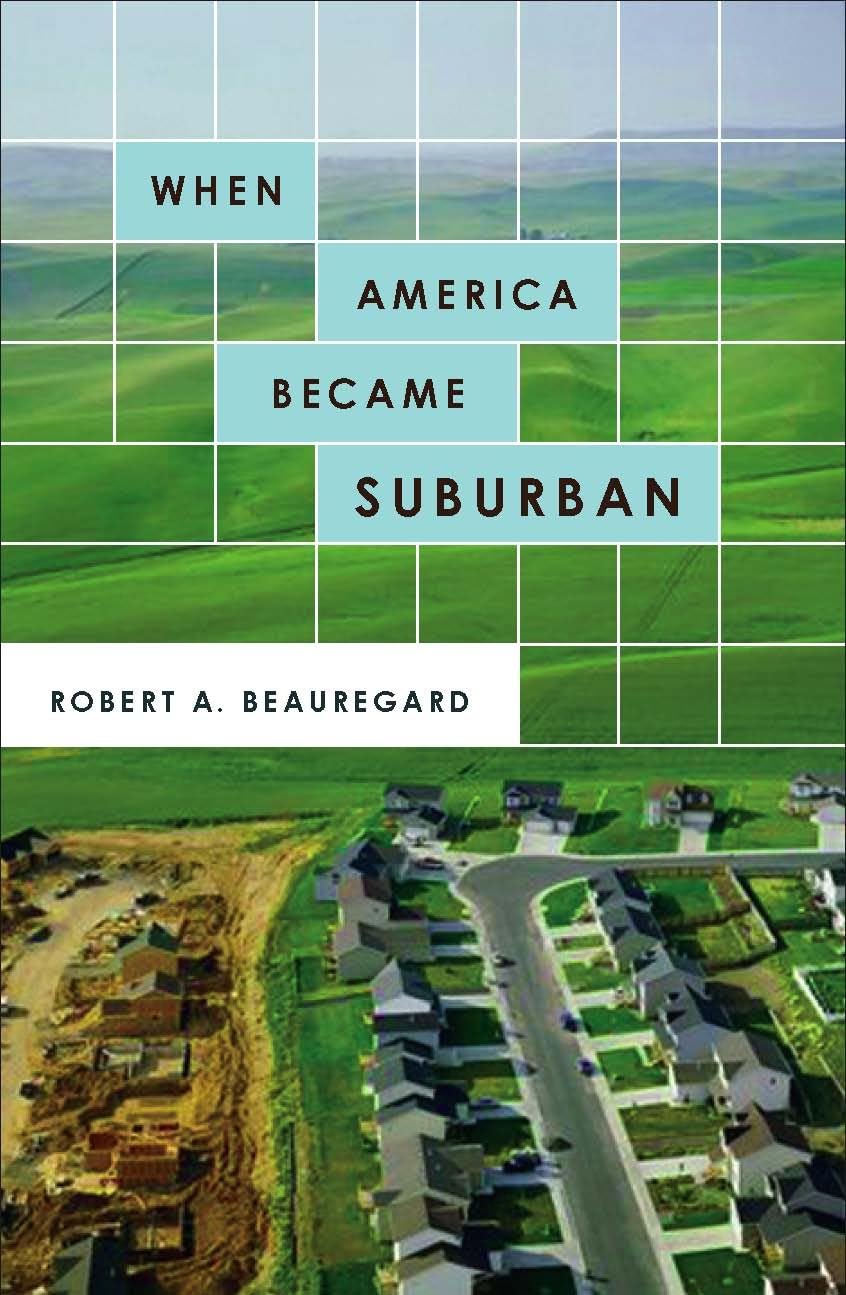
When America Became Suburban,Used
Sold by Ergodebooks, an authorized reseller.
Returns accepted within 30 days | support@ergodebooks.com
Shipping Information
- Free Standard Shipping — United States only
- Processing Time: 3–5 business days
- Estimated Delivery: 6–10 business days after dispatch
- Double-boxed, fully insured & discreetly packaged
- Tracking number sent via email once dispatched
Returns & Refund
Returns accepted within 30 days of delivery.
Damaged or Defective Item
Free return shipping + replacement or full refund
Wrong Item Received
Free return shipping + replacement or full refund
Change of Mind
Return shipping at customer's expense · 25% restocking fee applies
Payment Option

In the decades after World War II, the United States became the most prosperous nation in the world and a superpower whose dominance was symbolized by the American suburbs. Spurred by the decline of its industrial cities and by mass suburbanization, people imagined a new national identityone that emphasized consumerism, social mobility, and a suburban lifestyle. The urbanity of the city was lost. In When America Became Suburban, Robert A. Beauregard examines this historic intersection of urban decline, mass suburbanization, domestic prosperity, and U.S. global aspirations as it unfolded from 1945 to the mid1970s. Suburban expansion and the subsequent emergence of sprawling Sunbelt cities transformed every aspect of American society. Assessing the global implications of Americas suburban way of life as evidence of the superiority of capitalist democracy, Beauregard traces how the suburban ideology enabled America to distinguish itself from both the Communist bloc and Western Europe, thereby deepening its claim of exceptionalism on the worldhistorical stage.Placing the decline of Americas industrial cities and the rise of vast suburban housing and retail spaces into a cultural, political, and global context, Beauregard illuminates how these phenomena contributed to a changing notion of Americas identity at home and abroad. When America Became Suburban brings to light the profound implications of deurbanization: from the siphoning of investments from the cities and the effect on the quality of life for those left behind to a profound shift in national identity.Robert A. Beauregard is a professor in the Graduate School of Architecture, Planning, and Preservation at Columbia University. He is the author of Voices of Decline: The Postwar Fate of U.S. Cities and editor of Economic Restructuring and Political Response and Atop the Urban Hierarchy.
⚠️ WARNING (California Proposition 65):
This product may contain chemicals known to the State of California to cause cancer, birth defects, or other reproductive harm.
For more information, please visit www.P65Warnings.ca.gov.
- Q: What is the page count of 'When America Became Suburban'? A: This book has two hundred eighty-eight pages. It provides an in-depth exploration of suburbanization in America post-World War II.
- Q: What type of binding does this book have? A: This book is available in paperback binding. Paperback editions are generally more flexible and lightweight than hardcovers.
- Q: What are the dimensions of this book? A: The book measures five point nine one inches in length, zero point seven one inches in width, and nine point zero two inches in height. These dimensions make it easy to handle and store.
- Q: Who is the author of 'When America Became Suburban'? A: The author is Robert A. Beauregard. He is a professor at Columbia University and has written extensively about urban and suburban development.
- Q: What is the main topic of the book? A: The book examines the transformation of America through suburbanization after World War II. It explores the cultural and political implications of this shift.
- Q: Is this book suitable for academic research? A: Yes, it is suitable for academic research. The book provides historical insights and analyses that are valuable for understanding urban studies and American history.
- Q: How should I care for this book? A: To keep this book in good condition, store it in a dry place away from direct sunlight. Handle it with clean hands to avoid smudges or stains.
- Q: Can this book be used as a teaching resource? A: Yes, it can be used as a teaching resource. It covers significant historical themes that can enrich discussions in classrooms about post-war America.
- Q: What is the recommended age for readers of this book? A: This book is suitable for adults and advanced high school students. Its themes and analyses are geared toward a mature audience.
- Q: How do I return this book if needed? A: To return this book, follow the retailer's return policy. Ensure it is in the same condition as received, and include any necessary paperwork.
- Q: Is there a warranty for this book? A: No, books typically do not come with warranties. However, check with the retailer for their specific return and exchange policies.
- Q: What if the book arrives damaged? A: If the book arrives damaged, contact the seller immediately for a replacement or refund. Keep all packaging for the return process.
- Q: What distinguishes this book from other historical narratives? A: This book distinguishes itself by focusing on the intersection of suburbanization and American identity post-World War II. It explores unique cultural implications.
- Q: Is 'When America Became Suburban' a narrative or an analysis? A: It is primarily an analytical work. Beauregard provides a scholarly examination rather than a narrative account.
- Q: Are there any specific features of this book? A: One notable feature is its scholarly approach, backed by extensive research and references. This makes it a credible source for understanding suburban history.
- Q: Does this book include references or a bibliography? A: Yes, it includes references and a bibliography. These resources support the author's arguments and provide avenues for further research.