
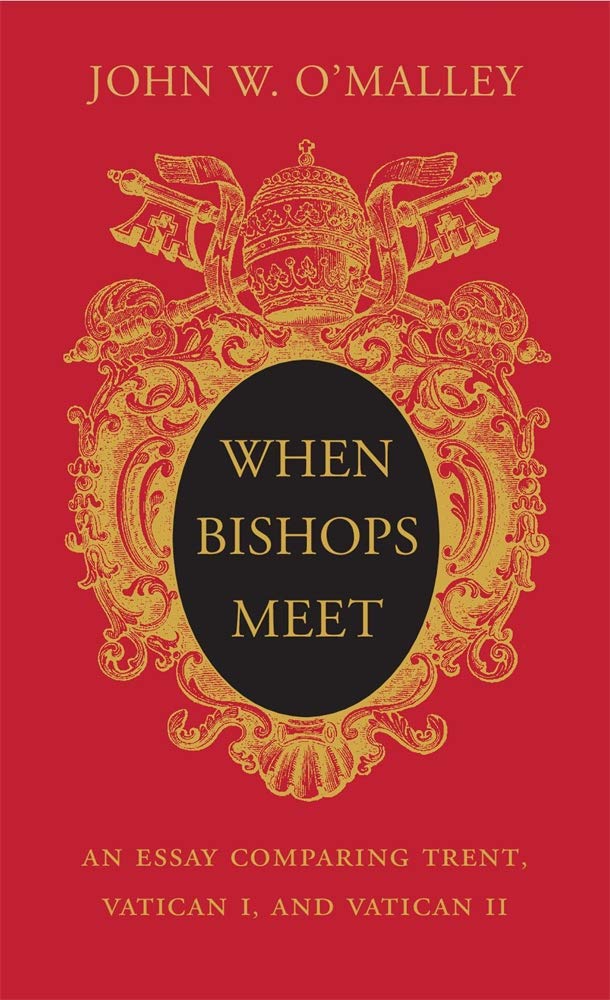
Title
When Bishops Meet: An Essay Comparing Trent, Vatican I, and Vatican II,Used
Sold by Ergodebooks, an authorized reseller.
Returns accepted within 30 days | support@ergodebooks.com
Shipping Information
- Free Standard Shipping — United States only
- Processing Time: 3–5 business days
- Estimated Delivery: 6–10 business days after dispatch
- Double-boxed, fully insured & discreetly packaged
- Tracking number sent via email once dispatched
Returns & Refund
Returns accepted within 30 days of delivery.
Damaged or Defective Item
Free return shipping + replacement or full refund
Wrong Item Received
Free return shipping + replacement or full refund
Change of Mind
Return shipping at customer's expense · 25% restocking fee applies
Payment Option

From one of our foremost church historians comes an overarching analysis of the three modern Catholic councilsan assessment of what Catholicism was and has become today.Catholic councils are meetings of bishops. In this unprecedented comparison of the three most recent meetings, John OMalley traverses more than 450 years of Catholic history and examines the councils most pressing and consistent concerns: questions of purpose, power, and relevance in a changing world. By offering new, sometimes radical, even troubling perspectives on these convocations, When Bishops Meet analyzes the evolution of the church itself.The Catholic Church today is shaped by the historical arc starting from Trent in the sixteenth century to Vatican II. The roles of popes, the laity, theologians, and others have varied from the bishopcentered Trent, to Vatican Is declaration of papal infallibility, to a new balance of power in the midtwentieth century. At Trent, lay people had direct influence on proceedings. By Vatican II, their presence was token. At each gathering, fundamental issues recurred: the relationship between bishops and the papacy, the very purpose of a council, and doctrinal change. Can the teachings of the church, by definition a conservative institution, change over time?Councils, being ecclesiastical as well as cultural institutions, have always reflected and profoundly influenced their times. Readers familiar with John OMalleys earlier work as well as those with no knowledge of councils will find this volume an indispensable guide for essential questions: Who is in charge of the church? What difference did the councils make, and will there be another?
⚠️ WARNING (California Proposition 65):
This product may contain chemicals known to the State of California to cause cancer, birth defects, or other reproductive harm.
For more information, please visit www.P65Warnings.ca.gov.