
Title
When Indians Became Cowboys: Native Peoples And Cattle Ranching In The American West,Used
Sold by Ergodebooks, an authorized reseller.
Returns accepted within 30 days | support@ergodebooks.com
Shipping Information
- Free Standard Shipping — United States only
- Processing Time: 3–5 business days
- Estimated Delivery: 6–10 business days after dispatch
- Double-boxed, fully insured & discreetly packaged
- Tracking number sent via email once dispatched
Returns & Refund
Returns accepted within 30 days of delivery.
Damaged or Defective Item
Free return shipping + replacement or full refund
Wrong Item Received
Free return shipping + replacement or full refund
Change of Mind
Return shipping at customer's expense · 25% restocking fee applies
Payment Option

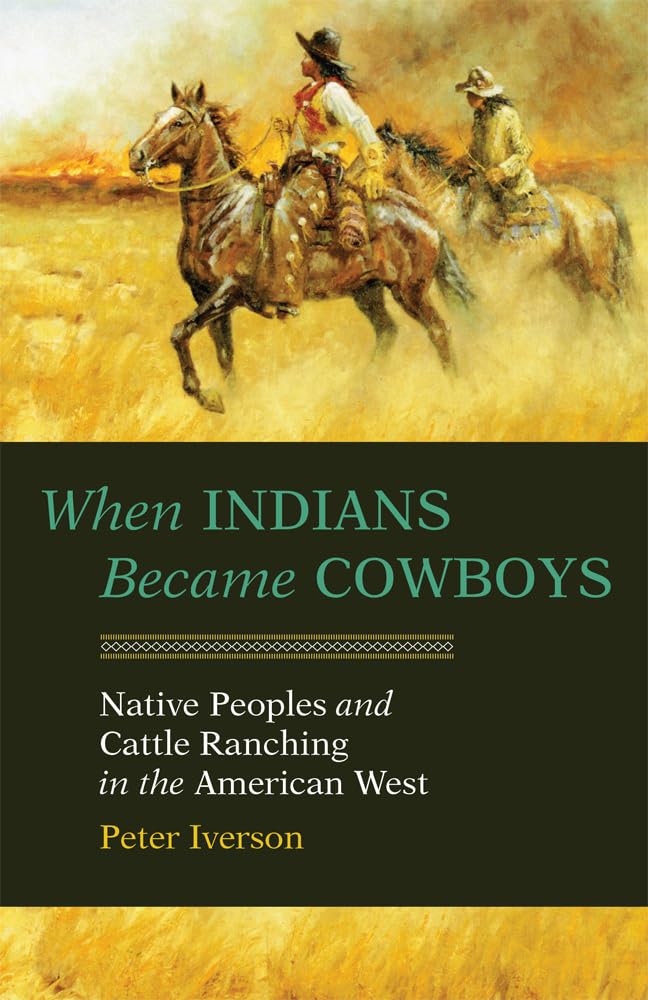
In this book on Indian cattle ranching, Peter Iverson describes a way of life that has been both economically viable and socially and culturally rewarding. Thus an Indian rancher can demonstrate his generosity and his concern for the wellbeing of others by giving cattle or beef to relatives, or by feeding people at a celebration. An expert rider possesses a skill appreciated by others. A rancher who raises prime cattle demonstrates that Indians can compete in an activity that dominates the surrounding nonIndian society.Focusing on the northern plains and the Southwest, Iverson traces the rise and fall of individual and tribal cattle industries against the backdrop of changing federal Indian policies. He describes the Indian Bureaus inability to recognize that most nineteenthcentury reservations were better suited to ranching than farming. Even though allotment and leasing stifled ranching, livestock became symbols and ranching a new means of resisting, adapting, and livingfor remaining Native.In the twentieth century, allotment, leasing, nonIndian competition, and a changing regional economy have limited the longterm economic success of Indian ranching. Although the New Deal era saw some marked improvements in Native ranching operations, Iverson suggests that since the 1960s, Indian and nonIndian ranchers alike have faced the same dilemma that confronted Indians in the nineteenth century: they are surrounded by a society that does not understand them and has different priorities for their land. Cattle ranching is no more likely to disappear than are the Indian communities themselves, but cowboys and Indians, who share a common sense of place and tradition, also share an uncertain future.
⚠️ WARNING (California Proposition 65):
This product may contain chemicals known to the State of California to cause cancer, birth defects, or other reproductive harm.
For more information, please visit www.P65Warnings.ca.gov.