If you have any questions, you are always welcome to contact us. We'll get back to you as soon as possible, withing 24 hours on weekdays.
Customer service
All questions about your order, return and delivery must be sent to our customer service team by e-mail at yourstore@yourdomain.com
Sale & Press
If you are interested in selling our products, need more information about our brand or wish to make a collaboration, please contact us at press@yourdomain.com
Help
If you have any questions, you are always welcome to contact us. We'll get back to you as soon as possible, withing 24 hours on weekdays.
Customer service
All questions about your order, return and delivery must be sent to our customer service team by e-mail at yourstore@yourdomain.com
Sale & Press
If you are interested in selling our products, need more information about our brand or wish to make a collaboration, please contact us at press@yourdomain.com
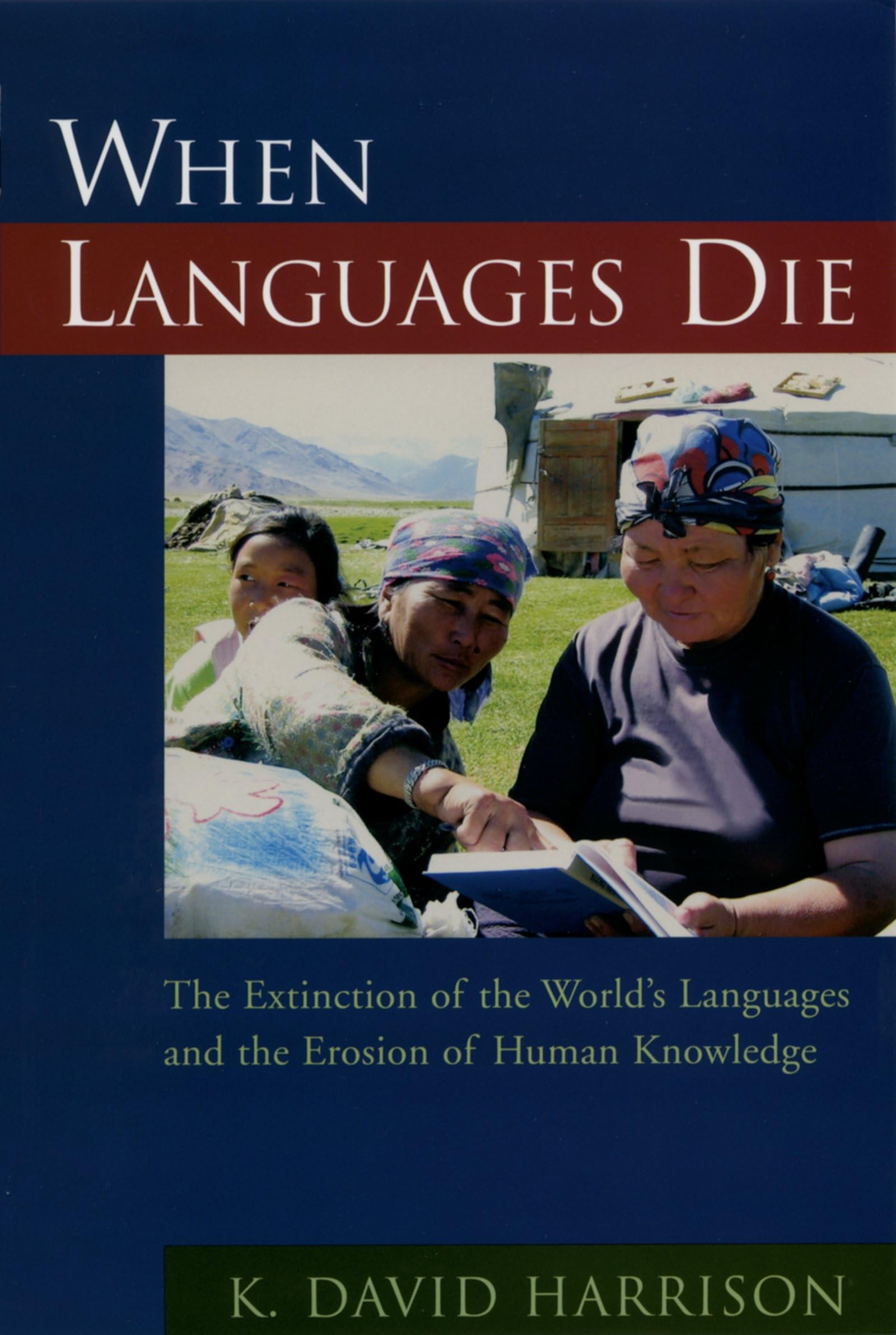
It is commonly agreed by linguists and anthropologists that the majority of languages spoken now around the globe will likely disappear within our lifetime. The phenomenon known as language death has started to accelerate as the world has grown smaller.This extinction of languages, and the knowledge therein, has no parallel in human history. K. David Harrison's book is the first to focus on the essential question, what is lost when a language dies? What forms of knowledge are embedded in a language's structure and vocabulary? And how harmful is it to humanity that such knowledge is lost forever?Harrison spans the globe from Siberia, to North America, to the Himalayas and elsewhere, to look at the human knowledge that is slowly being lost as the languages that express it fade from sight. He uses fascinating anecdotes and portraits of some of these languages' last remaining speakers, in order to demonstrate that this knowledge about ourselves and the world is inherently precious and once gone, will be lost forever. This knowledge is not only our cultural heritage (oral histories, poetry, stories, etc.) but very useful knowledge about plants, animals, the seasons, and other aspects of the natural worldnot to mention our understanding of the capacities of the human mind. Harrison's book is a testament not only to the pressing issue of language death, but to the remarkable span of human knowledge and ingenuity. It will fascinate linguists, anthropologists, and general readers.
⚠️ WARNING (California Proposition 65):
This product may contain chemicals known to the State of California to cause cancer,
birth defects, or other reproductive harm.
For MAP (Minimum Advertised Price) violations and Intellectual Property (IP) or Trademark concerns, please contact:
support@ergodebooks.com
⚠️ California Proposition 65 Warning: Some products sold on this website may expose you to chemicals known to the State of California to cause cancer, birth defects, or other reproductive harm. For more information, visit www.P65Warnings.ca.gov.