If you have any questions, you are always welcome to contact us. We'll get back to you as soon as possible, withing 24 hours on weekdays.
Customer service
All questions about your order, return and delivery must be sent to our customer service team by e-mail at yourstore@yourdomain.com
Sale & Press
If you are interested in selling our products, need more information about our brand or wish to make a collaboration, please contact us at press@yourdomain.com
Help
If you have any questions, you are always welcome to contact us. We'll get back to you as soon as possible, withing 24 hours on weekdays.
Customer service
All questions about your order, return and delivery must be sent to our customer service team by e-mail at yourstore@yourdomain.com
Sale & Press
If you are interested in selling our products, need more information about our brand or wish to make a collaboration, please contact us at press@yourdomain.com
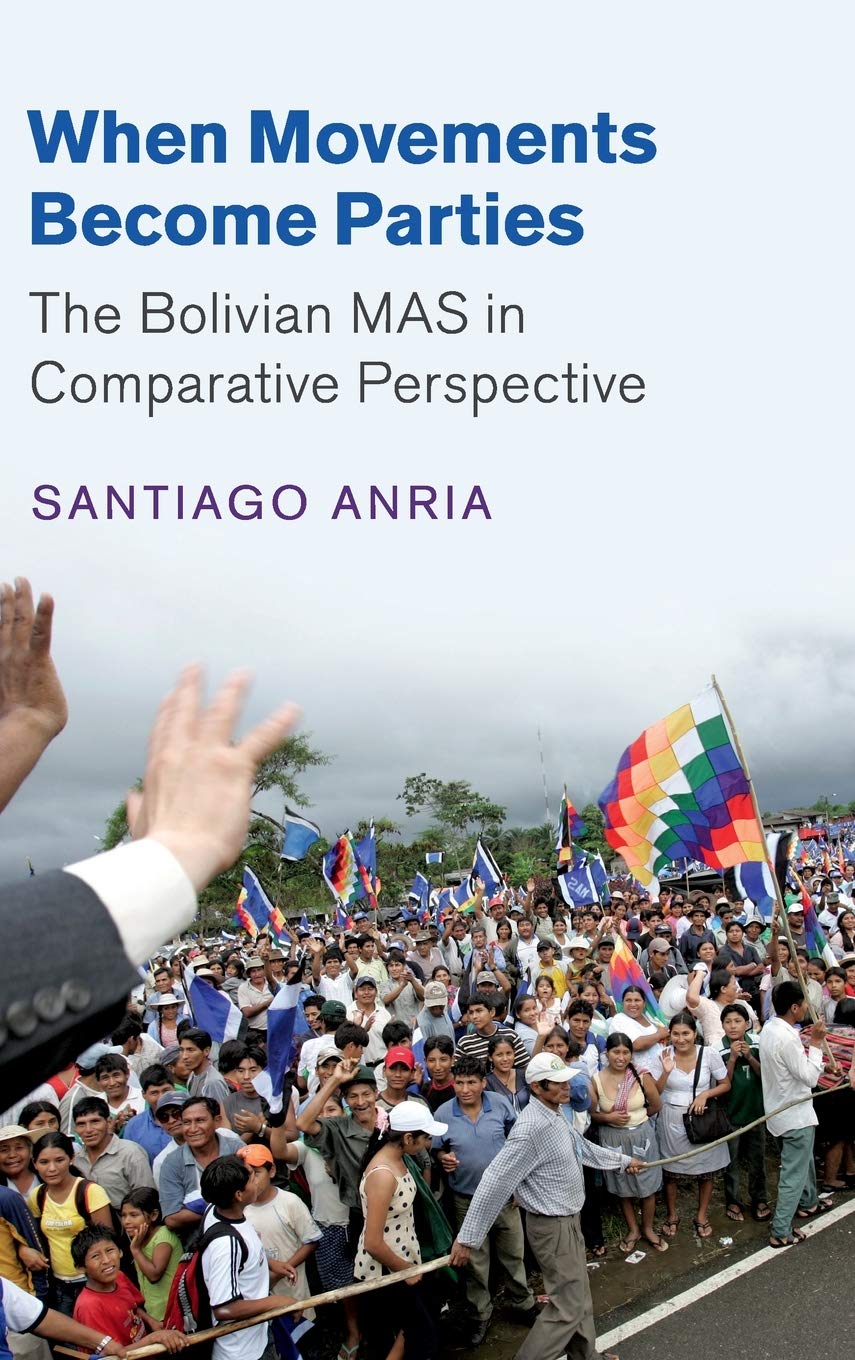
Why do some parties formed by social movements develop topdown structures while others stay more open and responsive to their social bases? The first rigorous comparative study of movementbased parties, this book shows not only how movements can form parties but also how movements contribute to parties' internal politics and shape organizational party models over the long term. Although the existing literature argues that movementbased parties will succumb to professionalization and specialization, Anria shows that this is not inevitable or preordained through an indepth examination of the unusual and counterintuitive development of Bolivia's MAS. Anria then compares the evolution of the MAS with that of other parties formed by social movements, including Brazil's PT and Uruguay's FA. In a region where successful new parties of any type have been rare, these three parties are remarkable for their success. Yet, despite their similar origins, they differ sharply in their organizational models.
⚠️ WARNING (California Proposition 65):
This product may contain chemicals known to the State of California to cause cancer,
birth defects, or other reproductive harm.
For MAP (Minimum Advertised Price) violations and Intellectual Property (IP) or Trademark concerns, please contact:
support@ergodebooks.com
⚠️ California Proposition 65 Warning: Some products sold on this website may expose you to chemicals known to the State of California to cause cancer, birth defects, or other reproductive harm. For more information, visit www.P65Warnings.ca.gov.