If you have any questions, you are always welcome to contact us. We'll get back to you as soon as possible, withing 24 hours on weekdays.
Customer service
All questions about your order, return and delivery must be sent to our customer service team by e-mail at yourstore@yourdomain.com
Sale & Press
If you are interested in selling our products, need more information about our brand or wish to make a collaboration, please contact us at press@yourdomain.com
Help
If you have any questions, you are always welcome to contact us. We'll get back to you as soon as possible, withing 24 hours on weekdays.
Customer service
All questions about your order, return and delivery must be sent to our customer service team by e-mail at yourstore@yourdomain.com
Sale & Press
If you are interested in selling our products, need more information about our brand or wish to make a collaboration, please contact us at press@yourdomain.com
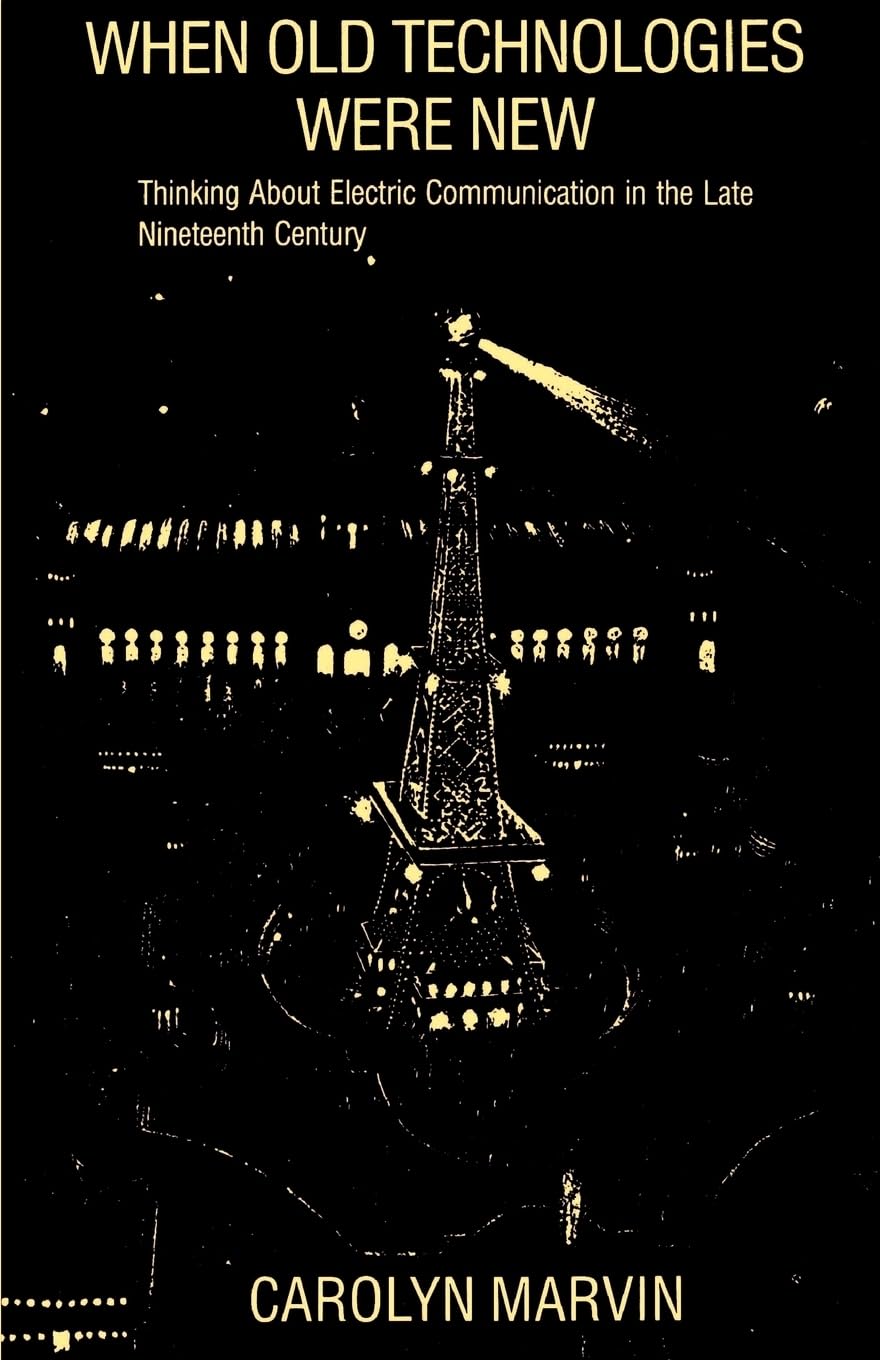
In The History Of Electronic Communication, The Last Quarter Of The Nineteenth Century Holds A Special Place, For It Was During This Period That The Telephone, Phonograph, Electric Light, Wireless, And Cinema Were All Invented. In When Old Technologies Were New, Carolyn Marvin Explores How Two Of These New Inventionsthe Telephone And The Electric Lightwere Publicly Envisioned At The End Of The Nineteenth Century, As Seen In Specialized Engineering Journals And Popular Media. Marvin Pays Particular Attention To The Telephone, Describing How It Disrupted Established Social Relations, Unsettling Customary Ways Of Dividing The Private Person And Family From The More Public Setting Of The Community. On The Lighter Side, She Describes How People Spoke Louder When Calling Long Distance, And How They Worried About Catching Contagious Diseases Over The Phone. A Particularly Powerful Chapter Deals With Telephonic Precursors Of Radio Broadcastingthe 'Telephone Herald' In New York And The 'Telefon Hirmondo' Of Hungaryand The Conflict Between The Technological Development Of Broadcasting And The Attempt To Impose A Homogenous, Ethnocentric Variant Of Anglosaxon Culture On The Public. While Focusing On The Way Professionals In The Electronics Field Tried To Control The New Media, Marvin Also Illuminates The Broader Social Impact, Presenting A Wideranging, Informative, And Entertaining Account Of The Early Years Of Electronic Media.
⚠️ WARNING (California Proposition 65):
This product may contain chemicals known to the State of California to cause cancer,
birth defects, or other reproductive harm.
For MAP (Minimum Advertised Price) violations and Intellectual Property (IP) or Trademark concerns, please contact:
support@ergodebooks.com
⚠️ California Proposition 65 Warning: Some products sold on this website may expose you to chemicals known to the State of California to cause cancer, birth defects, or other reproductive harm. For more information, visit www.P65Warnings.ca.gov.