
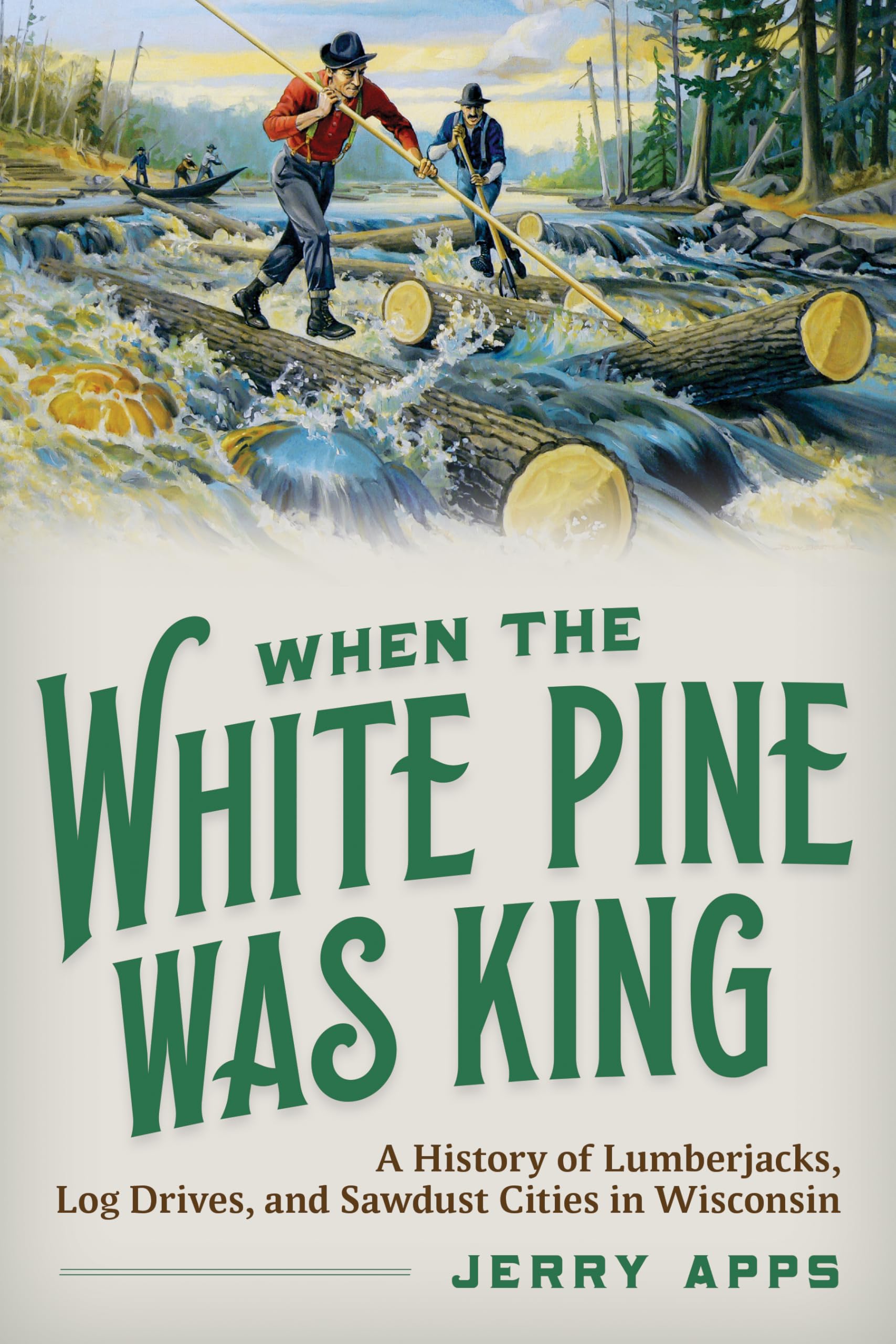
Title
When The White Pine Was King: A History Of Lumberjacks, Log Drives, And Sawdust Cities In Wisconsin
Sold by Ergodebooks, an authorized reseller.
Returns accepted within 30 days | support@ergodebooks.com
Shipping Information
- Free Standard Shipping — United States only
- Processing Time: 3–5 business days
- Estimated Delivery: 6–10 business days after dispatch
- Double-boxed, fully insured & discreetly packaged
- Tracking number sent via email once dispatched
Returns & Refund
Returns accepted within 30 days of delivery.
Damaged or Defective Item
Free return shipping + replacement or full refund
Wrong Item Received
Free return shipping + replacement or full refund
Change of Mind
Return shipping at customer's expense · 25% restocking fee applies
Payment Option

From The Ring Of The Ax In The Woods, To The Scream Of The Saw Blade In The Mill, To The Founding Of Many Of Wisconsins Communities, Jerry Apps Does An Outstanding Job Bringing Wisconsins Logging And Lumbering Heritage To Life.Kerry P. Bloedorn, Director, Rhinelander Pioneer Park Historical Complexfor More Than Half A Century, Logging, Lumber Production, And Affiliated Enterprises In Wisconsins Northwoods Provided Jobs For Tens Of Thousands Of Wisconsinites And Wealth For Many Individuals. The Industry Cut Through The Lives Of Nearly Every Wisconsin Citizen, From An Immigrant Lumberjack Or Camp Cook In The Chippewa Valley To A Suamico Sawmill Operator, An Oshkosh Factory Worker To A Milwaukee Banker.When The White Pine Was King Tells The Stories Of The Heyday Of Logging: Of Lumberjacks And Camp Cooks, Of River Drives And Deadly Log Jams, Of Sawmills And Lumber Towns And The Echo Of The Ax Ringing Through The Northwoods As Yet Another White Pine Crashed To The Ground. He Explores The Aftermath Of The Logging Era, Including Efforts To Farm The Cutover (Most Of Them Doomed To Fail), Successful Reforestation Work, And The Legacy Of The Lumber And Wood Products Industries, Which Continue To Fuel The States Economy.Enhanced With Dozens Of Historic Photos, When The White Pine Was King Transports Readers To The Lumber Boom Era And Reveals How The Lessons Learned In The Vast Northern Forestlands Continue To Shape The Region Today.
⚠️ WARNING (California Proposition 65):
This product may contain chemicals known to the State of California to cause cancer, birth defects, or other reproductive harm.
For more information, please visit www.P65Warnings.ca.gov.
- Q: How many pages does the book have? A: The book has one hundred ninety-two pages. It provides a comprehensive history of Wisconsin's lumbering heritage and its impact on local communities.
- Q: What is the binding type of this book? A: The book is a paperback. This binding type is lightweight and flexible, making it easy to carry and read.
- Q: What are the dimensions of the book? A: The book measures six inches in length, zero point six inches in width, and nine point zero two inches in height. These dimensions make it a convenient size for reading.
- Q: Who is the author of this book? A: The author is Jerry Apps. He is known for his expertise in Wisconsin history and has written extensively on this subject.
- Q: What genre does this book belong to? A: This book belongs to the genre of Environmental Economics. It explores the logging industry and its economic impact on Wisconsin.
- Q: Is there a historical focus in this book? A: Yes, the book focuses on Wisconsin's logging history. It delves into the lives of lumberjacks, sawmill operators, and the communities shaped by the industry.
- Q: How can I use this book for educational purposes? A: You can use this book as a historical reference or for research on Wisconsin’s logging industry. It is suitable for students and history enthusiasts alike.
- Q: Is this book suitable for children? A: Yes, the book is suitable for older children and teens interested in history. However, parental guidance may be helpful for younger readers.
- Q: What themes are explored in this book? A: The book explores themes of environmental impact, economic development, and community history. It provides insights into the logging boom and its lasting effects.
- Q: How should I store this book? A: Store the book in a cool, dry place away from direct sunlight. This will help preserve the quality of the paper and binding.
- Q: Can I clean the book if it gets dirty? A: Yes, you can gently wipe the cover with a soft, dry cloth. Avoid using water or cleaning solutions that could damage the pages.
- Q: Is this book easy to read? A: Yes, the book is written in an engaging and accessible style. Readers will find the narrative clear and informative.
- Q: What if I receive a damaged book? A: If you receive a damaged book, contact the seller for a return or exchange. Most sellers have policies in place to address such issues.
- Q: Does the book include photographs? A: Yes, the book is enhanced with dozens of historic photos. These images help illustrate the logging era and its significance in Wisconsin.
- Q: Is there a focus on reforestation in the book? A: Yes, the book discusses the aftermath of logging, including reforestation efforts. It highlights the importance of sustainable practices in forestry.
- Q: How does this book contribute to understanding Wisconsin's economy? A: The book provides insights into the historical roots of Wisconsin's economy through the lens of the logging industry. It examines how this sector shaped local wealth and employment.