
Title
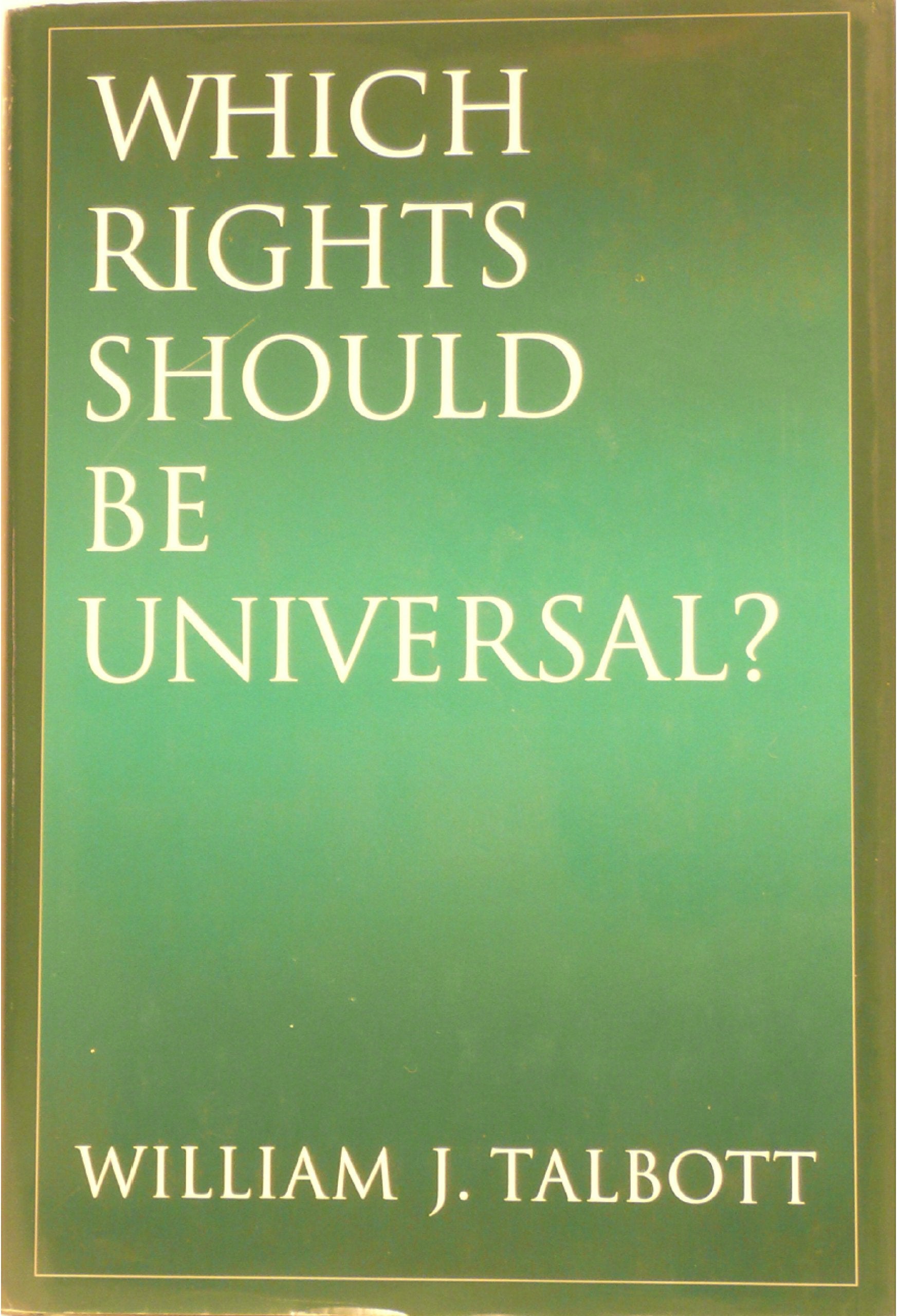
Which Rights Should Be Universal?,Used
Sold by Ergodebooks, an authorized reseller.
Returns accepted within 30 days | support@ergodebooks.com
Shipping Information
- Free Standard Shipping — United States only
- Processing Time: 3–5 business days
- Estimated Delivery: 6–10 business days after dispatch
- Double-boxed, fully insured & discreetly packaged
- Tracking number sent via email once dispatched
Returns & Refund
Returns accepted within 30 days of delivery.
Damaged or Defective Item
Free return shipping + replacement or full refund
Wrong Item Received
Free return shipping + replacement or full refund
Change of Mind
Return shipping at customer's expense · 25% restocking fee applies
Payment Option

We hold these truths to be selfevident...' So begins the U.S. Declaration of Independence. What follows those words is a ringing endorsement of universal rights, but it is far from selfevident. Why did the authors claim that it was? William Talbott suggests that they were trapped by a presupposition of Enlightenment philosophy: That there was only one way to rationally justify universal truths, by proving them from selfevident premises.With the benefit of hindsight, it is clear that the authors of the U.S. Declaration had no infallible source of moral truth. For example, many of the authors of the Declaration of Independence endorsed slavery. The wrongness of slavery was not selfevident; it was a moral discovery.In this book, William Talbott builds on the work of John Rawls, Jrgen Habermas, J.S. Mill, Amartya Sen, and Henry Shue to explain how, over the course of history, human beings have learned how to adopt a distinctively moral point of view from which it is possible to make universal, though not infallible, judgments of right and wrong. He explains how this distinctively moral point of view has led to the discovery of the moral importance of nine basic rights.Undoubtedly, the most controversial issue raised by the claim of universal rights is the issue of moral relativism. How can the advocate of universal rights avoid being a moral imperialist? In this book, Talbott shows how to defend basic individual rights from a universal moral point of view that is neither imperialistic nor relativistic. Talbott avoids moral imperialism by insisting that all of us, himself included, have moral blindspots and that we usually depend on others to help us to identify those blindspots.Talbott's book speaks to not only debates on human rights but to broader issues of moral and cultural relativism, and will interest a broad range of readers.
⚠️ WARNING (California Proposition 65):
This product may contain chemicals known to the State of California to cause cancer, birth defects, or other reproductive harm.
For more information, please visit www.P65Warnings.ca.gov.