
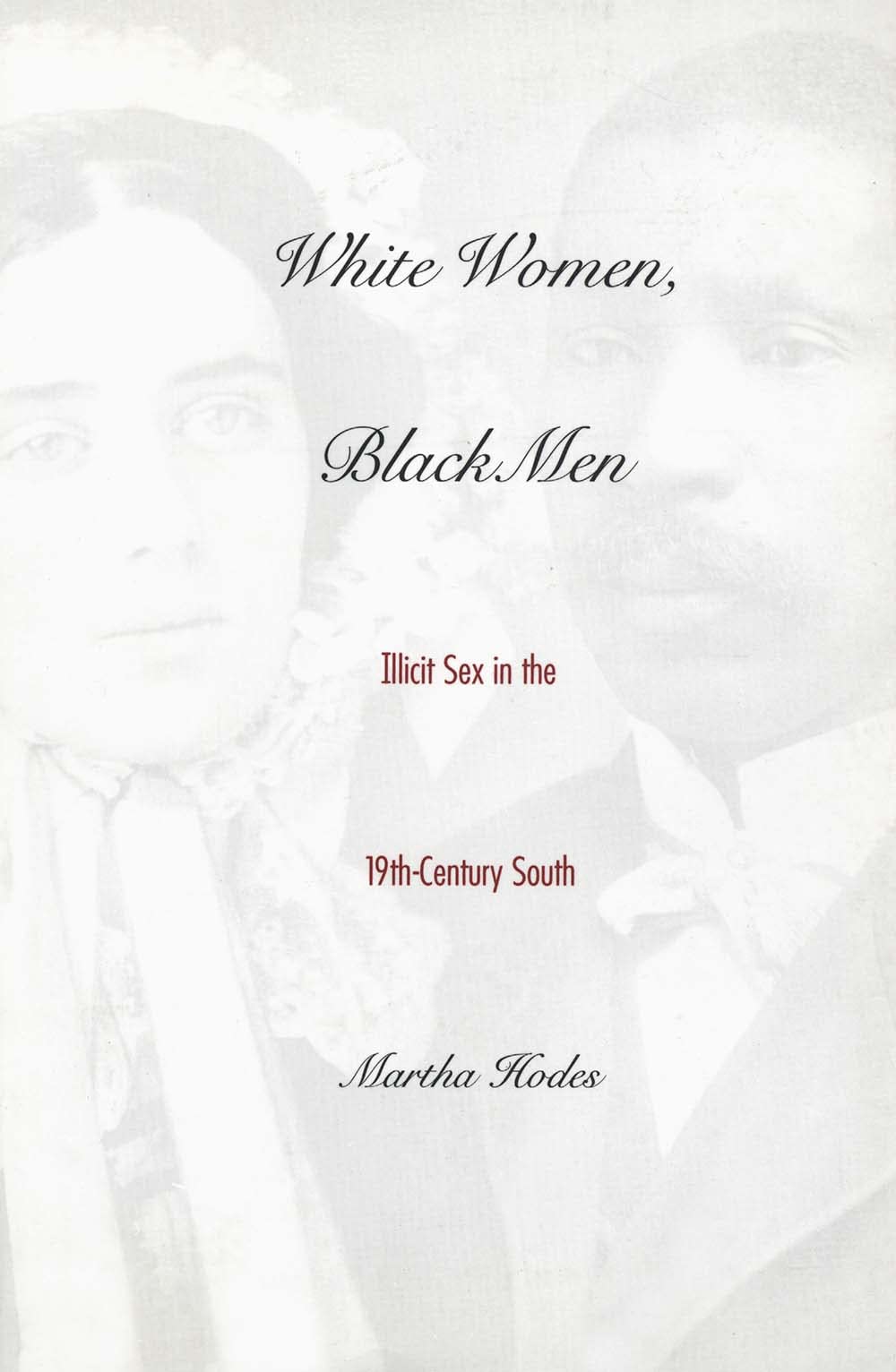
Title
White Women, Black Men: Illicit Sex In The Nineteenthcentury South
Sold by Ergodebooks, an authorized reseller.
Returns accepted within 30 days | support@ergodebooks.com
Shipping Information
- Free Standard Shipping — United States only
- Processing Time: 3–5 business days
- Estimated Delivery: 6–10 business days after dispatch
- Double-boxed, fully insured & discreetly packaged
- Tracking number sent via email once dispatched
Returns & Refund
Returns accepted within 30 days of delivery.
Damaged or Defective Item
Free return shipping + replacement or full refund
Wrong Item Received
Free return shipping + replacement or full refund
Change of Mind
Return shipping at customer's expense · 25% restocking fee applies
Payment Option

[A] Fascinating Survey Of Interracial Relationships In The South Between The 1680S And The 1880S. . . . Enthralling.David Nicholson, Washington Postthis Awardwinning Book Is The First To Explore The History Of A Powerful Category Of Illicit Sex In Americas Past: Liaisons Between Southern White Women And Black Men. Martha Hodes Tells A Series Of Stories About Such Liaisons In The Years Before The Civil War, Explores The Complex Ways In Which White Southerners Tolerated Them In The Slave South, And Shows How And Why These Responses Changed With Emancipation.Hodes Provides Details Of The Wedding Of A White Servantwoman And A Slave Man In 1681, An Antebellum Rape Accusation That Uncovered A Relationship Between An Unmarried White Woman And A Slave, And A Divorce Plea From A White Farmer Based On An Adulterous Affair Between His Wife And A Neighborhood Slave. Drawing On Sources That Include Courtroom Testimony, Legislative Petitions, Pardon Pleas, And Congressional Testimony, She Presents The Voices Of The Authorities, Eyewitnesses, And The Transgressors Themselvesand These Voices Seem To Say That In The Slave South, Whites Were Not Overwhelmingly Concerned About Such Liaisons, Beyond The Racial And Legal Status Of The Children That Were Produced. Only With The Advent Of Black Freedom Did The Issue Move Beyond Neighborhood Dramas And Into The Arena Of Politics, Becoming A Much More Serious Taboo Than It Had Ever Been Before. Hodes Gives Vivid Examples Of The Violence That Followed The Upheaval Of War, When Black Men And White Women Were Targeted By The Ku Klux Klan And Unprecedented White Rage And Terrorism Against Such Liaisons Began To Erupt. An Era Of Terror And Lynchings Was Inaugurated, And The Legacy Of These Sexual Politics Lingered Well Into The Twentieth Century.
⚠️ WARNING (California Proposition 65):
This product may contain chemicals known to the State of California to cause cancer, birth defects, or other reproductive harm.
For more information, please visit www.P65Warnings.ca.gov.
- Q: What is the page count of this book? A: This book has three hundred fifty-two pages. It provides an in-depth exploration of interracial relationships in the South during the nineteenth century.
- Q: What are the dimensions of the book? A: The book measures nine point twenty-five inches in length, six point one inches in width, and zero point ninety-four inches in height.
- Q: What type of binding does this book have? A: This book is available in paperback binding. This makes it lightweight and easy to handle for reading.
- Q: Who is the author of this book? A: The author of this book is Martha Hodes. She is recognized for her research on race and gender in American history.
- Q: What is the genre of this book? A: The genre of this book is sexuality. It explores complex themes of race and relationships in the historical context of the South.
- Q: How should I read this book? A: You can read this book as a historical exploration of interracial relationships. It is suitable for those interested in American history and social studies.
- Q: Is this book suitable for academic research? A: Yes, this book is suitable for academic research. It includes detailed historical accounts and primary sources relevant to history and sociology.
- Q: What age group is this book appropriate for? A: This book is appropriate for mature audiences, typically high school age and older. It discusses sensitive themes related to race and sexuality.
- Q: How can I keep the book in good condition? A: To keep the book in good condition, store it in a cool, dry place and avoid exposing it to direct sunlight. Handle it gently to prevent wear.
- Q: Can I lend this book to others? A: Yes, you can lend this book to others. Just ensure that they understand its sensitive themes and handle it carefully.
- Q: What if the book arrives damaged? A: If the book arrives damaged, you should contact the seller for a return or exchange. Most retailers have policies for damaged items.
- Q: Is there a warranty for this book? A: No, books typically do not come with a warranty. However, check with the retailer for their return policy.
- Q: How do I report a missing page in the book? A: To report a missing page, contact the retailer or publisher where you purchased the book. They may offer a replacement.
- Q: Are there any discussion questions included in the book? A: No, this book does not include discussion questions. However, its rich content can inspire thoughtful discussions.
- Q: Is this book part of a series? A: No, this book is not part of a series. It stands alone as a comprehensive study of its subject matter.
- Q: Can this book be used in a classroom setting? A: Yes, this book can be used in a classroom setting. It provides valuable insights for discussions on race, history, and social issues.