
Title
Whitecollar Government: The Hidden Role Of Class In Economic Policy Making (Chicago Studies In American Politics)
Sold by Ergodebooks, an authorized reseller.
Returns accepted within 30 days | support@ergodebooks.com
Shipping Information
- Free Standard Shipping — United States only
- Processing Time: 3–5 business days
- Estimated Delivery: 6–10 business days after dispatch
- Double-boxed, fully insured & discreetly packaged
- Tracking number sent via email once dispatched
Returns & Refund
Returns accepted within 30 days of delivery.
Damaged or Defective Item
Free return shipping + replacement or full refund
Wrong Item Received
Free return shipping + replacement or full refund
Change of Mind
Return shipping at customer's expense · 25% restocking fee applies
Payment Option

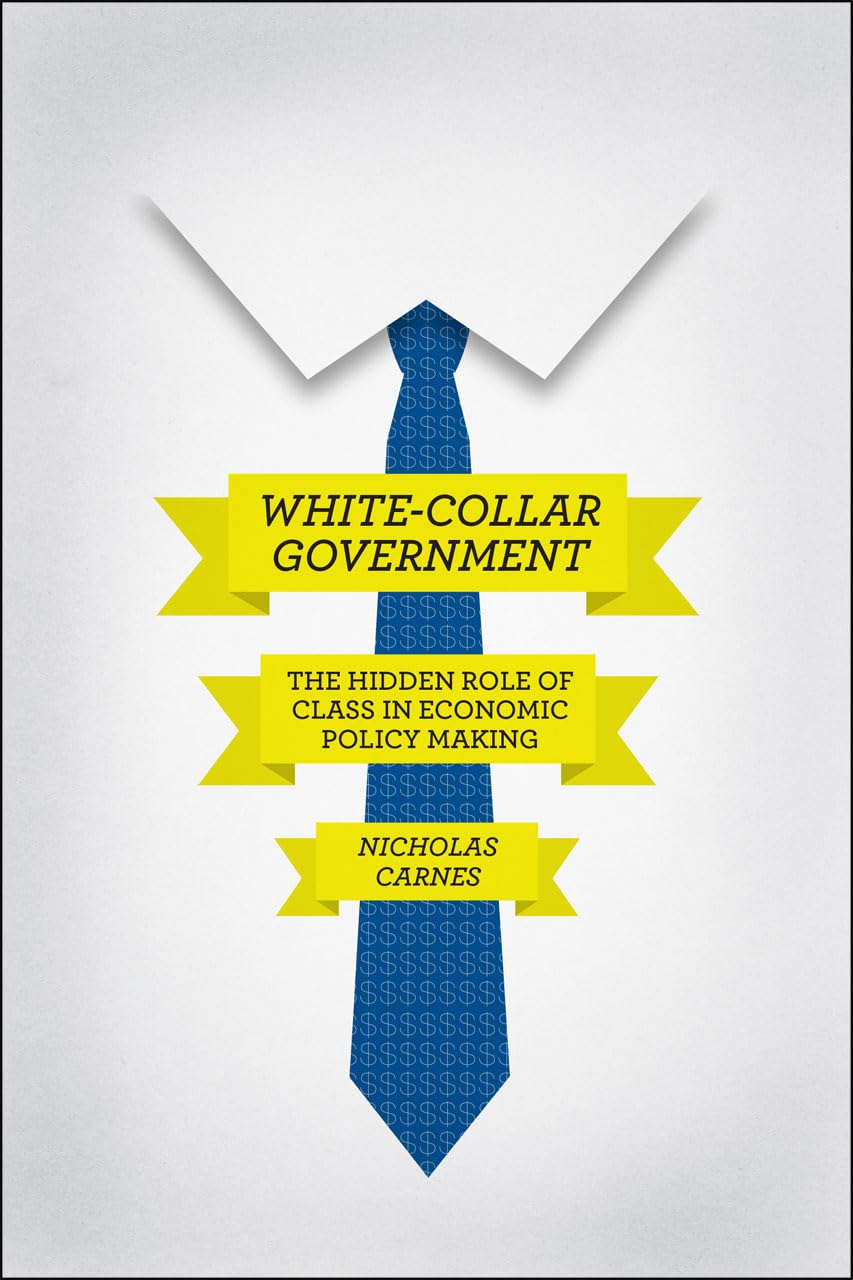
Eight Of The Last Twelve Presidents Were Millionaires When They Took Office. Millionaires Have A Majority On The Supreme Court, And They Also Make Up Majorities In Congress, Where A Background In Business Or Law Is The Norm And The Average Member Has Spent Less Than Two Percent Of His Or Her Adult Life In A Workingclass Job. Why Is It That Most Politicians In America Are So Much Better Off Than The People Who Elect Them And Does The Social Class Divide Between Citizens And Their Representatives Matter?With Whitecollar Government, Nicholas Carnes Answers This Question With A Resoundingand Disturbingyes. Legislators Socioeconomic Backgrounds, He Shows, Have A Profound Impact On Both How They View The Issues And The Choices They Make In Office. Scant Representation From Among The Working Class Almost Guarantees That The Policymaking Process Will Be Skewed Toward Outcomes That Favor The Upper Class. It Matters That The Wealthiest Americans Set The Tax Rates For The Wealthy, That Whitecollar Professionals Choose The Minimum Wage For Bluecollar Workers, And That People Who Have Always Had Health Insurance Decide Whether Or Not To Help Those Without. And While There Is No One Cause For This Crisis Of Representation, Carnes Shows That The Problem Does Not Stem From A Lack Of Qualified Candidates From Among The Working Class. The Solution, He Argues, Must Involve A Variety Of Changes, From The Equalization Of Campaign Funding To A Shift In The Types Of Candidates The Parties Support.If We Want A Government For The People, We Have To Start Working Toward A Government That Is Truly By The People. Whitecollar Government Challenges Longheld Notions About The Causes Of Political Inequality In The United States And Speaks To Enduring Questions About Representation And Political Accountability.
⚠️ WARNING (California Proposition 65):
This product may contain chemicals known to the State of California to cause cancer, birth defects, or other reproductive harm.
For more information, please visit www.P65Warnings.ca.gov.
- Q: What is the page count of this book? A: The book has one hundred eighty-eight pages. It provides an in-depth analysis of the intersection between social class and political policy.
- Q: What are the dimensions of the book? A: The book measures eight point nine inches in length, five point nine one inches in width, and zero point five one inches in height. These dimensions make it portable and easy to handle.
- Q: What type of binding does this book have? A: This book is published in paperback binding. This allows for flexibility and ease of reading.
- Q: How do I read this book effectively? A: To read this book effectively, set aside dedicated time to reflect on its themes. Take notes on key points regarding socioeconomic impacts on policy making.
- Q: Is this book suitable for beginners in political science? A: Yes, this book is suitable for beginners in political science. It presents complex ideas in an accessible format without assuming prior knowledge.
- Q: What age group is this book appropriate for? A: This book is appropriate for adults and older teens interested in political science and economic policy. It discusses mature themes related to class and representation.
- Q: How should I store this book to keep it in good condition? A: Store this book in a cool, dry place away from direct sunlight. Keeping it upright on a shelf can help maintain its shape.
- Q: Can I lend this book to others? A: Yes, you can lend this book to others. Just ensure that the book is returned in the same condition to maintain its quality.
- Q: What is the best way to clean this book? A: To clean this book, gently wipe the cover with a soft, dry cloth. Avoid using liquids as they can damage the pages.
- Q: Is there a warranty or return policy for this book? A: Typically, books do not come with a warranty. However, you can check the return policy of the retailer for specific terms.
- Q: What if the book arrives damaged? A: If the book arrives damaged, contact the retailer immediately for a replacement or refund. Most retailers have policies in place for such issues.
- Q: How does this book compare to other political science texts? A: This book offers a unique perspective by focusing on class issues, setting it apart from many traditional political science texts that may not emphasize socioeconomic factors.
- Q: Is this book suitable for academic research? A: Yes, this book is suitable for academic research. It provides valuable insights into class dynamics in policy making that can support various research topics.
- Q: Does this book include any illustrations or tables? A: Yes, the book includes sixty-one line drawings and eight tables. These visual elements enhance the understanding of complex data and concepts.
- Q: Who is the author of this book? A: The author of this book is Nicholas Carnes. He is known for his work on political inequality and socioeconomic influence in policy.
- Q: What topics does this book cover? A: This book covers topics related to economic policy, political representation, and the impact of social class on governance. It aims to challenge existing notions of political accountability.