
Title
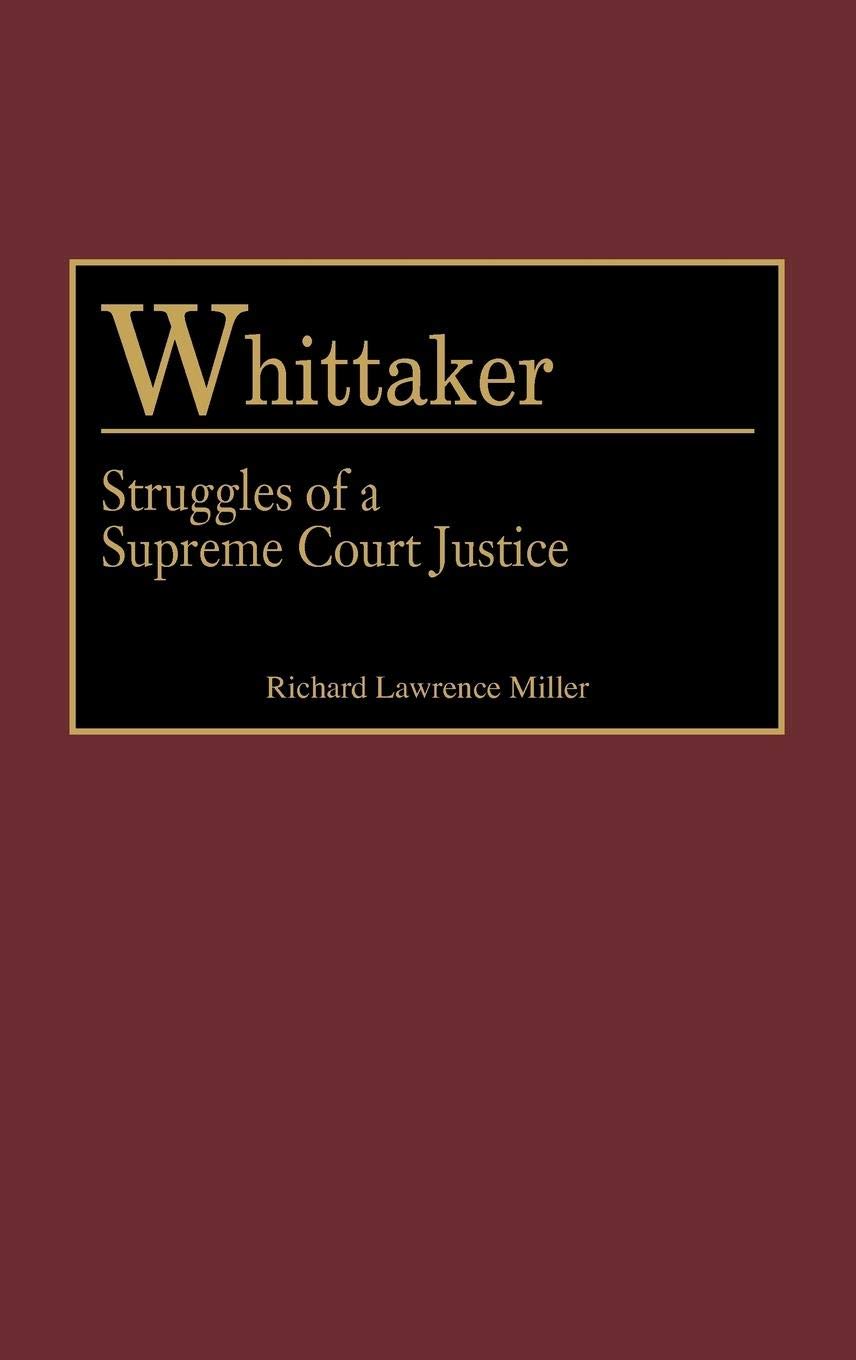
Whittaker: Struggles of a Supreme Court Justice (Contributions in Legal Studies),New
Sold by Ergodebooks, an authorized reseller.
Returns accepted within 30 days | support@ergodebooks.com
Shipping Information
- Free Standard Shipping — United States only
- Processing Time: 3–5 business days
- Estimated Delivery: 6–10 business days after dispatch
- Double-boxed, fully insured & discreetly packaged
- Tracking number sent via email once dispatched
Returns & Refund
Returns accepted within 30 days of delivery.
Damaged or Defective Item
Free return shipping + replacement or full refund
Wrong Item Received
Free return shipping + replacement or full refund
Change of Mind
Return shipping at customer's expense · 25% restocking fee applies
Payment Option

A Kansas farm boy, who talked his way into law school despite his lack of a high school diploma, Charles E. Whittaker was admitted to the bar before graduation and became the stereotype of a demanding, workaholic attorney. In a thirtyyear practice representing Midwest corporations, he became universally admired among Missouri lawyers, and the American Bar Association called him one of the best selections ever made for the Supreme Court. Yet the very characteristics that made Whittaker one of the most acclaimed choices ensured that his service would be catastrophic both for the Court and for him. By the time he left that bench, legal scholars considered his performance on the Court as one of the saddest.Whittaker was apolitical, yet won judicial appointments requiring strong support from politicians of national strength. He was a hardline law and order judge who was horrified by the death penalty. During the turbulent 1960s, he called for rational discussion of public issues, yet gave inflammatory speeches linking the civil rights movement to Communism. He was the epitome of his era's Main Street conservatism. Most biographies of justices deal with those who had great influence on law and society. From an institutional standpoint, however, this study of a justice who failed sharpens our understanding of how the U.S. Supreme Court differs from other judicial bodies and fills a surprising gap in the Court's history.
⚠️ WARNING (California Proposition 65):
This product may contain chemicals known to the State of California to cause cancer, birth defects, or other reproductive harm.
For more information, please visit www.P65Warnings.ca.gov.