
Title
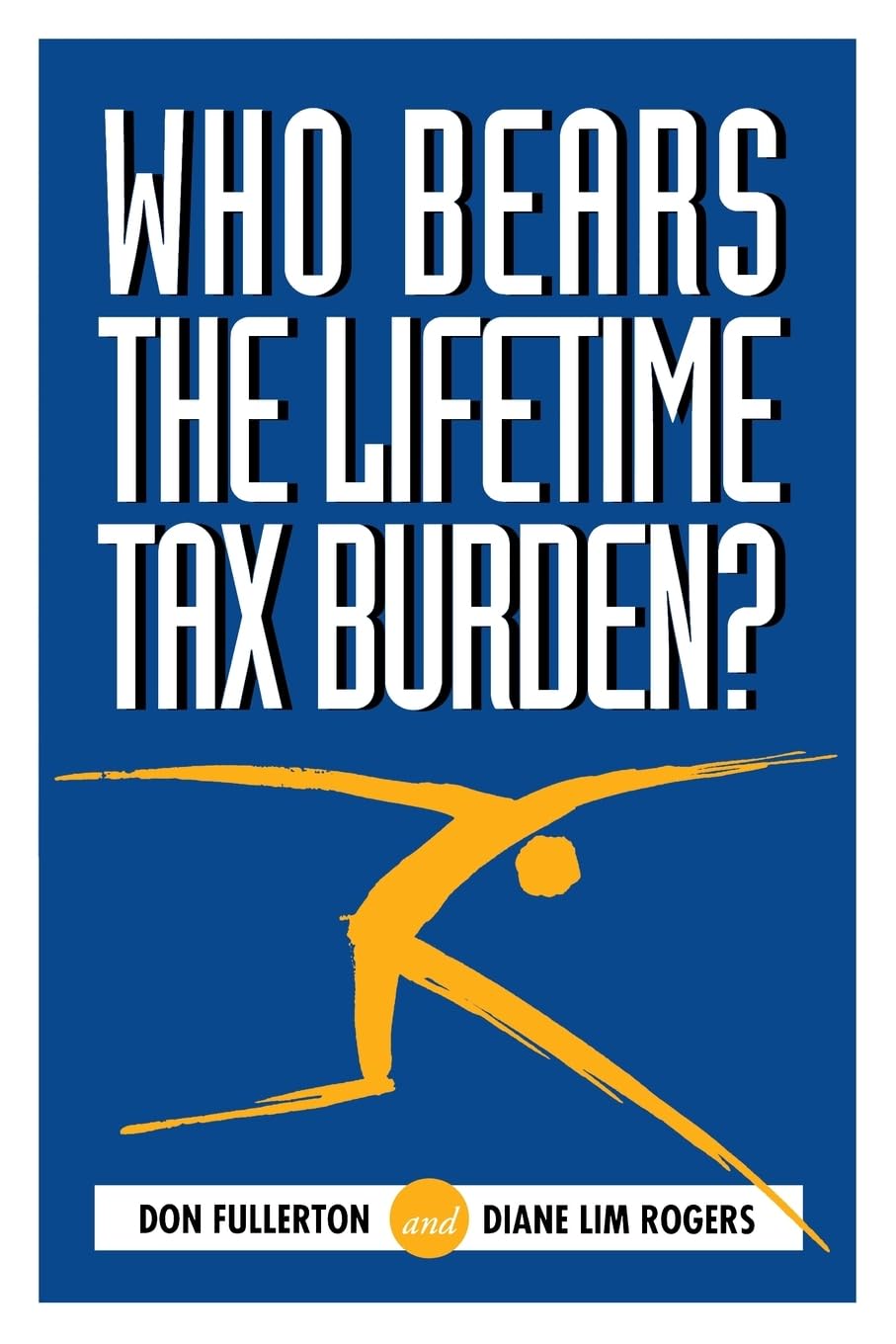
Who Bears The Lifetime Tax Burden?,Used
Sold by Ergodebooks, an authorized reseller.
Returns accepted within 30 days | support@ergodebooks.com
Shipping Information
- Free Standard Shipping — United States only
- Processing Time: 3–5 business days
- Estimated Delivery: 6–10 business days after dispatch
- Double-boxed, fully insured & discreetly packaged
- Tracking number sent via email once dispatched
Returns & Refund
Returns accepted within 30 days of delivery.
Damaged or Defective Item
Free return shipping + replacement or full refund
Wrong Item Received
Free return shipping + replacement or full refund
Change of Mind
Return shipping at customer's expense · 25% restocking fee applies
Payment Option

Debates about tax policy arise every year in Washington, and legislative changes occur almost as often. In just the past decade, corporate tax burdens were dramatically reduced and then subsequently increased. But who really bears the burden of taxation? Finding a satisfactory way to address this question remains one of the biggest challenges for economists. While much research has explored this issue using annual data on household incomes and expenditures, this book considers the multiple effects of taxes on individuals over their entire lifetimes.Since annual incomes typically vary from year to year, and change systematically over the course of a lifetime, annual income is not necessarily a good indicator of a person's relative wellbeing. Instead, Dianne Rogers and Don Fullerton categorize individuals into lifetime income groups, and reestimate the pattern of earnings over the lifetime of each group. They utilize a general equilibrium model that encompasses household demands, work effort, and savings, and they calculate the distribution of each current tax. Because their model includes all major U.S. federal, state, and local taxes, it can be used to simulate the effects of changes in any of those taxes on investment, productivity, resource allocation, and the distribution of burdens.Don Fullerton is professor of economics at the University of Virginia and visiting professor of economics and public policy at Carnegie Mellon, School of Urban and Public Affairs. He served as Deputy Assistant Secretary of the Treasury for Tax Analysis from 1985 to 1987. Diane Lim Rogers is assistant professor of economics at Pennsylvania State University.'
⚠️ WARNING (California Proposition 65):
This product may contain chemicals known to the State of California to cause cancer, birth defects, or other reproductive harm.
For more information, please visit www.P65Warnings.ca.gov.