
Title
Who Cleans the Park?: Public Work and Urban Governance in New York City,Used
Sold by Ergodebooks, an authorized reseller.
Returns accepted within 30 days | support@ergodebooks.com
Shipping Information
- Free Standard Shipping — United States only
- Processing Time: 3–5 business days
- Estimated Delivery: 6–10 business days after dispatch
- Double-boxed, fully insured & discreetly packaged
- Tracking number sent via email once dispatched
Returns & Refund
Returns accepted within 30 days of delivery.
Damaged or Defective Item
Free return shipping + replacement or full refund
Wrong Item Received
Free return shipping + replacement or full refund
Change of Mind
Return shipping at customer's expense · 25% restocking fee applies
Payment Option

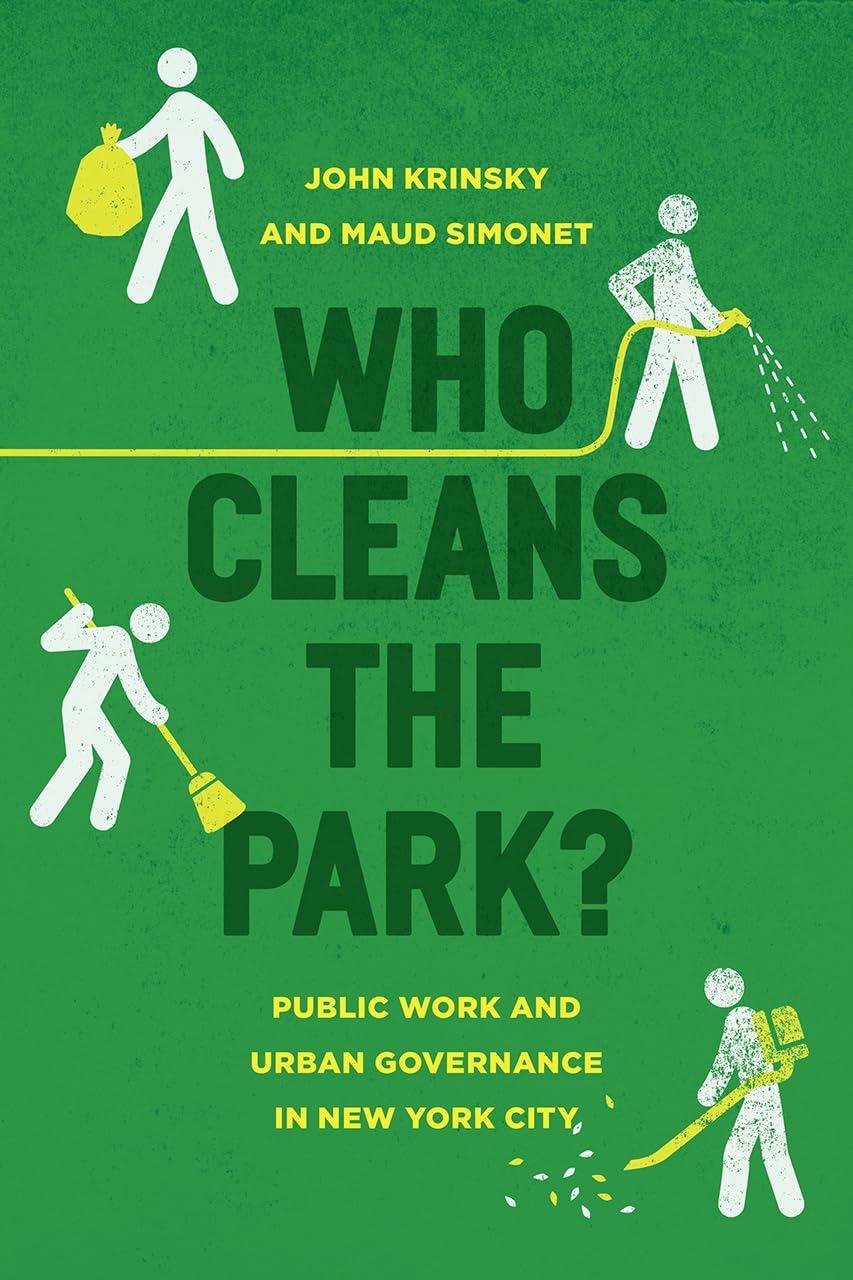
Americas public parks are in a golden age. Hundreds of millions of dollarsboth public and privatefund urban jewels like Manhattans Central Park. Keeping the polish on landmark parks and in neighborhood playgrounds alike means that the trash must be picked up, benches painted, equipment tested, and leaves raked. Bringing this ofteninvisible work into view, however, raises profound questions for citizens of cities.In Who Cleans the Park? John Krinsky and Maud Simonet explain that the work of maintaining parks has intersected with broader trends in welfare reform, civic engagement, criminal justice, and the rise of publicprivate partnerships. Welfaretowork trainees, volunteers, unionized city workers (sometimes working outside their official job descriptions), staff of nonprofit park conservancies, and people sentenced to community service are just a few of the groups who routinely maintain parks. With public services no longer being provided primarily by public workers, Krinsky and Simonet argue, the nature of public work must be reevaluated. Based on four years of fieldwork in New York City, Who Cleans the Park? looks at the transformation of public parks from the ground up. Beginning with studying changes in the workplace, progressing through the publicprivate partnerships that help maintain the parks, and culminating in an investigation of a parks contribution to urban realestate values, the book unearths a new urban order based on nonprofit partnerships and a rhetoric of responsible citizenship, which at the same time promotes unpaid work, reinforces workers domination at the workplace, and increases the value of parkside property. Who Cleans the Park? asks difficult questions about who benefits from public work, ultimately forcing us to think anew about the way we govern ourselves, with implications well beyond the five boroughs.
⚠️ WARNING (California Proposition 65):
This product may contain chemicals known to the State of California to cause cancer, birth defects, or other reproductive harm.
For more information, please visit www.P65Warnings.ca.gov.