
Title
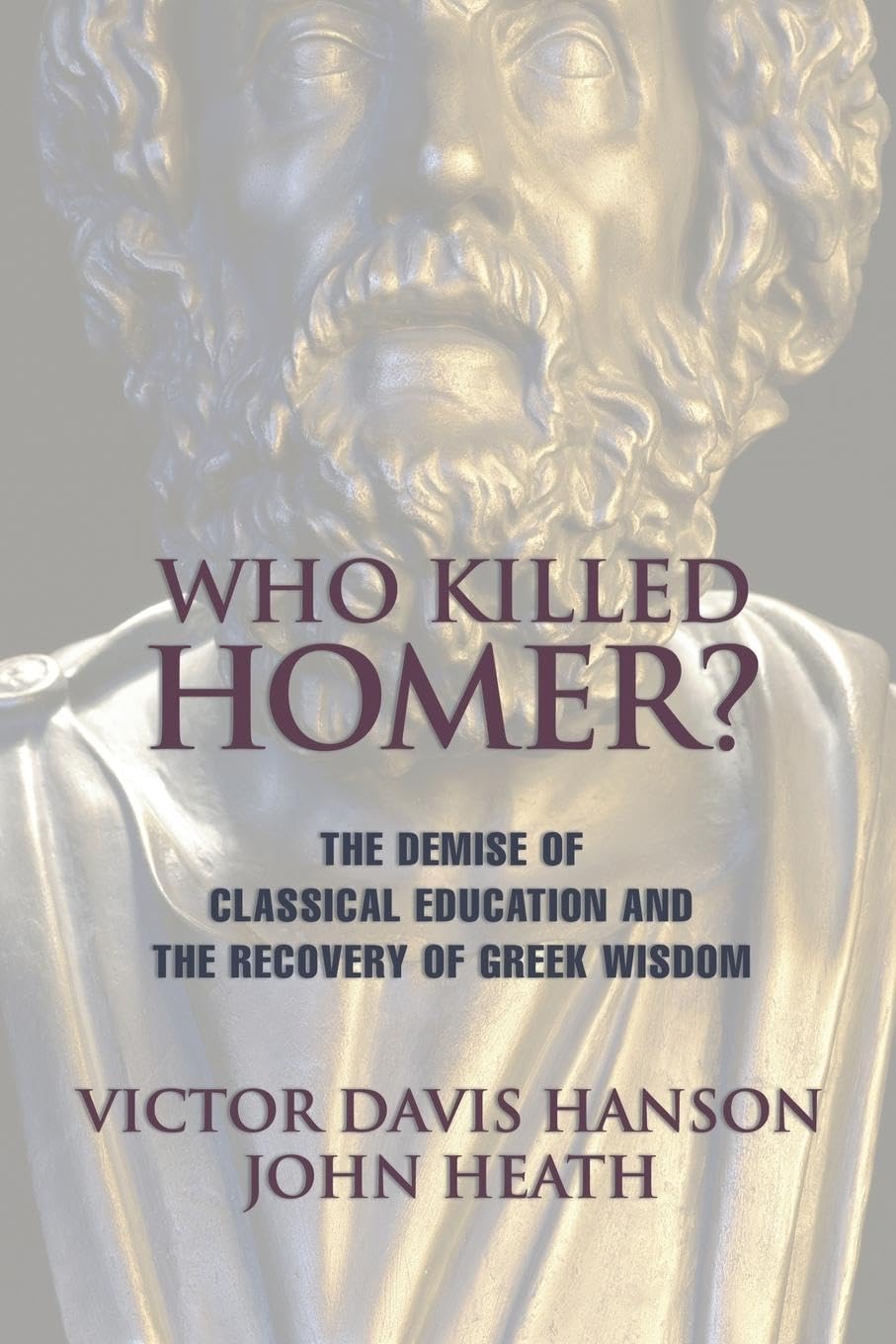
Who Killed Homer: The Demise of Classical Education and the Recovery of Greek Wisdom,Used
Sold by Ergodebooks, an authorized reseller.
Returns accepted within 30 days | support@ergodebooks.com
Shipping Information
- Free Standard Shipping — United States only
- Processing Time: 3–5 business days
- Estimated Delivery: 6–10 business days after dispatch
- Double-boxed, fully insured & discreetly packaged
- Tracking number sent via email once dispatched
Returns & Refund
Returns accepted within 30 days of delivery.
Damaged or Defective Item
Free return shipping + replacement or full refund
Wrong Item Received
Free return shipping + replacement or full refund
Change of Mind
Return shipping at customer's expense · 25% restocking fee applies
Payment Option

With straightforward advice and informative readings of the great Greek texts, the authors show how we might still save classics and the Greeks for future generations. Who Killed Homer? is must reading for anyone who agrees that knowledge of classics acquaints us with the beauty and perils of our own culture.
⚠️ WARNING (California Proposition 65):
This product may contain chemicals known to the State of California to cause cancer, birth defects, or other reproductive harm.
For more information, please visit www.P65Warnings.ca.gov.
- Q: What is the page count of this book? A: This book has three hundred twenty-three pages. It provides in-depth analysis and readings of classical texts.
- Q: What are the dimensions of 'Who Killed Homer'? A: The dimensions are six inches in length, one inch in width, and nine point zero two inches in height. This size makes it portable for reading.
- Q: What is the binding type of this book? A: This book is a paperback edition. Paperback bindings are generally more flexible and lightweight for easy handling.
- Q: Who is the author of 'Who Killed Homer'? A: The author is Victor Davis Hanson. He is a renowned historian and classicist, known for his insights into classical education.
- Q: What genre does this book belong to? A: This book falls under the Ancient and Classical genre. It discusses the importance of classical education in modern society.
- Q: How should I approach reading this book? A: You can read this book at your own pace. It is suitable for anyone interested in classical education and Greek wisdom.
- Q: Is this book suitable for children? A: Yes, it is suitable for older children and teenagers. It offers insights into classical literature, but parental guidance may be beneficial.
- Q: Can this book be used as a textbook? A: Yes, it can be used as a supplementary textbook. Its discussions on Greek texts can enhance understanding of classical studies.
- Q: How do I care for this paperback book? A: To care for this book, keep it in a dry place and avoid direct sunlight. This will help preserve the cover and pages.
- Q: Can I store this book on a bookshelf? A: Yes, it can be stored on a bookshelf. Ensure it is upright to prevent bending or damage to the spine.
- Q: What if my book arrives damaged? A: If your book arrives damaged, you should contact the seller for a return or replacement. Most retailers have customer service for such issues.
- Q: Is there a return policy for this book? A: Yes, most retailers have a return policy. Check with the specific seller for details on their return procedures.
- Q: What is the recommended audience for this book? A: The recommended audience includes students, educators, and anyone interested in classical education. It appeals to a broad range of readers.
- Q: How does this book compare to other classical education texts? A: This book provides a unique perspective on classical education. It emphasizes the relevance of Greek wisdom in contemporary culture.
- Q: What themes are explored in 'Who Killed Homer'? A: Themes include the decline of classical education and the importance of Greek literature. The authors argue for its relevance today.
- Q: Is there a summary available for this book? A: Yes, a summary typically highlights key arguments about preserving classical education. You can find summaries online for a quick overview.