If you have any questions, you are always welcome to contact us. We'll get back to you as soon as possible, withing 24 hours on weekdays.
Customer service
All questions about your order, return and delivery must be sent to our customer service team by e-mail at yourstore@yourdomain.com
Sale & Press
If you are interested in selling our products, need more information about our brand or wish to make a collaboration, please contact us at press@yourdomain.com
Help
If you have any questions, you are always welcome to contact us. We'll get back to you as soon as possible, withing 24 hours on weekdays.
Customer service
All questions about your order, return and delivery must be sent to our customer service team by e-mail at yourstore@yourdomain.com
Sale & Press
If you are interested in selling our products, need more information about our brand or wish to make a collaboration, please contact us at press@yourdomain.com
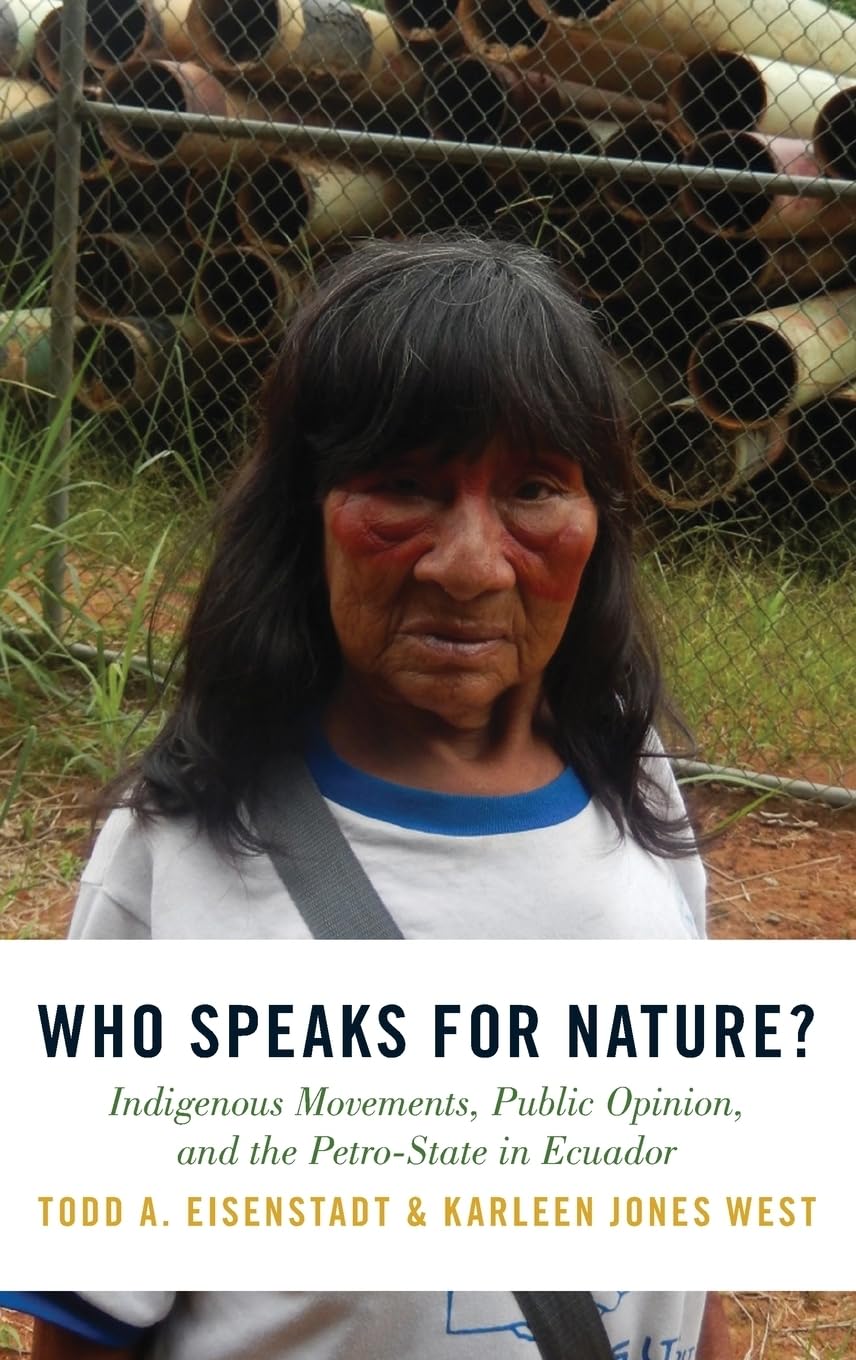
In 2009, Ecuador became the first nation ever to enshrine rights for nature in its constitution. Nature was accorded inalienable rights, and every citizen was granted standing to defend those rights. At the same time, the government advanced a policy of 'extractive populism,' buying public support for mineral mining by promising that funds from the mining would be used to increase public services.This book, based on a nationwide survey and interviews about environmental attitudes among citizens as well as indigenous, environmental, government, academic, and civil society leaders in Ecuador, offers a theory about when and why individuals will speak for nature, particularly when economic interests are at stake. Parting from conventional social science arguments that political attitudes are determined by ethnicity or social class, the authors argue that environmental dispositions in developing countries are shaped by personal experiences of vulnerability to environmental degradation. Abstract appeals to identity politics, on the other hand, are less effective. Ultimately, this book argues that indigenous groups should be the stewards of nature, but that they must do so by appealing to the concrete, everyday vulnerabilities they face, rather than by turning to the more abstract appeals of ethnicbased movements.
⚠️ WARNING (California Proposition 65):
This product may contain chemicals known to the State of California to cause cancer,
birth defects, or other reproductive harm.
For MAP (Minimum Advertised Price) violations and Intellectual Property (IP) or Trademark concerns, please contact:
support@ergodebooks.com
⚠️ California Proposition 65 Warning: Some products sold on this website may expose you to chemicals known to the State of California to cause cancer, birth defects, or other reproductive harm. For more information, visit www.P65Warnings.ca.gov.