If you have any questions, you are always welcome to contact us. We'll get back to you as soon as possible, withing 24 hours on weekdays.
Customer service
All questions about your order, return and delivery must be sent to our customer service team by e-mail at yourstore@yourdomain.com
Sale & Press
If you are interested in selling our products, need more information about our brand or wish to make a collaboration, please contact us at press@yourdomain.com
Help
If you have any questions, you are always welcome to contact us. We'll get back to you as soon as possible, withing 24 hours on weekdays.
Customer service
All questions about your order, return and delivery must be sent to our customer service team by e-mail at yourstore@yourdomain.com
Sale & Press
If you are interested in selling our products, need more information about our brand or wish to make a collaboration, please contact us at press@yourdomain.com
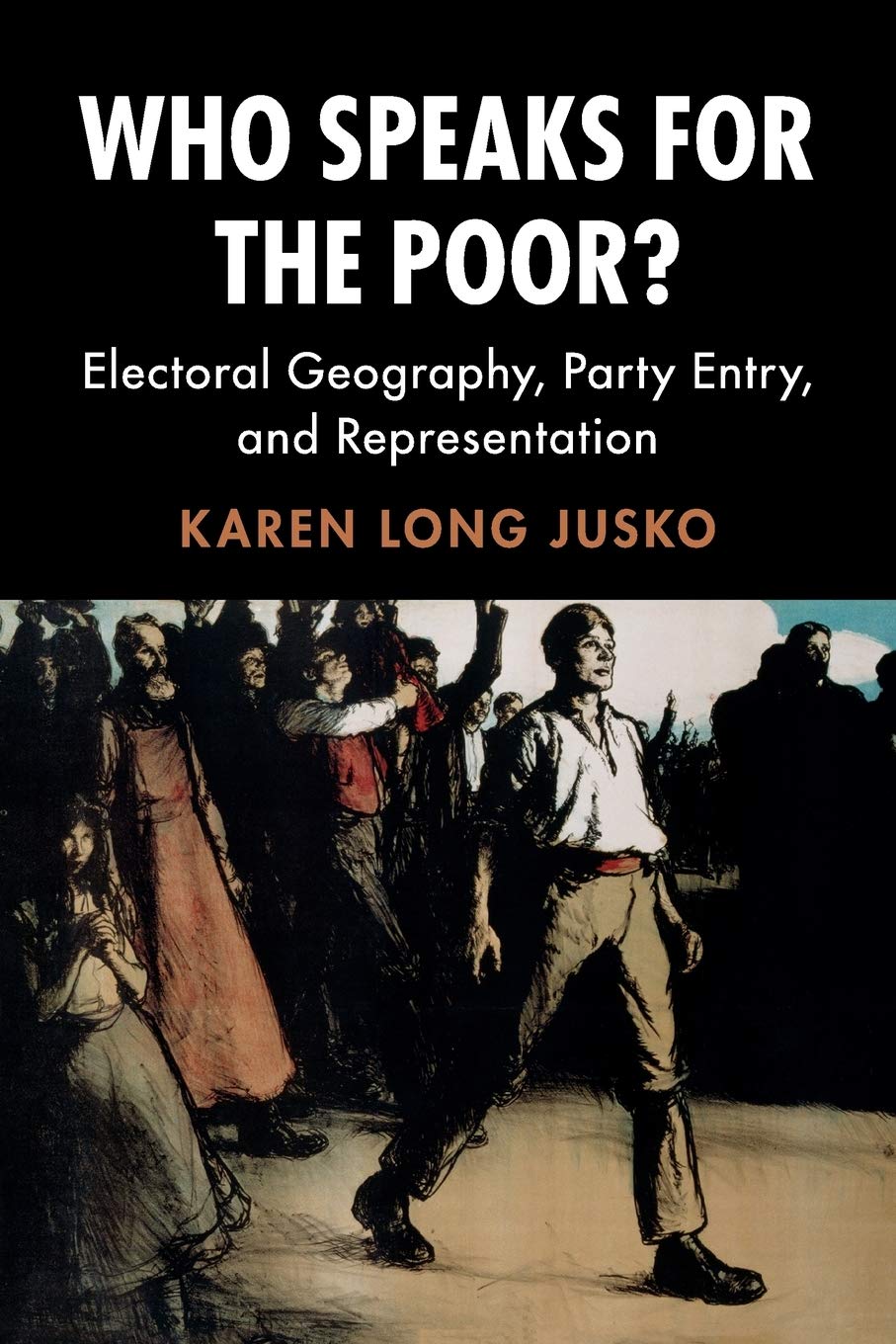
Who Speaks for the Poor? explains why parties represent some groups and not others. This book focuses attention on the electoral geography of income, and how it has changed over time, to account for crossnational differences in the political and partisan representation of lowincome voters. Jusko develops a general theory of new party formation that shows how changes in the geographic distribution of groups across electoral districts create opportunities for new parties to enter elections, especially where changes favor groups previously excluded from local partisan networks. Empirical evidence is drawn first from a broadly comparative analysis of all new party entry and then from a series of historical case studies, each focusing on the strategic entry incentives of new lowincome peoples' parties. Jusko offers a new explanation for the absence of a lowincome people's party in the USA and a more general account of political inequality in contemporary democratic societies.
⚠️ WARNING (California Proposition 65):
This product may contain chemicals known to the State of California to cause cancer,
birth defects, or other reproductive harm.
For MAP (Minimum Advertised Price) violations and Intellectual Property (IP) or Trademark concerns, please contact:
support@ergodebooks.com
⚠️ California Proposition 65 Warning: Some products sold on this website may expose you to chemicals known to the State of California to cause cancer, birth defects, or other reproductive harm. For more information, visit www.P65Warnings.ca.gov.