If you have any questions, you are always welcome to contact us. We'll get back to you as soon as possible, withing 24 hours on weekdays.
Customer service
All questions about your order, return and delivery must be sent to our customer service team by e-mail at yourstore@yourdomain.com
Sale & Press
If you are interested in selling our products, need more information about our brand or wish to make a collaboration, please contact us at press@yourdomain.com
Help
If you have any questions, you are always welcome to contact us. We'll get back to you as soon as possible, withing 24 hours on weekdays.
Customer service
All questions about your order, return and delivery must be sent to our customer service team by e-mail at yourstore@yourdomain.com
Sale & Press
If you are interested in selling our products, need more information about our brand or wish to make a collaboration, please contact us at press@yourdomain.com
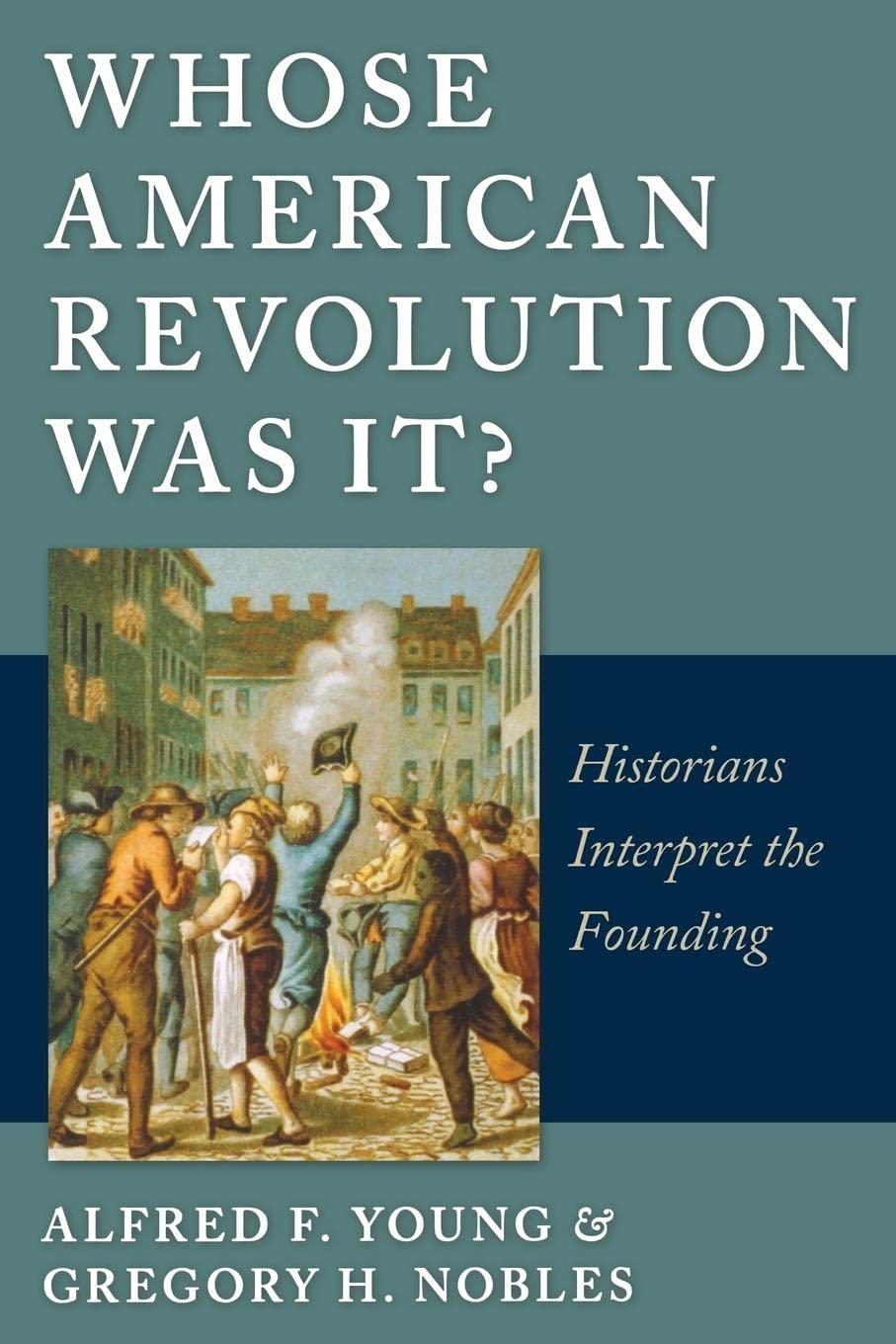
The meaning of the American Revolution has always been a muchcontested question, and asking it is particularly important today: the standard, easily digested narrative puts the Founding Fathers at the head of a unified movement, failing to acknowledge the deep divisions in Revolutionaryera society and the many different historical interpretations that have followed. Whose American Revolution Was It? speaks both to the ways diverse groups of Americans who lived through the Revolution might have answered that question and to the different ways historians through the decades have interpreted the Revolution for our own time.As the only volume to offer an accessible and sweeping discussion of the periods historiography and its historians, Whose American Revolution Was It? is an essential reference for anyone studying early American history. The first section, by Alfred F. Young, begins in 1925 with historian J. Franklin Jameson and takes the reader through the successive schools of interpretation up to the 1990s. The second section, by Gregory H. Nobles, focuses primarily on the ways presentday historians have expanded our understanding of the broader social history of the Revolution, bringing onto the stage farmers and artisans, who made up the majority of white men, as well as African Americans, Native Americans, and women of all social classes.
⚠️ WARNING (California Proposition 65):
This product may contain chemicals known to the State of California to cause cancer,
birth defects, or other reproductive harm.
For MAP (Minimum Advertised Price) violations and Intellectual Property (IP) or Trademark concerns, please contact:
support@ergodebooks.com
⚠️ California Proposition 65 Warning: Some products sold on this website may expose you to chemicals known to the State of California to cause cancer, birth defects, or other reproductive harm. For more information, visit www.P65Warnings.ca.gov.