If you have any questions, you are always welcome to contact us. We'll get back to you as soon as possible, withing 24 hours on weekdays.
Customer service
All questions about your order, return and delivery must be sent to our customer service team by e-mail at yourstore@yourdomain.com
Sale & Press
If you are interested in selling our products, need more information about our brand or wish to make a collaboration, please contact us at press@yourdomain.com
Help
If you have any questions, you are always welcome to contact us. We'll get back to you as soon as possible, withing 24 hours on weekdays.
Customer service
All questions about your order, return and delivery must be sent to our customer service team by e-mail at yourstore@yourdomain.com
Sale & Press
If you are interested in selling our products, need more information about our brand or wish to make a collaboration, please contact us at press@yourdomain.com
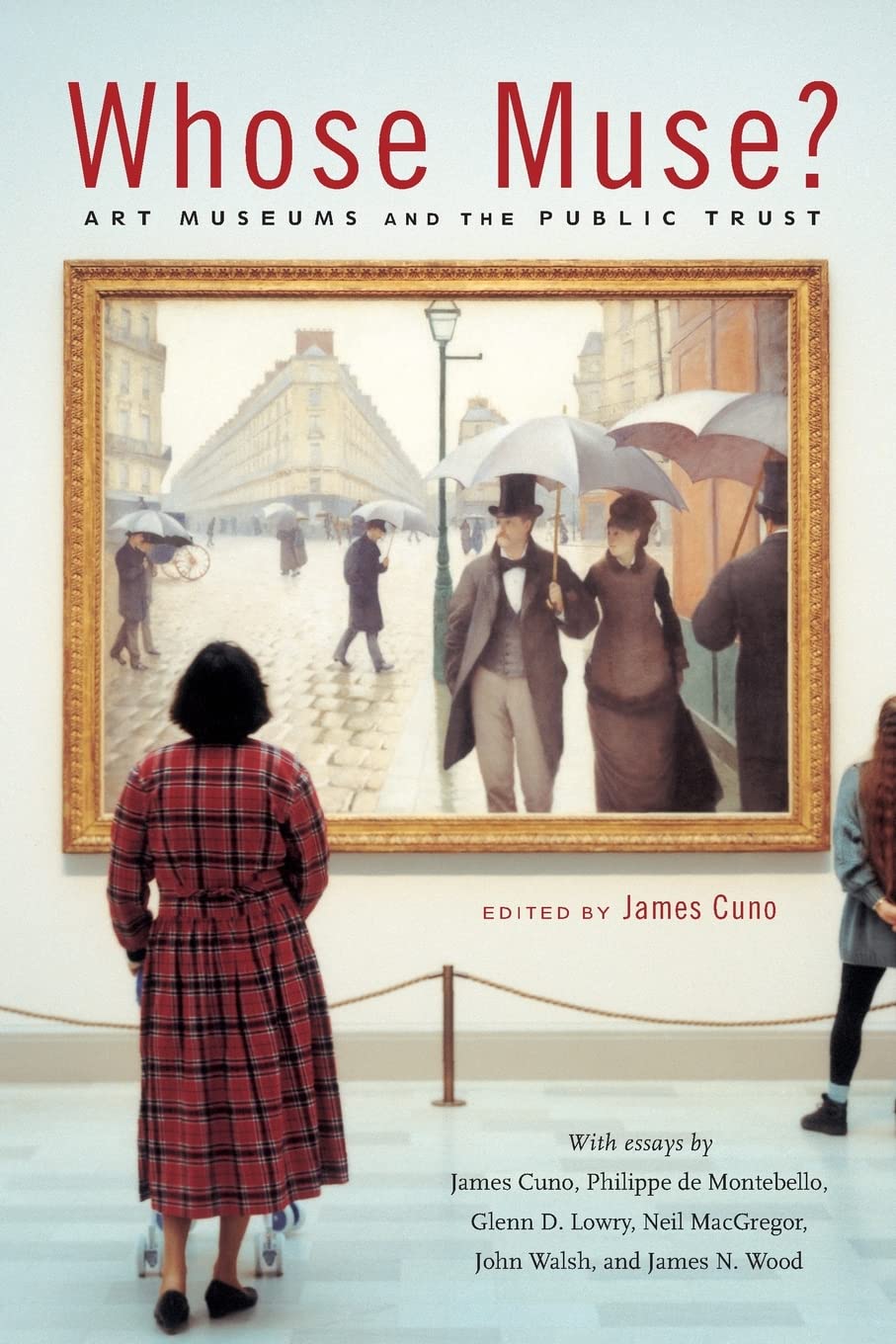
During the economic boom of the 1990s, art museums expanded dramatically in size, scope, and ambition. They came to be seen as new civic centers: on the one hand as places of entertainment, leisure, and commerce, on the other as socially therapeutic institutions. But museums were also criticized for everything from elitism to looting or illegally exporting works from other countries, to exhibiting works offensive to the public taste.Whose Muse? brings together five directors of leading American and British art museums who together offer a forwardlooking alternative to such prevailing views. While their approaches differ, certain themes recur: As museums have become increasingly complex and costly to manage, and as government support has waned, the temptation is great to follow policies driven not by a mission but by the market. However, the directors concur that public trust can be upheld only if museums continue to see their core mission as building collections that reflect a nation's artistic legacy and providing informed and unfettered access to them.The book, based on a lecture series of the same title held in 20002001 by the Harvard Program for Art Museum Directors, also includes an introduction by Cuno and a fascinatingand surprisingly frankroundtable discussion among the participating directors. A rare collection of sustained reflections by prominent museum directors on the current state of affairs in their profession, this book is without equal. It will be read widely not only by museum professionals, trustees, critics, and scholars, but also by the artloving public itself.
⚠️ WARNING (California Proposition 65):
This product may contain chemicals known to the State of California to cause cancer,
birth defects, or other reproductive harm.
For MAP (Minimum Advertised Price) violations and Intellectual Property (IP) or Trademark concerns, please contact:
support@ergodebooks.com
⚠️ California Proposition 65 Warning: Some products sold on this website may expose you to chemicals known to the State of California to cause cancer, birth defects, or other reproductive harm. For more information, visit www.P65Warnings.ca.gov.