
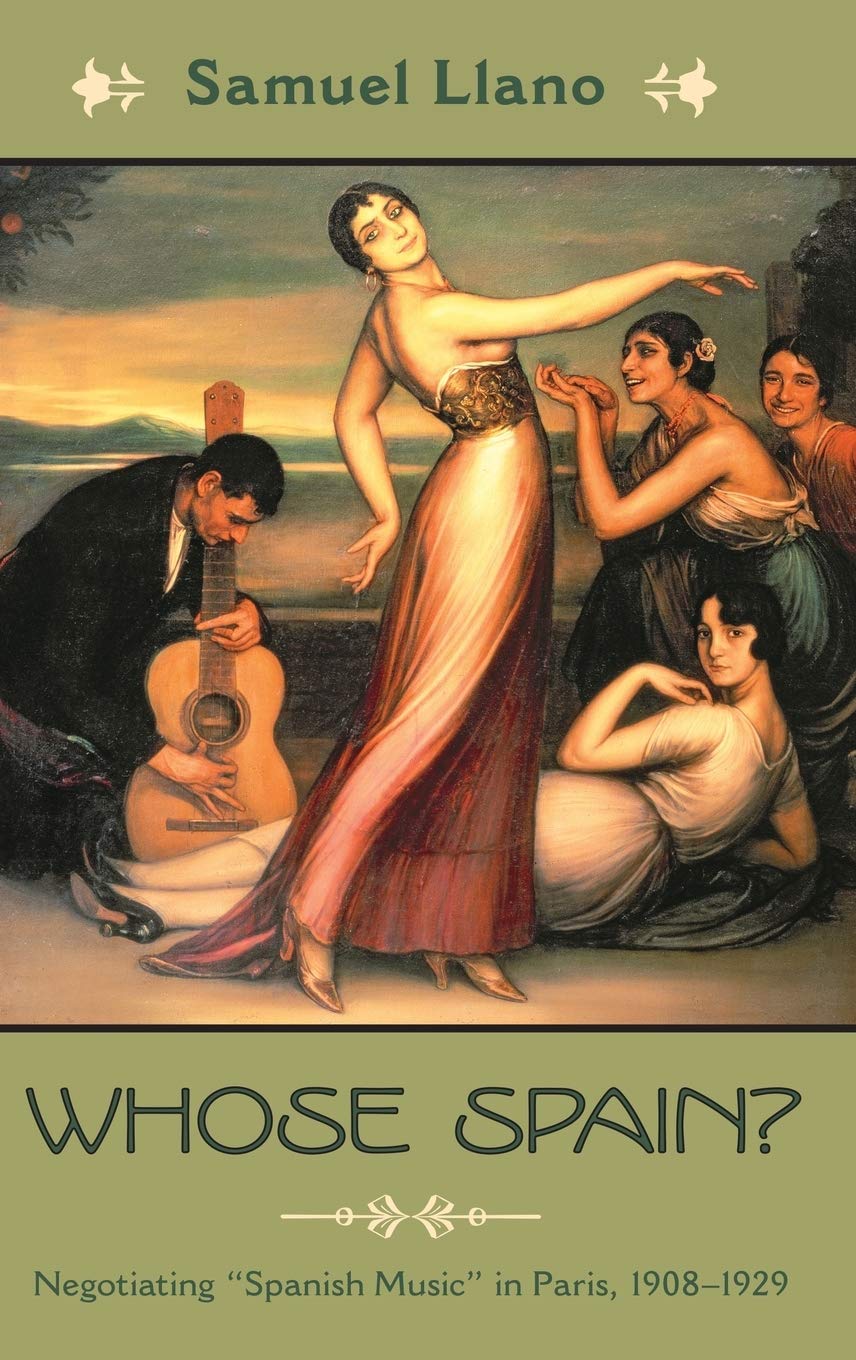
Title
Whose Spain?: Negotiating Spanish Music In Paris, 19081929 (Currents In Latin American And Iberian Music)
Sold by Ergodebooks, an authorized reseller.
Returns accepted within 30 days | support@ergodebooks.com
Shipping Information
- Free Standard Shipping — United States only
- Processing Time: 3–5 business days
- Estimated Delivery: 6–10 business days after dispatch
- Double-boxed, fully insured & discreetly packaged
- Tracking number sent via email once dispatched
Returns & Refund
Returns accepted within 30 days of delivery.
Damaged or Defective Item
Free return shipping + replacement or full refund
Wrong Item Received
Free return shipping + replacement or full refund
Change of Mind
Return shipping at customer's expense · 25% restocking fee applies
Payment Option

From The Very Beginning Of The Nineteenth Century, Many Elements Of Spanish Culture Carried An Air Of 'Exoticism' For The Frenchand Nothing Played More Important Of A Role In Shaping The French Idea Of Spain Than The Country'S Musical Tradition. However, As Samuel Llano Argues In Whose Spain?, Perceptions And Representations Of Spanish Musical Identities Changed In The Early Twentieth Century, Due To The Emergence Of The Hispanistes. These Specialists On Spanish Music And Culture, Who Wrote Encyclopedic And 'Scientific' Articles On 'Spanish Music,' Strived To Endow The World Of Spanish Music With A Sense Of Authority And Knowledge. Yet, The Writings Of Those Hispanistes And Other Music Critics Showed A Highly Sensationalist Attitude, Aimed At Describing 'Spanish Music' In A Way That Was Instrumental To The Interests Of French Musicians. At The Same Time, The Spanish Fought To Articulate Their Own Identities Through The Creation And Performance Of New Musical Works.In This Book, Llano Analyzes The Sociopolitical Discourses Underpinning Critical And Musicological Descriptions Of 'Spanish Music' And The Discourse'S Connection With French Politics And Culture. He Also Studies Operas And Other Musical Works For The Stage As Privileged Sites For The Production Of Spanish Musical Identities, Given The Enhanced Possibilities Of Performance For Cultural And Critical Engagement. The Study Covers The Period 1908 To 1929, When Representations Of 'Spanish Music' In The Writings Of The Hispaniste Henri Collet And Other French Musicians Underwent Several Transformations, Mostly Sparked By The Need To Reformulate French Identity During And After The First World War. Ultimately, Llano Demonstrates That Definitions Of 'French' And 'Spanish' Music Were To Some Extent Interdependent, And That The Public Performances Of These Pieces Even Helped The Musical Community In France To Begein To Reformulate Their Notions Of 'Spanish Music' And Identity.
⚠️ WARNING (California Proposition 65):
This product may contain chemicals known to the State of California to cause cancer, birth defects, or other reproductive harm.
For more information, please visit www.P65Warnings.ca.gov.
- Q: How many pages does this book have? A: This book has three hundred twelve pages. It provides an in-depth analysis of Spanish music in France from nineteen oh eight to nineteen twenty-nine.
- Q: What is the binding type of this book? A: This book is bound in hardcover. This durable binding is ideal for preserving the book through frequent handling.
- Q: What are the dimensions of the book? A: The book measures nine point four one inches in length, one point two inches in width, and six point four two inches in height. These dimensions make it a standard-sized hardcover book.
- Q: Who is the author of the book? A: The author of the book is Samuel Llano. He examines the socio-political discourses surrounding Spanish music in France.
- Q: What is the primary focus of the book? A: The book focuses on the negotiation of Spanish musical identities in Paris. It explores how these identities were shaped by French culture and politics during the early twentieth century.
- Q: Is this book suitable for academic study? A: Yes, this book is suitable for academic study. It provides critical insights and detailed analyses that are beneficial for students and scholars of musicology.
- Q: What themes are addressed in the book? A: The book addresses themes like cultural identity, representation, and the influence of socio-political contexts on music. It examines how French and Spanish identities were intertwined in music.
- Q: What type of reader would enjoy this book? A: Readers interested in music history, cultural studies, and Spanish or French history would enjoy this book. It is particularly valuable for those studying Latin American and Iberian music.
- Q: Does the book include any illustrations or musical scores? A: No, the book does not include illustrations or musical scores. It focuses on textual analysis and scholarly discussion.
- Q: What condition is the book in if it's labeled 'Used Book in Good Condition'? A: The book is in good condition, indicating it may show some signs of wear but is still fully functional and readable. This condition is ideal for budget-conscious readers.
- Q: Is this book part of a series? A: No, this book is not part of a series. It stands alone as a significant study of Spanish music in the designated time period.
- Q: What publisher released this book? A: The book was published by Oxford University Press, USA. This publisher is known for its academic and scholarly works.
- Q: Can this book be used for research papers? A: Yes, this book can be used for research papers. It contains well-researched content that is relevant for academic citations.
- Q: Is the book available in digital format? A: The provided details do not specify a digital format. Check with the publisher for information on eBook availability.
- Q: What is the main argument presented in the book? A: The main argument is that definitions of French and Spanish music were interdependent during the early twentieth century. The book illustrates how performances influenced cultural identity.