If you have any questions, you are always welcome to contact us. We'll get back to you as soon as possible, withing 24 hours on weekdays.
Customer service
All questions about your order, return and delivery must be sent to our customer service team by e-mail at yourstore@yourdomain.com
Sale & Press
If you are interested in selling our products, need more information about our brand or wish to make a collaboration, please contact us at press@yourdomain.com
Help
If you have any questions, you are always welcome to contact us. We'll get back to you as soon as possible, withing 24 hours on weekdays.
Customer service
All questions about your order, return and delivery must be sent to our customer service team by e-mail at yourstore@yourdomain.com
Sale & Press
If you are interested in selling our products, need more information about our brand or wish to make a collaboration, please contact us at press@yourdomain.com
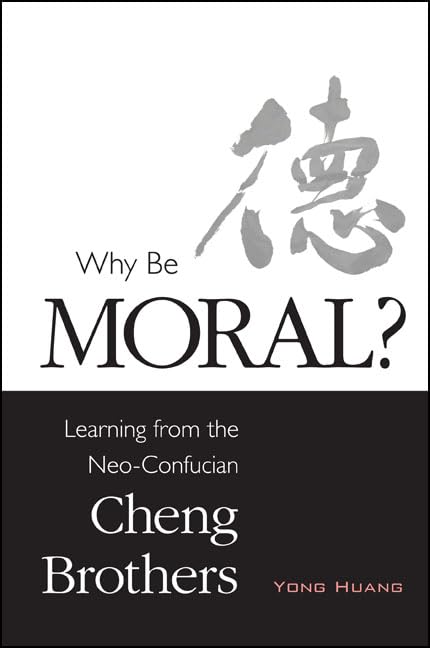
Yong Huang presents a new way of doing comparative philosophy as he demonstrates the resources for contemporary ethics offered by the Cheng brothers, Cheng Hao (10321085) and Cheng Yi (10331107), canonical neoConfucian philosophers. Huang departs from the standard method of Chinese/Western comparison, which tends to interest those already interested in Chinese philosophy. While Westernoriented scholars may be excited to learn about Chinese philosophers who have said things similar to what they or their favored philosophers have to say, they hardly find anything philosophically new from such comparative work. Instead of comparing and contrasting philosophers, each chapter of this book discusses a significant topic in Western moral philosophy, examines the representative views on this topic in the Western tradition, identifies their respective difficulties, and discusses how the Cheng brothers have better things to say on the subject. Topics discussed include why one should be moral, how weakness of will is not possible, whether virtue ethics is selfcentered, in what sense the political is also personal, how a moral theory can be of an antitheoretical nature, and whether moral metaphysics is still possible in this postmodern and postmetaphysical age.
⚠️ WARNING (California Proposition 65):
This product may contain chemicals known to the State of California to cause cancer,
birth defects, or other reproductive harm.
For MAP (Minimum Advertised Price) violations and Intellectual Property (IP) or Trademark concerns, please contact:
support@ergodebooks.com
⚠️ California Proposition 65 Warning: Some products sold on this website may expose you to chemicals known to the State of California to cause cancer, birth defects, or other reproductive harm. For more information, visit www.P65Warnings.ca.gov.