
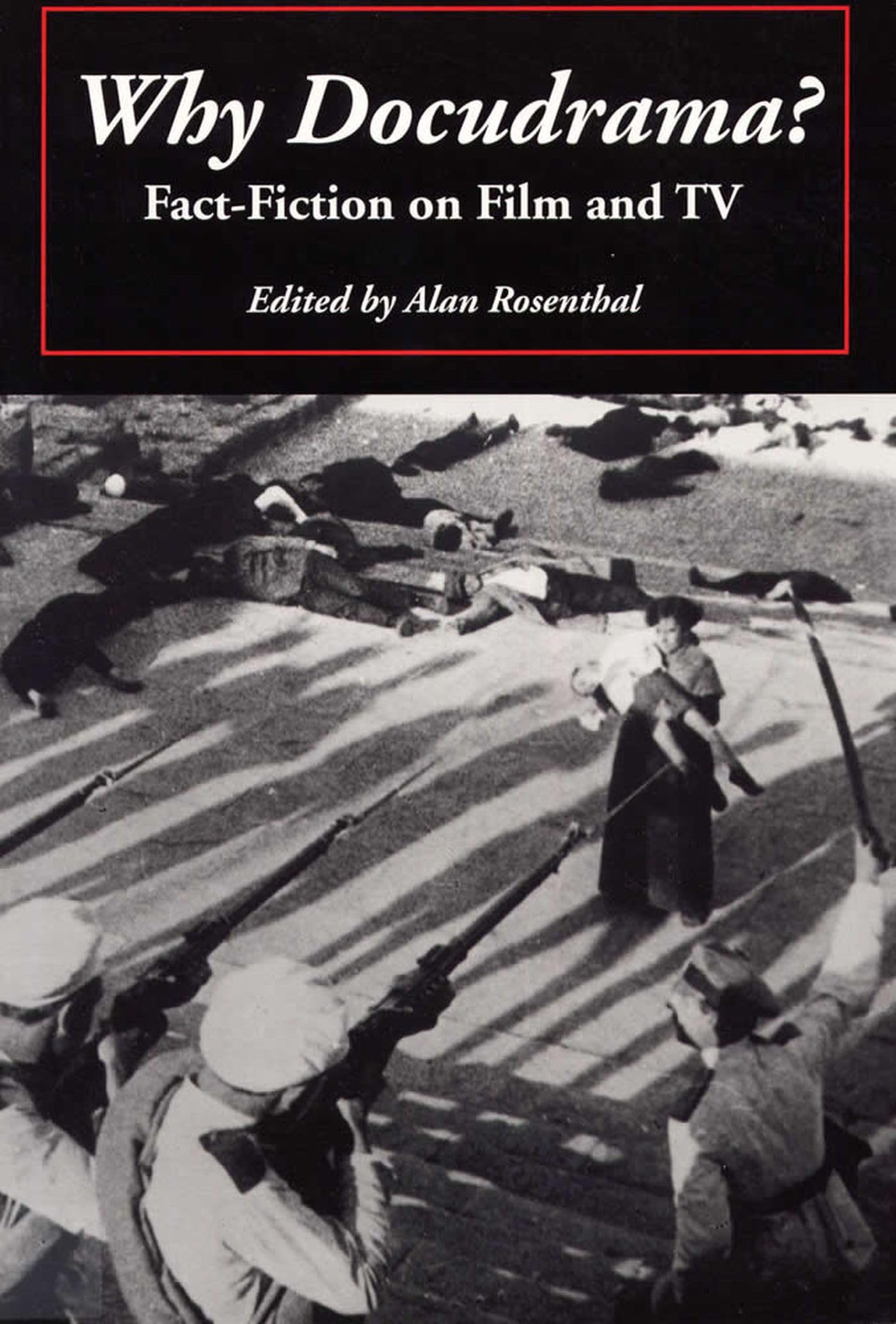
Title
Why Docudrama?: Factfiction On Film And Tv,Used
Sold by Ergodebooks, an authorized reseller.
Returns accepted within 30 days | support@ergodebooks.com
Shipping Information
- Free Standard Shipping — United States only
- Processing Time: 3–5 business days
- Estimated Delivery: 6–10 business days after dispatch
- Double-boxed, fully insured & discreetly packaged
- Tracking number sent via email once dispatched
Returns & Refund
Returns accepted within 30 days of delivery.
Damaged or Defective Item
Free return shipping + replacement or full refund
Wrong Item Received
Free return shipping + replacement or full refund
Change of Mind
Return shipping at customer's expense · 25% restocking fee applies
Payment Option

When the 1990 English docudrama Who Bombed Birmingham? cast serious doubt on the guilt of six men convicted of bombing two British pubs in 1974, Prime Minister Margaret Thatcher declared that a 'television program alters nothing.' But, as Alan Rosenthal concludes, Thatcher was wrong. The film engendered a new inquiry that led to the release of the convicted men.Rosenthal notes that docudrama wields more influence than the average documentary and that 'realitybased stories taken from topical journalism are the most popular drama genre on U.S. and British television today.' This threepart collection of diverse and provocative essays addresses the dominant questions and controversies the genre poses.Defining and examining the rationale of docudrama, the nine essayists in the first part discuss the history and development of docudrama on TV and in film; they also consider the place of truth in docudrama, the main critiques of the form, and the audience's susceptibilities and expectations. In investigating the actual filmmaking process, the eight essays in the second part focus on how 'docudrama as a 'commodity' is created in the United States and England.' Part essay, part case study, and part interview, this section also explores how Hollywood and the commercial networks as well as producers and writers work and think. The final part presents an indepth critique of a number of controversial docudramas that have helped form and shape public opinion, including Battleship Potemkin, Roots, Reds, JFK, Mississippi Burning, Schindler's List, and In the Name of the Father.In addition to Rosenthal, the contributors are John Corner, George F. Custen, David Edgar, Leslie Fishbein, George MacDonald Fraser, Todd Gitlin, Douglas Gomery, Richard Grenier, Sumiko Higashi, Tom W. Hoffer, Jerry Kuehl, Steve Lipkin, Yosefa Loshitsky, Ian McBride, Richard Alan Nelson, Conor Cruise O'Brien, Derek Paget, Robert A. Rosenstone, Betsy Sharkey, Irene Shubik, Jeff Silverman, D. J. Wenden, Sita Williams, and Leslie Woodhead.
⚠️ WARNING (California Proposition 65):
This product may contain chemicals known to the State of California to cause cancer, birth defects, or other reproductive harm.
For more information, please visit www.P65Warnings.ca.gov.