
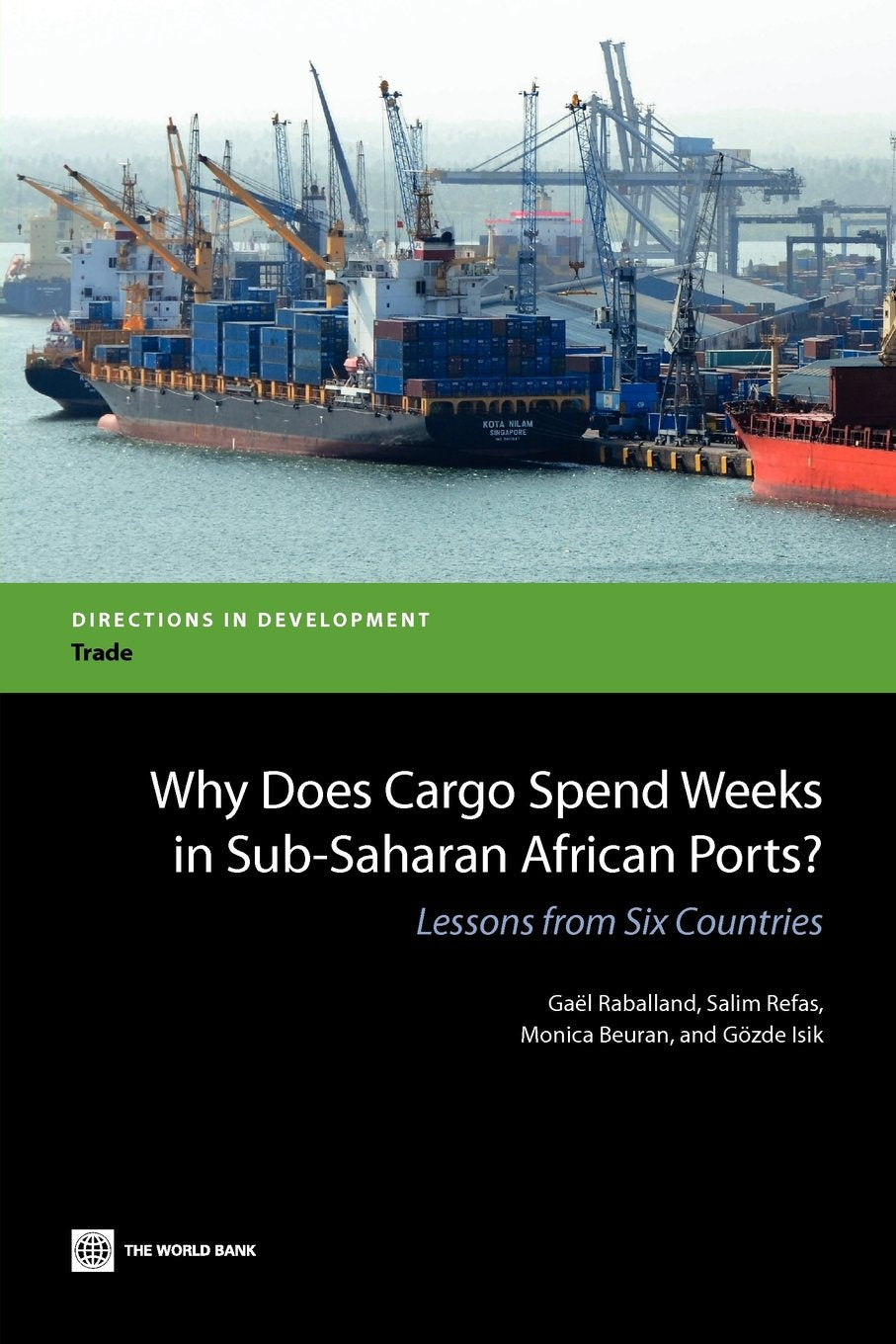
Title
Why Does Cargo Spend Weeks in SubSaharan African Ports?: Lessons from Six Countries (Directions in Development Trade),Used
Sold by Ergodebooks, an authorized reseller.
Returns accepted within 30 days | support@ergodebooks.com
Shipping Information
- Free Standard Shipping — United States only
- Processing Time: 3–5 business days
- Estimated Delivery: 6–10 business days after dispatch
- Double-boxed, fully insured & discreetly packaged
- Tracking number sent via email once dispatched
Returns & Refund
Returns accepted within 30 days of delivery.
Damaged or Defective Item
Free return shipping + replacement or full refund
Wrong Item Received
Free return shipping + replacement or full refund
Change of Mind
Return shipping at customer's expense · 25% restocking fee applies
Payment Option

SubSaharan Africa has a serious infrastructure deficitestimated at about $48 billion a yearwhich is impeding the continents competitiveness and hence its economic growth. How to solve this problem? Some advocate building more infrastructure while others suggest privatizing, or contracting out to the private sector, the management of infrastructure so that the discipline of the market will lead to more and better quality services. This book graphically illustrates the problem in the case of Africas ports. With the exception of Durban, cargo dwell timesthe amount of time cargo spends in the portaverage about 20 days in African ports, compared with 34 days in most other international ports. None of the past attempts to solve this problem have worked. The reasonand this is the major contribution of this volumeis that long dwell times are in the interest of certain public and private actors in the system. Importers use the ports to store their goods. Customs brokers have little incentive to move the goods because they can pass on the costs of delay to the importers. And when the domestic market is a monopoly, the downstream producer has an incentive to keep the cargo dwell times long as a way of deterring entry of other producers. The net result is inordinately long dwell times, ineffective interventions, and globally uncompetitive industries in African countries. The solution to decrease dwell time in these ports relies mainly on the challenging task of breaking the private sectors collusion and equilibrium between public authorities, logistics operators, and some shippers and not on investing massively in infrastructure. Addressing the challenge will also require that there be political support from the general public for reforms that will promote their interests. And before they offer their political support, the public needs to be informed. This book is a step in that direction.
⚠️ WARNING (California Proposition 65):
This product may contain chemicals known to the State of California to cause cancer, birth defects, or other reproductive harm.
For more information, please visit www.P65Warnings.ca.gov.