
Title
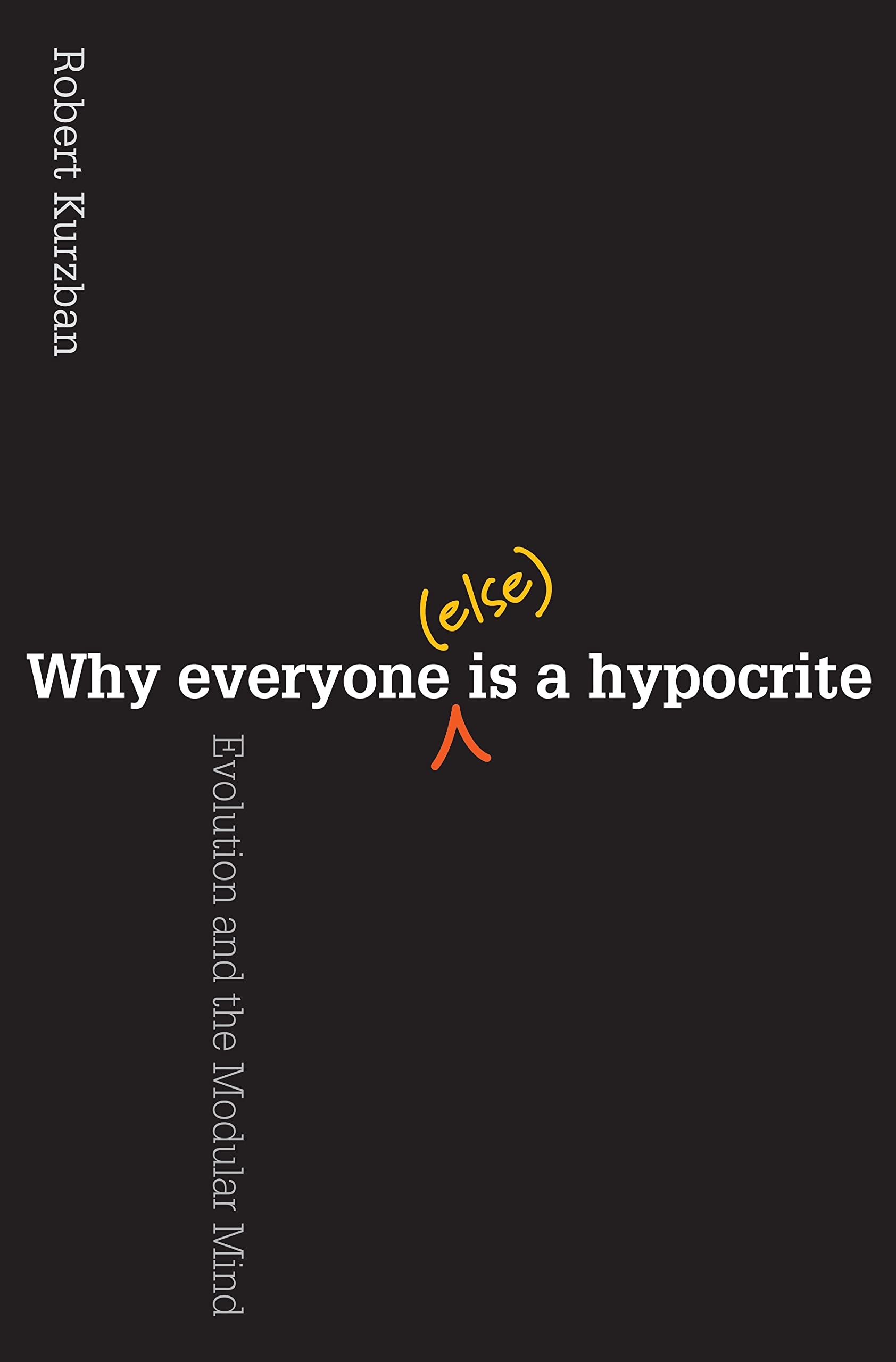
Why Everyone (Else) Is A Hypocrite: Evolution And The Modular Mind
Sold by Ergodebooks, an authorized reseller.
Returns accepted within 30 days | support@ergodebooks.com
Shipping Information
- Free Standard Shipping — United States only
- Processing Time: 3–5 business days
- Estimated Delivery: 6–10 business days after dispatch
- Double-boxed, fully insured & discreetly packaged
- Tracking number sent via email once dispatched
Returns & Refund
Returns accepted within 30 days of delivery.
Damaged or Defective Item
Free return shipping + replacement or full refund
Wrong Item Received
Free return shipping + replacement or full refund
Change of Mind
Return shipping at customer's expense · 25% restocking fee applies
Payment Option

The Evolutionary Psychology Behind Human Inconsistencywe'Re All Hypocrites. Why? Hypocrisy Is The Natural State Of The Human Mind.Robert Kurzban Shows Us That The Key To Understanding Our Behavioral Inconsistencies Lies In Understanding The Mind'S Design. The Human Mind Consists Of Many Specialized Units Designed By The Process Of Evolution By Natural Selection. While These Modules Sometimes Work Together Seamlessly, They Don'T Always, Resulting In Impossibly Contradictory Beliefs, Vacillations Between Patience And Impulsiveness, Violations Of Our Supposed Moral Principles, And Overinflated Views Of Ourselves.This Modular, Evolutionary Psychological View Of The Mind Undermines Deeply Held Intuitions About Ourselves, As Well As A Range Of Scientific Theories That Require A Self With Consistent Beliefs And Preferences. Modularity Suggests That There Is No I. Instead, Each Of Us Is A Contentious WeA Collection Of Discrete But Interacting Systems Whose Constant Conflicts Shape Our Interactions With One Another And Our Experience Of The World.In Clear Language, Full Of Wit And Rich In Examples, Kurzban Explains The Roots And Implications Of Our Inconsistent Minds, And Why It Is Perfectly Natural To Believe That Everyone Else Is A Hypocrite.
⚠️ WARNING (California Proposition 65):
This product may contain chemicals known to the State of California to cause cancer, birth defects, or other reproductive harm.
For more information, please visit www.P65Warnings.ca.gov.
- Q: What is the page count of this book? A: This book contains two hundred eighty-eight pages. It's a comprehensive exploration of human psychology and behavior.
- Q: What is the binding type of 'Why Everyone (Else) Is a Hypocrite'? A: This book is available in paperback binding. This makes it lightweight and easy to handle for readers.
- Q: Who is the author of this book? A: The author is Robert Kurzban. He presents a unique perspective on evolutionary psychology in this work.
- Q: What is the main theme of this book? A: The main theme is the exploration of human hypocrisy through the lens of evolutionary psychology. It discusses how our minds are designed and how this leads to inconsistencies.
- Q: Is this book suitable for beginners in psychology? A: Yes, this book is suitable for beginners. It explains complex ideas in clear language and uses relatable examples.
- Q: What age group is this book appropriate for? A: This book is recommended for adults and mature teens. It discusses themes that are more suitable for an older audience.
- Q: How should I care for this paperback book? A: To care for this book, store it in a dry place and avoid exposure to direct sunlight. This helps preserve its condition over time.
- Q: Can I clean the book if it gets dirty? A: Yes, you can gently wipe the cover with a soft, dry cloth. Avoid using water or cleaning solutions on the pages.
- Q: What should I do if the book arrives damaged? A: If the book arrives damaged, contact the seller for a return or exchange. Most sellers have a return policy for damaged goods.
- Q: How does this book compare to other psychology books? A: This book offers a unique modular view of the mind, differing from other psychology books that may focus on a singular theory. It combines humor with serious insights.
- Q: What are the dimensions of this book? A: The dimensions are six inches in length, zero point seventy-five inches in width, and nine point twenty-five inches in height. These dimensions make it portable and easy to read.
- Q: Is this book considered a scholarly work? A: Yes, it is considered a scholarly work. It is based on research in evolutionary psychology and presents well-supported arguments.
- Q: What genre does this book belong to? A: This book belongs to the personality psychology genre. It explores intricate aspects of human behavior and thought.
- Q: Will this book help me understand my own inconsistencies? A: Yes, this book provides insights into understanding personal inconsistencies. It explains why such behaviors are natural and common among humans.
- Q: Is there any specific audience for this book? A: The book primarily targets readers interested in psychology and human behavior. It's especially relevant for those curious about evolutionary perspectives.