
Title
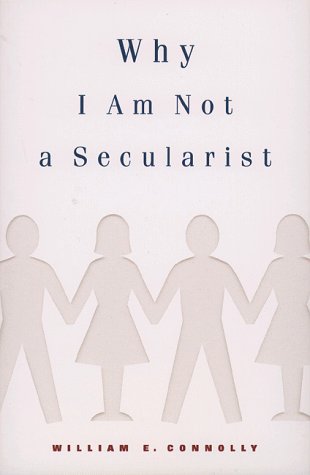
Why I Am Not a Secularist,Used
Sold by Ergodebooks, an authorized reseller.
Returns accepted within 30 days | support@ergodebooks.com
Shipping Information
- Free Standard Shipping — United States only
- Processing Time: 3–5 business days
- Estimated Delivery: 6–10 business days after dispatch
- Double-boxed, fully insured & discreetly packaged
- Tracking number sent via email once dispatched
Returns & Refund
Returns accepted within 30 days of delivery.
Damaged or Defective Item
Free return shipping + replacement or full refund
Wrong Item Received
Free return shipping + replacement or full refund
Change of Mind
Return shipping at customer's expense · 25% restocking fee applies
Payment Option

Hard CoverReligion's influence in American politics is obvious in recent debates about school prayer, abortion, and homosexuality, as well as in the success of grassroots religious organizations in mobilizing voters. Many liberal secularists decry this trend, rejecting any interaction between politics and religion. But in Why I Am Not a Secularist, distinguished political theorist William E. Connolly argues that secularism, although admirable in its pursuit of freedom and diversity, too often undercuts these goals through its narrow and intolerant understandings of public reason. In response, he crafts a new model of public life that more accurately reflects the needs of contemporary politics.Connolly first shows how the secular division between public and private life conceals the vital role of 'the visceral register' in public life itself. Then, while elaborating an ethos of engagement that appreciates this element, he examines capital punishment, the War on Drugs, the liberal idea of the nation, the public role of atheism, and the right to die. The traditional formulations of secularism, Connolly contends, underestimate the vitality and complexity of reallife political judgments. At its best, secularism remains immodest in its claim to provide the authoritative basis for public reason; at its worst, it overlooks possibilities for selective collaboration between religious and nonreligious perspectives in politics.To correct these limitations, Connolly advances a bold new vision of public diversity that acknowledges questions about its own ideology, incorporates a wider variety of ethical views, and honors the desire of believers and nonbelievers alike to represent their faiths openly in the civic forum. Throughout this provocative volume, Connolly presents convincing evidence of the need to refashion secularism to foster a more responsive public life and a more generous political culture.William E. Connolly is professor of political science at Johns Hopkins University. He is the author of numerous books including The Terms of Political Discourse (1983; winner of the 1999 Lippincott Award from the American Political Science Association), IdentityDifference (1991), and The Ethos of Pluralization (Minnesota, 1995).Translation inquiries: University of Minnesota Press
⚠️ WARNING (California Proposition 65):
This product may contain chemicals known to the State of California to cause cancer, birth defects, or other reproductive harm.
For more information, please visit www.P65Warnings.ca.gov.
- Q: What is the page count of 'Why I Am Not a Secularist'? A: This book contains two hundred twenty-four pages. It provides a comprehensive exploration of secularism's impact on American politics.
- Q: What type of binding does this book have? A: The book is available in hardcover binding. This ensures durability and a premium feel, ideal for long-term use.
- Q: What are the dimensions of the book? A: The book measures six inches in length, zero point seven five inches in width, and nine point zero two inches in height. These dimensions make it a convenient size for reading and storage.
- Q: Who is the author of 'Why I Am Not a Secularist'? A: The author is William E. Connolly. He is a distinguished political theorist known for his work on the intersections of politics and religion.
- Q: What is the main theme of the book? A: The main theme explores the intersection of secularism and politics. Connolly argues for a new understanding of public life that embraces diverse ethical views.
- Q: Is 'Why I Am Not a Secularist' suitable for academic study? A: Yes, the book is suitable for academic study. It offers critical insights into political theory and is used in various political science courses.
- Q: How should I care for this hardcover book? A: To care for the book, store it upright on a shelf. Avoid exposure to direct sunlight and keep it in a dry environment to maintain its condition.
- Q: Can I find this book in digital format? A: Yes, 'Why I Am Not a Secularist' is available in a digital format. Check eBook retailers for availability.
- Q: Is this book suitable for a general audience? A: Yes, the book is suitable for a general audience interested in politics and religion. However, some concepts may require prior knowledge of political theory.
- Q: What if my copy of the book arrives damaged? A: If your copy arrives damaged, contact the seller for a return or exchange. Most retailers have policies in place for damaged items.
- Q: Is there a warranty on this book? A: No, books typically do not come with a warranty. However, check with the retailer about their return policy for any issues.
- Q: How can I find more works by William E. Connolly? A: You can find more works by William E. Connolly through academic databases or major book retailers. He has authored several influential texts in political theory.
- Q: Is this book appropriate for high school students? A: Yes, it can be appropriate for high school students studying political science. It encourages critical thinking about secularism and public life.
- Q: How does this book compare to other works on secularism? A: This book stands out by challenging traditional views of secularism. Connolly's approach emphasizes the complexity of political judgments in contemporary society.
- Q: What topics are covered in 'Why I Am Not a Secularist'? A: Topics covered include capital punishment, the War on Drugs, and the role of atheism in public life. The book addresses various ethical perspectives in politics.