
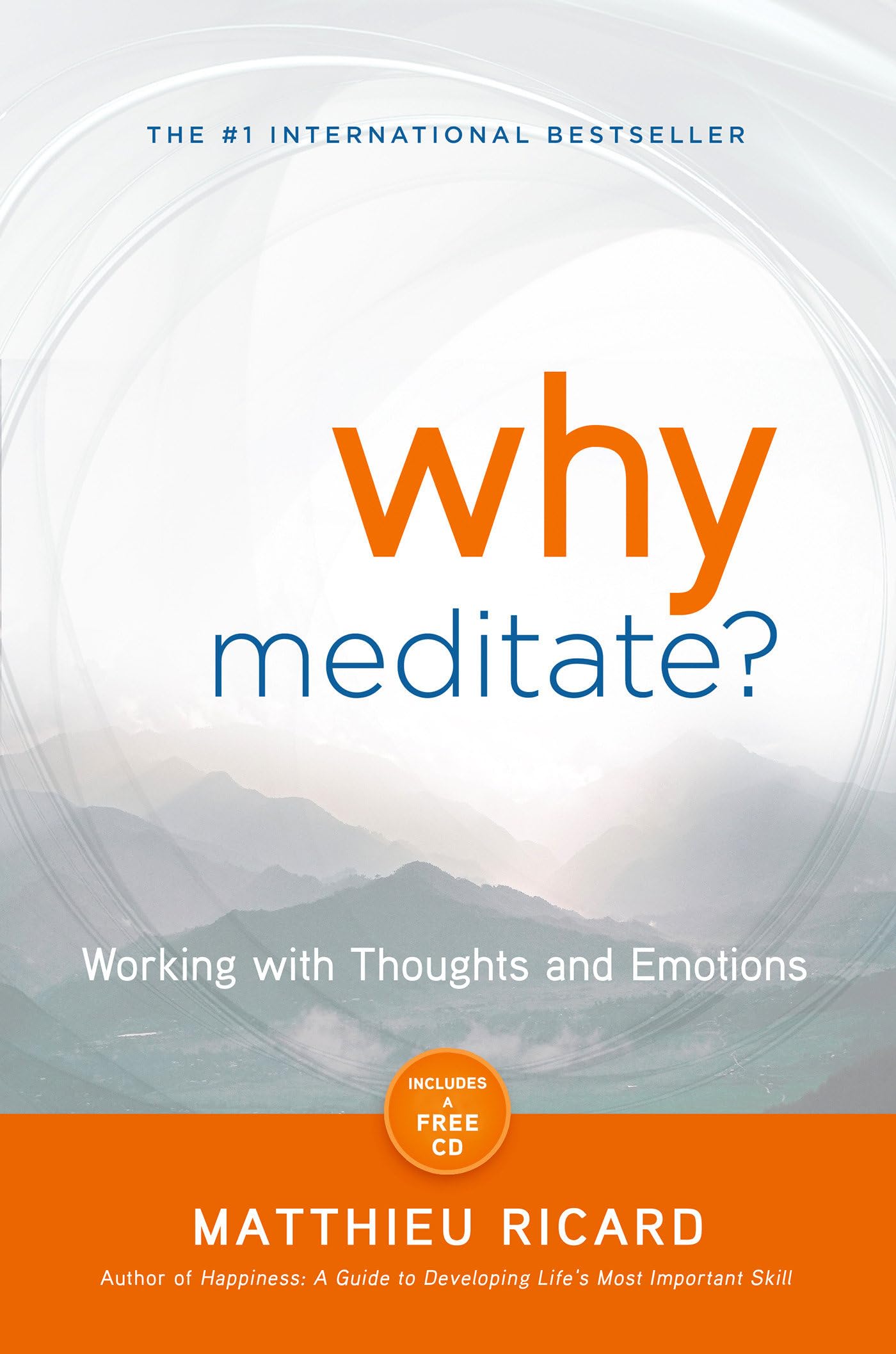
Title
Why Meditate: Working with Thoughts and Emotions,New
Sold by Ergodebooks, an authorized reseller.
Returns accepted within 30 days | support@ergodebooks.com
Shipping Information
- Free Standard Shipping — United States only
- Processing Time: 3–5 business days
- Estimated Delivery: 6–10 business days after dispatch
- Double-boxed, fully insured & discreetly packaged
- Tracking number sent via email once dispatched
Returns & Refund
Returns accepted within 30 days of delivery.
Damaged or Defective Item
Free return shipping + replacement or full refund
Wrong Item Received
Free return shipping + replacement or full refund
Change of Mind
Return shipping at customer's expense · 25% restocking fee applies
Payment Option

Wherever he goes, Buddhist monk Matthieu Ricard is asked to explain what meditation is, how it is done, and what it can achieve. In this elegant, authoritative, and entirely accessible book, he sets out to answer these questions. Although meditation is a lifelong process even for the wisest, Why Meditate? demonstrates that by practicing it on a daily basis we can change our understanding of ourselves and the world around us. In this brilliant short book and the accompanying audio download, Ricard talks us through the theory, spirituality, and practical aspects of meditation. He illustrates each stage of his teaching with examples, leading readers deeper into their own practice. Through his experience as a monk, his close reading of sacred texts, and his deep knowledge of the Buddhist masters, Ricard shows the significant benefits that meditation, based on selfless love and compassion, can bring to each of us.
⚠️ WARNING (California Proposition 65):
This product may contain chemicals known to the State of California to cause cancer, birth defects, or other reproductive harm.
For more information, please visit www.P65Warnings.ca.gov.
- Q: How many pages does the book 'Why Meditate' have? A: The book contains one hundred sixty-eight pages. This makes it a concise yet comprehensive read about meditation.
- Q: What is the binding type of 'Why Meditate'? A: The book is available in paperback binding. This format offers flexibility and portability for readers.
- Q: What are the dimensions of the book? A: The book measures five point thirty-nine inches in length, zero point forty-three inches in width, and eight point thirty-nine inches in height. These dimensions make it easy to handle.
- Q: Who is the author of 'Why Meditate'? A: The author is Matthieu Ricard, a Buddhist monk known for his insights on meditation. His expertise adds depth to the book's content.
- Q: What topics does 'Why Meditate' cover? A: The book addresses meditation techniques, its benefits, and spiritual insights. It aims to guide readers in understanding and practicing meditation.
- Q: Is 'Why Meditate' suitable for beginners? A: Yes, the book is suitable for beginners. It provides accessible explanations and practical advice for those new to meditation.
- Q: How can I apply the teachings from 'Why Meditate'? A: You can apply the teachings by practicing meditation daily as recommended in the book. It encourages readers to integrate meditation into their routines.
- Q: What age group is 'Why Meditate' appropriate for? A: The book is appropriate for adults and older teenagers. Its content is designed to resonate with those seeking personal growth through meditation.
- Q: Are there any accompanying materials with the book? A: Yes, the book comes with an accompanying audio download. This enhances the learning experience by providing guided meditation.
- Q: How should I store 'Why Meditate' to keep it in good condition? A: Store the book in a cool, dry place away from direct sunlight. This helps preserve the pages and binding over time.
- Q: Can I clean the book if it gets dirty? A: Yes, you can gently wipe the cover with a dry cloth. Avoid using water or cleaning solutions, as they may damage the book.
- Q: What if the book arrives damaged? A: If the book arrives damaged, you should contact the seller for return options. Most sellers offer a satisfaction guarantee.
- Q: Is there a warranty for 'Why Meditate'? A: Typically, books do not come with warranties. However, check the seller's return policy for any available guarantees.
- Q: How does 'Why Meditate' compare to other books on meditation? A: This book stands out due to Matthieu Ricard's unique perspective as a monk. It combines personal anecdotes with practical advice.
- Q: Is 'Why Meditate' focused on any specific meditation style? A: Yes, the book emphasizes meditation based on selfless love and compassion. Ricard draws from Buddhist teachings to illustrate this.