
Title
Why People Get Lost: The Psychology and Neuroscience of Spatial Cognition,Used
Sold by Ergodebooks, an authorized reseller.
Returns accepted within 30 days | support@ergodebooks.com
Shipping Information
- Free Standard Shipping — United States only
- Processing Time: 3–5 business days
- Estimated Delivery: 6–10 business days after dispatch
- Double-boxed, fully insured & discreetly packaged
- Tracking number sent via email once dispatched
Returns & Refund
Returns accepted within 30 days of delivery.
Damaged or Defective Item
Free return shipping + replacement or full refund
Wrong Item Received
Free return shipping + replacement or full refund
Change of Mind
Return shipping at customer's expense · 25% restocking fee applies
Payment Option

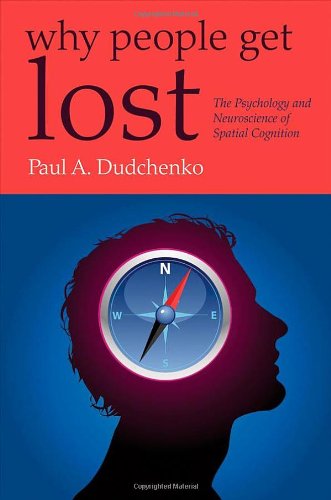
At some point in our lives, most of us have been lost. How does this happen? What are the limits of our ability to find our way? Do we have an innate sense of direction?'How people get lost' reviews the psychology and neuroscience of navigation. It starts with a history of studies looking at how organisms solve mazes. It then reviews contemporary studies of spatial cognition, and the wayfinding abilities of adults and children. It then considers how specific parts of the brain provide a cognitive map and a neural compass. This book also considers the neurology of spatial disorientation, and the tendency of patients with Alzheimer's disease to lose their way. Within the book, the author considers that, perhaps we get lost simply because our brain's compass becomes misoriented.This book is written for anyone with an interest in navigation and the brain. It assumes no specialised knowledge of neuroscience, but covers recent advances in our understanding of how the brain represents space.
⚠️ WARNING (California Proposition 65):
This product may contain chemicals known to the State of California to cause cancer, birth defects, or other reproductive harm.
For more information, please visit www.P65Warnings.ca.gov.