
Title
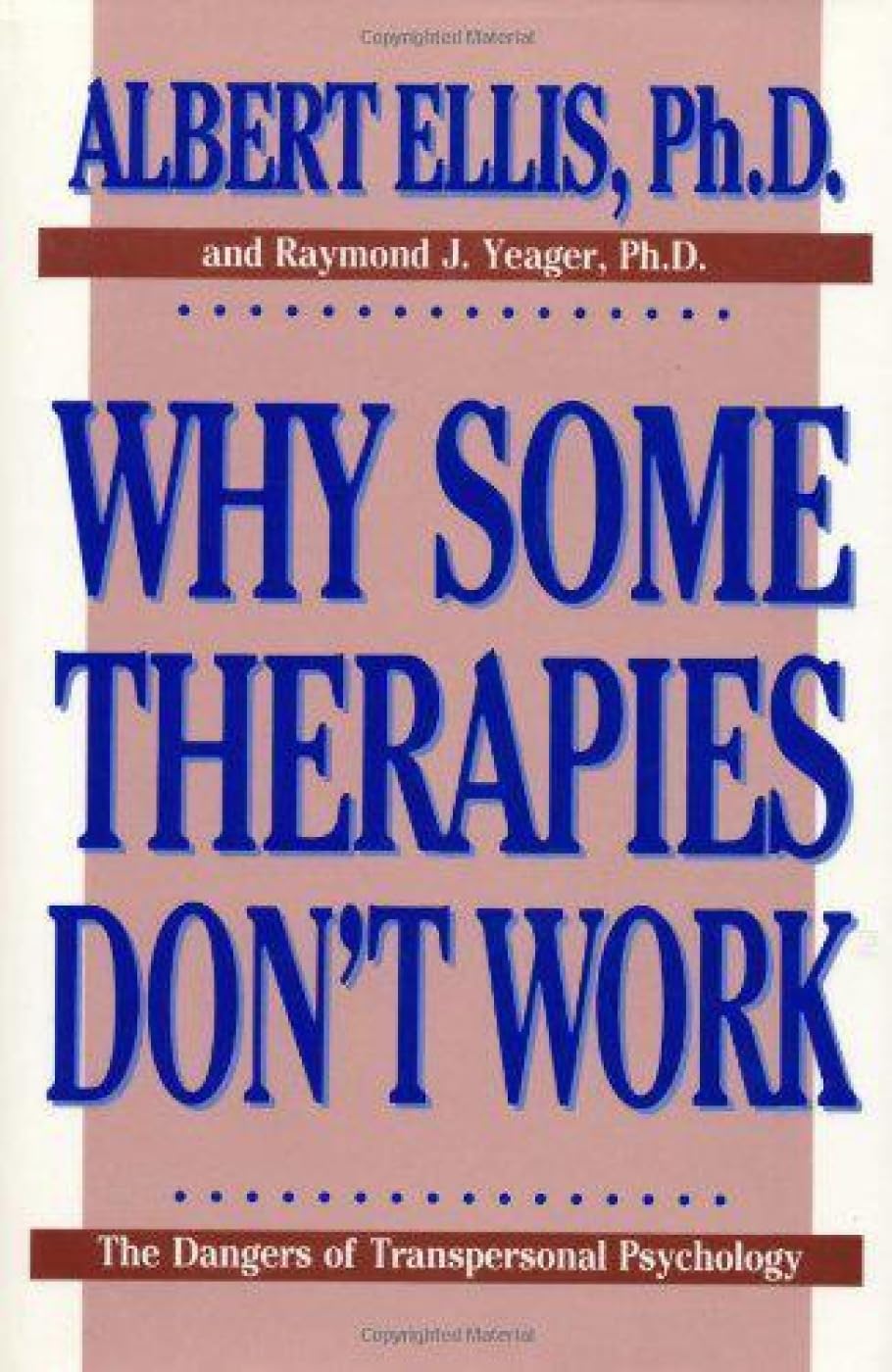
Why Some Therapies Don't Work (Psychology),Used
Sold by Ergodebooks, an authorized reseller.
Returns accepted within 30 days | support@ergodebooks.com
Shipping Information
- Free Standard Shipping — United States only
- Processing Time: 3–5 business days
- Estimated Delivery: 6–10 business days after dispatch
- Double-boxed, fully insured & discreetly packaged
- Tracking number sent via email once dispatched
Returns & Refund
Returns accepted within 30 days of delivery.
Damaged or Defective Item
Free return shipping + replacement or full refund
Wrong Item Received
Free return shipping + replacement or full refund
Change of Mind
Return shipping at customer's expense · 25% restocking fee applies
Payment Option

Joined by his colleague Raymond J. Yeager, renowned therapist Albert Ellis explains the revolutionary technique of rationalemotive therapy (RET) and contrasts it with transpersonal psychology and psychotherapy in a devastating analysis of cult therapy.Contrasting the theories, methods, and results of transpersonal psychotherapy with the more sensible and effective RET approach, Ellis and Yeager explain the goals of psychotherapy in terms of human wellbeing, showing how transpersonal psychology can actually increase a person's frustration, intensify neurotic defenses, and impede the development of a healthy selfimage.A tremendous amount of research supports the effectiveness of RET and its related forms of treatment. The cognitivetherapy revolution, with its realistic approach to life problems, is gaining momentum both inside clinical practice and among the general population. In Why Some Therapies Don't Work, Ellis and Yeager emphasize the inherent dangers of the transpersonal phenomenon, in whatever form it might take. By comparing and contrasting RET and transpersonalism, they provide professionals with a valuable resource while offering general readers a functional and clearly written selfhelp guide.
⚠️ WARNING (California Proposition 65):
This product may contain chemicals known to the State of California to cause cancer, birth defects, or other reproductive harm.
For more information, please visit www.P65Warnings.ca.gov.
- Q: What is the page count of the book? A: The book contains one hundred ninety-six pages. This length allows for a concise exploration of therapy techniques.
- Q: What are the dimensions of the book? A: The book measures six inches in length, zero point eight seven inches in width, and nine point zero two inches in height. These dimensions make it easy to handle and store.
- Q: What type of binding does this book have? A: The book has a hardcover binding. This ensures durability and a professional appearance, suitable for both personal and classroom use.
- Q: How is rational-emotive therapy explained in the book? A: The book provides a detailed analysis of rational-emotive therapy. It contrasts this method with transpersonal psychology, highlighting effectiveness and practical applications.
- Q: Is this book suitable for beginners in psychology? A: Yes, the book is suitable for beginners. It presents concepts in an accessible manner while providing deep insights into psychotherapy techniques.
- Q: How can I apply the techniques discussed in the book? A: You can apply the techniques by practicing rational-emotive therapy principles. The book offers guidance on integrating these methods into everyday situations.
- Q: How should I store this book to keep it in good condition? A: Store the book in a dry, cool place away from direct sunlight. This will help maintain the integrity of the hardcover and the pages.
- Q: Is this book safe for young adults? A: Yes, the book is appropriate for young adults. It addresses psychological concepts relevant to individuals seeking personal growth and understanding.
- Q: What if the book arrives damaged? A: If the book arrives damaged, you should contact customer support for assistance. They can guide you through the return or exchange process.
- Q: Are there any safety precautions related to the content of the book? A: The book discusses therapeutic practices and theories. Readers should approach the content thoughtfully, considering their personal mental health needs.
- Q: Can I find similar themes in other books by the same author? A: Yes, works by Raymond J. Yeager often explore similar themes in psychology. Look for titles focusing on therapy methods and human well-being.
- Q: Does the book include research supporting its claims? A: Yes, the book includes extensive research backing the effectiveness of rational-emotive therapy. This adds credibility to its recommendations and conclusions.
- Q: How does this book compare to other psychotherapy resources? A: This book stands out by providing a critical analysis of transpersonal psychology versus rational-emotive therapy, offering unique insights not found in typical resources.
- Q: What should I do if I have questions while reading? A: If you have questions while reading, consider consulting additional resources or discussing with a mental health professional for deeper understanding.
- Q: Is there a specific audience this book targets? A: The book targets both professionals in psychology and general readers interested in understanding therapy techniques. It is designed to be informative for all.