If you have any questions, you are always welcome to contact us. We'll get back to you as soon as possible, withing 24 hours on weekdays.
Customer service
All questions about your order, return and delivery must be sent to our customer service team by e-mail at yourstore@yourdomain.com
Sale & Press
If you are interested in selling our products, need more information about our brand or wish to make a collaboration, please contact us at press@yourdomain.com
Help
If you have any questions, you are always welcome to contact us. We'll get back to you as soon as possible, withing 24 hours on weekdays.
Customer service
All questions about your order, return and delivery must be sent to our customer service team by e-mail at yourstore@yourdomain.com
Sale & Press
If you are interested in selling our products, need more information about our brand or wish to make a collaboration, please contact us at press@yourdomain.com
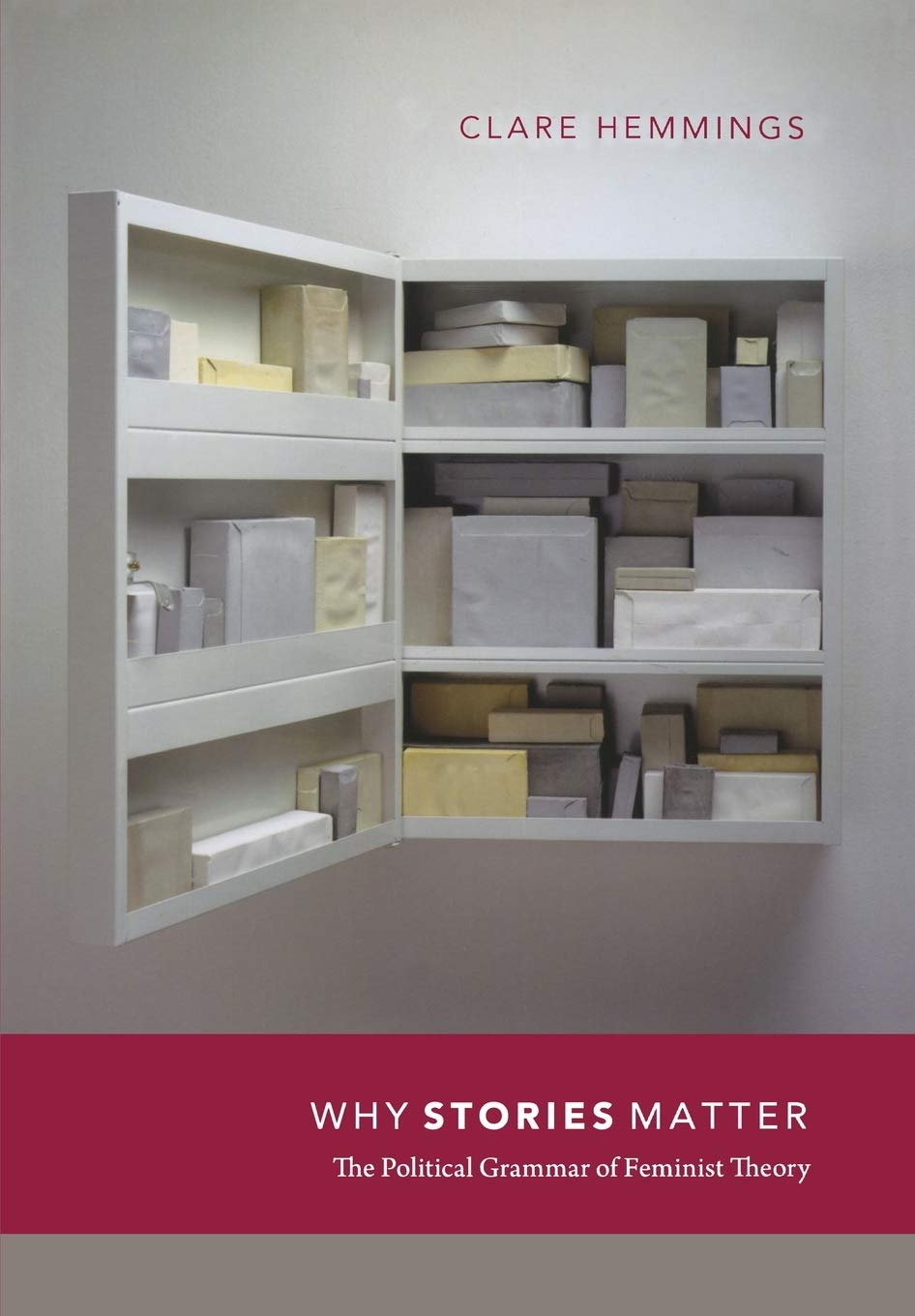
Why Stories Matter is a powerful critique of the stories that feminists tell about the past four decades of Western feminist theory. Clare Hemmings examines the narratives that make up feminist accounts of recent feminist history, highlights the ethical and political dilemmas raised by these narratives, and offers innovative strategies for transforming them. Drawing on her indepth analysis of feminist journals, such as Signs, Feminist Review, and Feminist Theory, Hemmings argues that feminists portray the development of Western feminism through narratives of progress, loss, and return. Whether celebrating the move beyond unity or identity, lamenting the demise of a feminist political agenda, or proposing a return to a feminist vision from the past, by advancing these narratives feminists construct a mobile political grammar too easily adapted for postfeminist agendas. Hemmings insists that it is not enough for feminist theorists to lament what is most often perceived as the cooptation of feminism in global arenas. They must pay attention to the amenability of their own stories, narrative constructs, and grammatical forms to broader discursive uses of gender and feminism if history is not simply to repeat itself. Since citation practices and the mobilization of affect are central to how the narratives of progress, loss, and return persuade readers to suspend disbelief, they are also potential keys to telling the story of feminisms past, present, and future differently.
⚠️ WARNING (California Proposition 65):
This product may contain chemicals known to the State of California to cause cancer,
birth defects, or other reproductive harm.
For MAP (Minimum Advertised Price) violations and Intellectual Property (IP) or Trademark concerns, please contact:
support@ergodebooks.com
⚠️ California Proposition 65 Warning: Some products sold on this website may expose you to chemicals known to the State of California to cause cancer, birth defects, or other reproductive harm. For more information, visit www.P65Warnings.ca.gov.