
Title
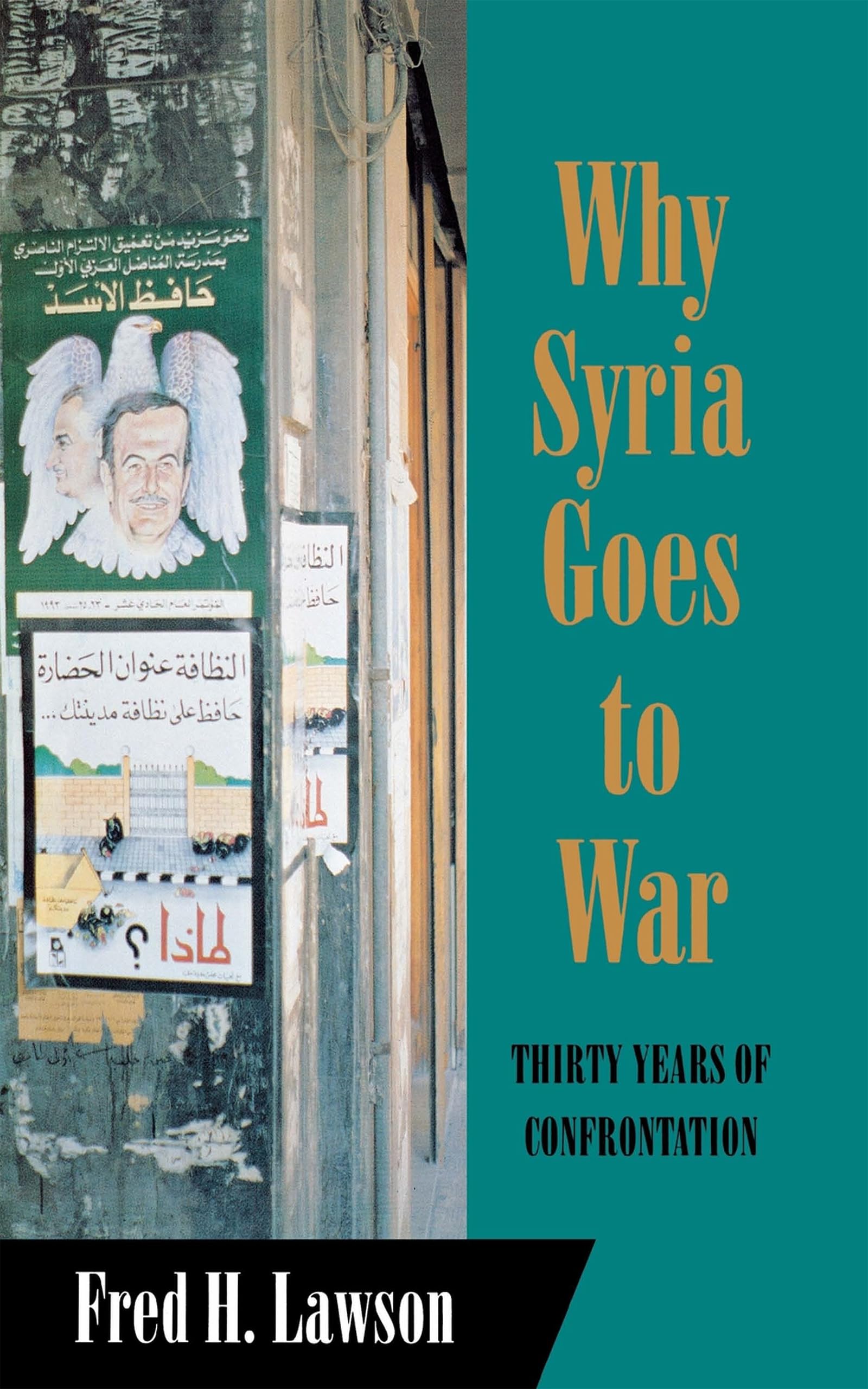
Why Syria Goes To War: Thirty Years Of Confrontation (Cornell Studies In Political Economy)
Sold by Ergodebooks, an authorized reseller.
Returns accepted within 30 days | support@ergodebooks.com
Shipping Information
- Free Standard Shipping — United States only
- Processing Time: 3–5 business days
- Estimated Delivery: 6–10 business days after dispatch
- Double-boxed, fully insured & discreetly packaged
- Tracking number sent via email once dispatched
Returns & Refund
Returns accepted within 30 days of delivery.
Damaged or Defective Item
Free return shipping + replacement or full refund
Wrong Item Received
Free return shipping + replacement or full refund
Change of Mind
Return shipping at customer's expense · 25% restocking fee applies
Payment Option

Rejecting Conventional Explanations For Syrian Foreign Policy, Which Emphasize The Personalities And Attitudes Of Leaders, Cultural Factors Peculiar To Arab Societies, Or The Machinations Of The Great Powers, Fred H. Lawson Describes Key Shifts In Damascus'S Response To Regional Adversaries In Terms Of Changes In The Intensity Of Political Struggles At Home. Periodic Eruptions Of Domestic Conflict Have Inspired Syria'S Ruling Coalition To Adopt A Wide Range Of Programs Designed To Buy Off Domestic Rivals And Perpetuate The Predominance Of Individual Coalition Members. These Programs Have Undermined The Unity Of The Ba'Thi Regime, Increasing The Chances That Opponents Will Overturn The Established Order.Challenges To The Ba'Thi Regime Become Most Threatening Whenever Crises Of Accumulation Shake The Domestic Political Economy, Lawson Contends. Opposition Forces Gain Strength When The State Cannot Sustain New Investment Or When Competition Increases Between Public And Private Enterprises. Political And Economic Trends Inside Syria Have Determined Why Damascus Has Since 1963 Alternately Escalated Tensions With Regional Rivals And Adopted More Accommodating Postures.Lawson Traces This Dynamic Through Five Major Episodes: The 1967 War With Israel; Limited Intervention In Jordan In 1970; The Widening Conflict In Lebanon In 1976; The Defusing Of Conflict With Iraq In 1982; And The Rapprochement With Turkey Over Kurdish Separatism In 1994. These Patterns, Lawson Suggests, May Be Characteristic Of Nations Changing From One Domestic Economic System To A Radically Different One, As Syria Has In The Transition From State Socialism To A Privatized Political Economy.
⚠️ WARNING (California Proposition 65):
This product may contain chemicals known to the State of California to cause cancer, birth defects, or other reproductive harm.
For more information, please visit www.P65Warnings.ca.gov.
- Q: What is the page count of this book? A: The book has two hundred forty pages. This length provides an in-depth exploration of Syrian foreign policy over three decades.
- Q: What type of binding does this book have? A: This book is a hardcover. The hardcover binding ensures durability and longevity for repeated readings.
- Q: Who is the author of this book? A: The author is Fred H. Lawson. He offers a detailed analysis of Syria's political economy in this work.
- Q: What are the dimensions of this book? A: The book measures six point one inches in length, zero point eight three inches in width, and nine point two five inches in height. These dimensions make it a manageable size for readers.
- Q: What is the publishing brand of this book? A: The book is published by Cornell University Press. This reputable publisher is known for academic and scholarly works.
- Q: How does this book explain Syrian foreign policy? A: The book rejects conventional explanations. It emphasizes domestic political struggles as key factors in shaping Syria's international relations.
- Q: Is this book suitable for academic study? A: Yes, this book is suitable for academic study. It provides a comprehensive analysis of economic and political conditions in Syria.
- Q: What topics does this book cover? A: The book covers Syrian foreign policy, domestic political economy, and historical conflicts. It discusses episodes from the 1967 war to the rapprochement with Turkey.
- Q: What is the target audience for this book? A: The target audience includes students and scholars of political economy. It is also suitable for anyone interested in Middle Eastern studies.
- Q: How should I care for this hardcover book? A: Keep the book in a cool, dry place. Avoid exposure to direct sunlight to preserve its condition over time.
- Q: Is this book safe for all readers? A: Yes, this book is safe for all readers. It discusses historical and political themes without graphic content.
- Q: What if my book arrives damaged? A: If your book arrives damaged, contact the seller for a return or replacement. Most sellers provide a customer satisfaction policy.
- Q: How can I store this book? A: Store this book upright on a shelf. Ensure it is not pressed or stacked under heavy items to maintain its shape.
- Q: Can I read this book if I'm not familiar with Middle Eastern politics? A: Yes, you can read this book without prior knowledge. It provides context for understanding Syria's political landscape.
- Q: What makes this book different from other political economy texts? A: This book uniquely focuses on the interplay between domestic struggles and foreign policy. It offers a fresh perspective on Syria's international relations.
- Q: Does this book include any illustrations or charts? A: No, this book does not include illustrations or charts. It focuses on textual analysis and historical narratives.