
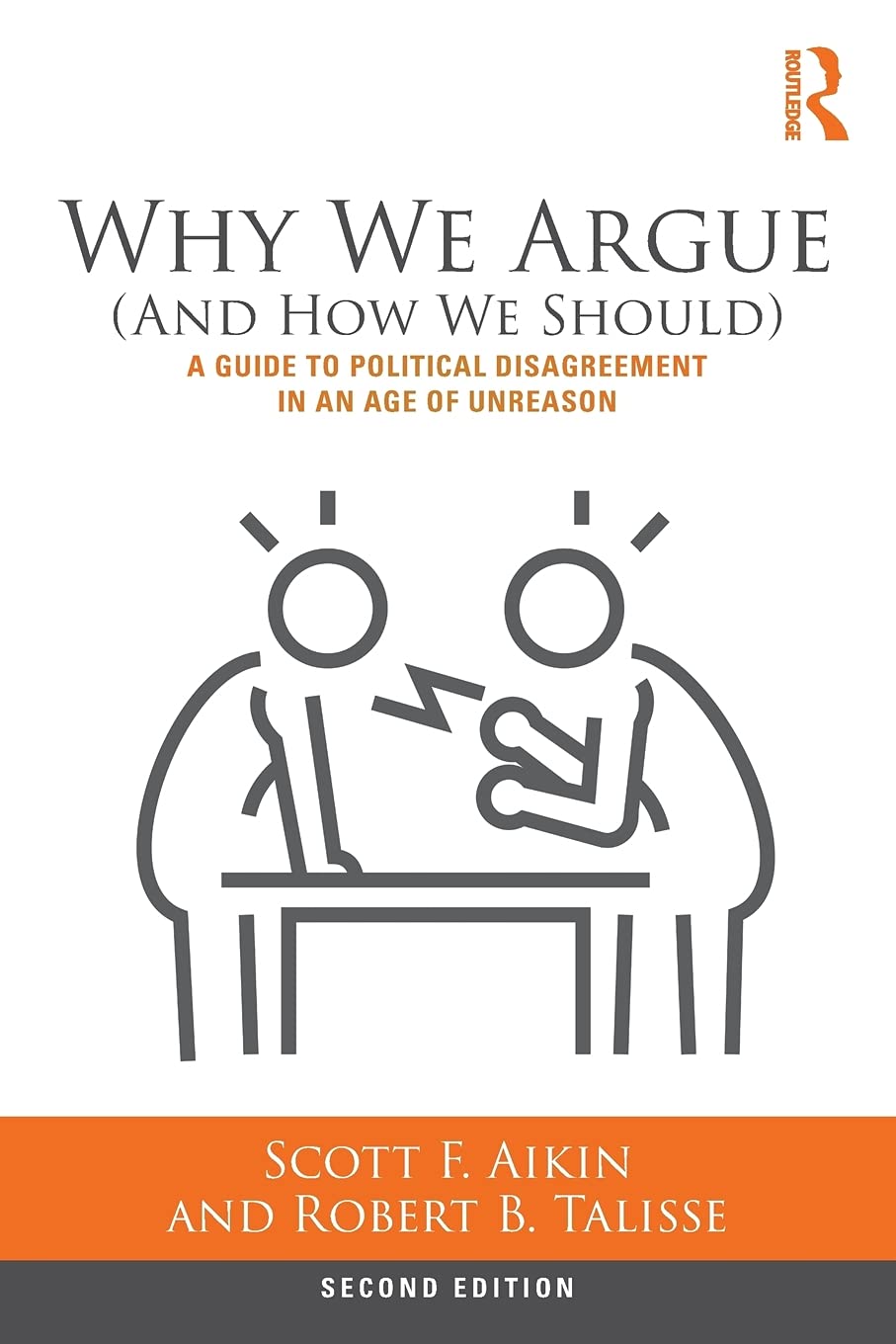
Title
Why We Argue (And How We Should): A Guide to Political Disagreement in an Age of Unreason,New
Sold by Ergodebooks, an authorized reseller.
Returns accepted within 30 days | support@ergodebooks.com
Shipping Information
- Free Standard Shipping — United States only
- Processing Time: 3–5 business days
- Estimated Delivery: 6–10 business days after dispatch
- Double-boxed, fully insured & discreetly packaged
- Tracking number sent via email once dispatched
Returns & Refund
Returns accepted within 30 days of delivery.
Damaged or Defective Item
Free return shipping + replacement or full refund
Wrong Item Received
Free return shipping + replacement or full refund
Change of Mind
Return shipping at customer's expense · 25% restocking fee applies
Payment Option

Why We Argue (And How We Should): A Guide to Political Disagreement in an Age of Unreason presents an accessible and engaging introduction to the theory of argument, with special emphasis on the way argument works in public political debate. The authors develop a view according to which proper argument is necessary for ones individual cognitive health; this insight is then expanded to the collective health of ones society. Proper argumentation, then, is seen to play a central role in a wellfunctioning democracy.Written in a lively style and filled with examples drawn from the real world of contemporary politics, and questions following each chapter to encourage discussion, Why We Argue (And How We Should) reads like a guide for the participation in, and maintenance of, modern democracy. An excellent student resource for courses in critical thinking, political philosophy, and related fields, Why We Argue (And How We Should) is an important contribution to reasoned debate.Whats New in the Second Edition:Updated examples throughout the book, including examples from the 2016 U.S. election and first years of the Trump presidency;Expanded coverage of dialectical fallacies, including coverage of new types of fallacies and of sites where such fallacies thrive (e.g., cable news, social media);Revised For Further Thought questions and definitions of Key Terms, included at the end of each chapter;The addition of five new chapters:Deep DisagreementArgument by AnalogyArgument between the AdsThe Owl of Minerva (or weaponizing metalanguage)Argumentative Responsibility and Repair.
⚠️ WARNING (California Proposition 65):
This product may contain chemicals known to the State of California to cause cancer, birth defects, or other reproductive harm.
For more information, please visit www.P65Warnings.ca.gov.