
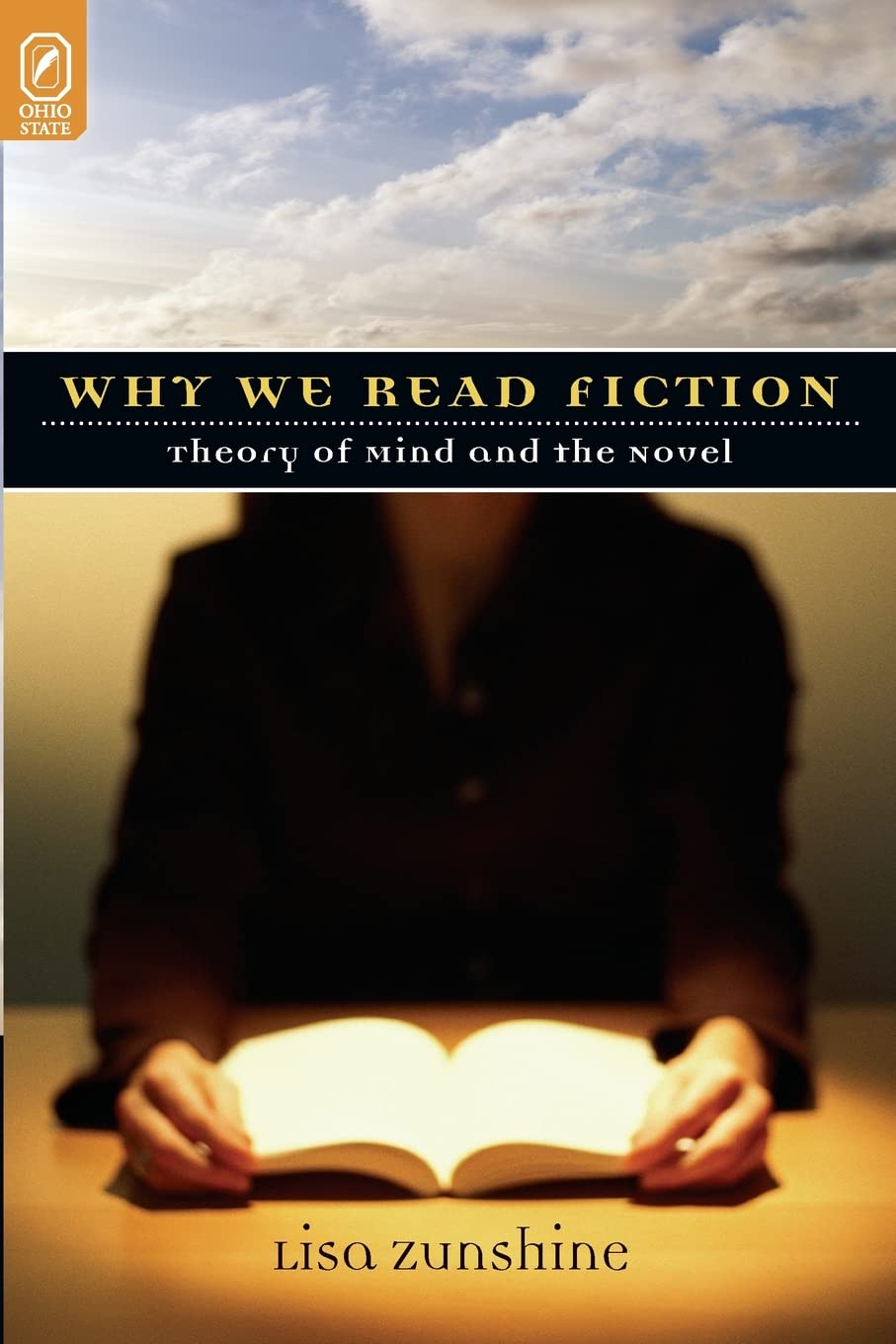
Title
Why We Read Fiction: Theory Of Mind And The Novel (Theory And Interpretation Of Narrative),Used
Sold by Ergodebooks, an authorized reseller.
Returns accepted within 30 days | support@ergodebooks.com
Shipping Information
- Free Standard Shipping — United States only
- Processing Time: 3–5 business days
- Estimated Delivery: 6–10 business days after dispatch
- Double-boxed, fully insured & discreetly packaged
- Tracking number sent via email once dispatched
Returns & Refund
Returns accepted within 30 days of delivery.
Damaged or Defective Item
Free return shipping + replacement or full refund
Wrong Item Received
Free return shipping + replacement or full refund
Change of Mind
Return shipping at customer's expense · 25% restocking fee applies
Payment Option

Why We Read Fiction Offers A Lucid Overview Of The Most Exciting Area Of Research In Contemporary Cognitive Psychology Known As Theory Of Mind And Discusses Its Implications For Literary Studies. It Covers A Broad Range Of Fictional Narratives, From Richardsons Clarissa, Dostoyevskis Crime And Punishment, And Austens Pride And Prejudice To Woolfs Mrs. Dalloway, Nabokovs Lolita, And Hammetts The Maltese Falcon. Zunshines Surprising New Interpretations Of Wellknown Literary Texts And Popular Cultural Representations Constantly Prod Her Readers To Rethink Their Own Interest In Fictional Narrative. Written For A General Audience, This Study Provides A Jargonfree Introduction To The Rapidly Growing Interdisciplinary Field Known As Cognitive Approaches To Literature And Culture.
⚠️ WARNING (California Proposition 65):
This product may contain chemicals known to the State of California to cause cancer, birth defects, or other reproductive harm.
For more information, please visit www.P65Warnings.ca.gov.
- Q: What is the page count of this book? A: This book has one hundred ninety-eight pages. It provides a comprehensive exploration of cognitive psychology and literary theory.
- Q: What are the dimensions of this book? A: The book measures six point one inches in length, zero point five nine inches in width, and nine point zero two inches in height. These dimensions make it a compact paperback.
- Q: Who is the author of this book? A: The author of this book is Lisa Zunshine. She is known for her work in cognitive approaches to literature.
- Q: What is the binding type of this book? A: This book is paperback bound. This type of binding is lightweight and flexible, making it easy to handle.
- Q: What category does this book belong to? A: This book is categorized under Criticism and Theory. It focuses on the intersection of cognitive psychology and literary narrative.
- Q: What is the main theme of the book? A: The main theme is the exploration of Theory of Mind in relation to fiction. It discusses how literary narratives influence our understanding of others.
- Q: Is this book suitable for general audiences? A: Yes, this book is written for a general audience. It provides a jargon-free introduction to complex concepts in cognitive psychology.
- Q: Does this book include well-known literary texts? A: Yes, it discusses several well-known literary texts. Examples include Richardson’s Clarissa, Dostoyevski’s Crime and Punishment, and Austen’s Pride and Prejudice.
- Q: What is the condition of the book? A: The book is described as a used book in good condition. This means it may show some signs of wear but is still fully functional.
- Q: How does this book approach literary studies? A: The book approaches literary studies through the lens of cognitive psychology. It offers fresh interpretations of popular narratives and cultural representations.
- Q: Is the book's content accessible to non-experts? A: Yes, the content is accessible to non-experts. It aims to engage readers without requiring specialized knowledge in cognitive psychology.
- Q: What kind of narratives does the book cover? A: The book covers a broad range of fictional narratives. It includes works from various authors, enriching the discussion of Theory of Mind.
- Q: Can this book help in understanding fictional narratives? A: Yes, it helps readers rethink their interest in fictional narratives. The insights provided encourage deeper engagement with literature.
- Q: Who published this book? A: This book is published by Ohio State University Press. The publisher is known for its academic and literary works.
- Q: What type of audience would benefit from this book? A: Readers interested in cognitive psychology and literature would benefit from this book. It's suitable for students, teachers, and general readers.
- Q: Are there any notable interpretations in the book? A: Yes, the book presents surprising new interpretations of well-known literary texts. These insights challenge conventional views on narrative.